Post-Workout Protein Snacks: What to Eat After Training
By Editorial Team. Updated . 9 min read.
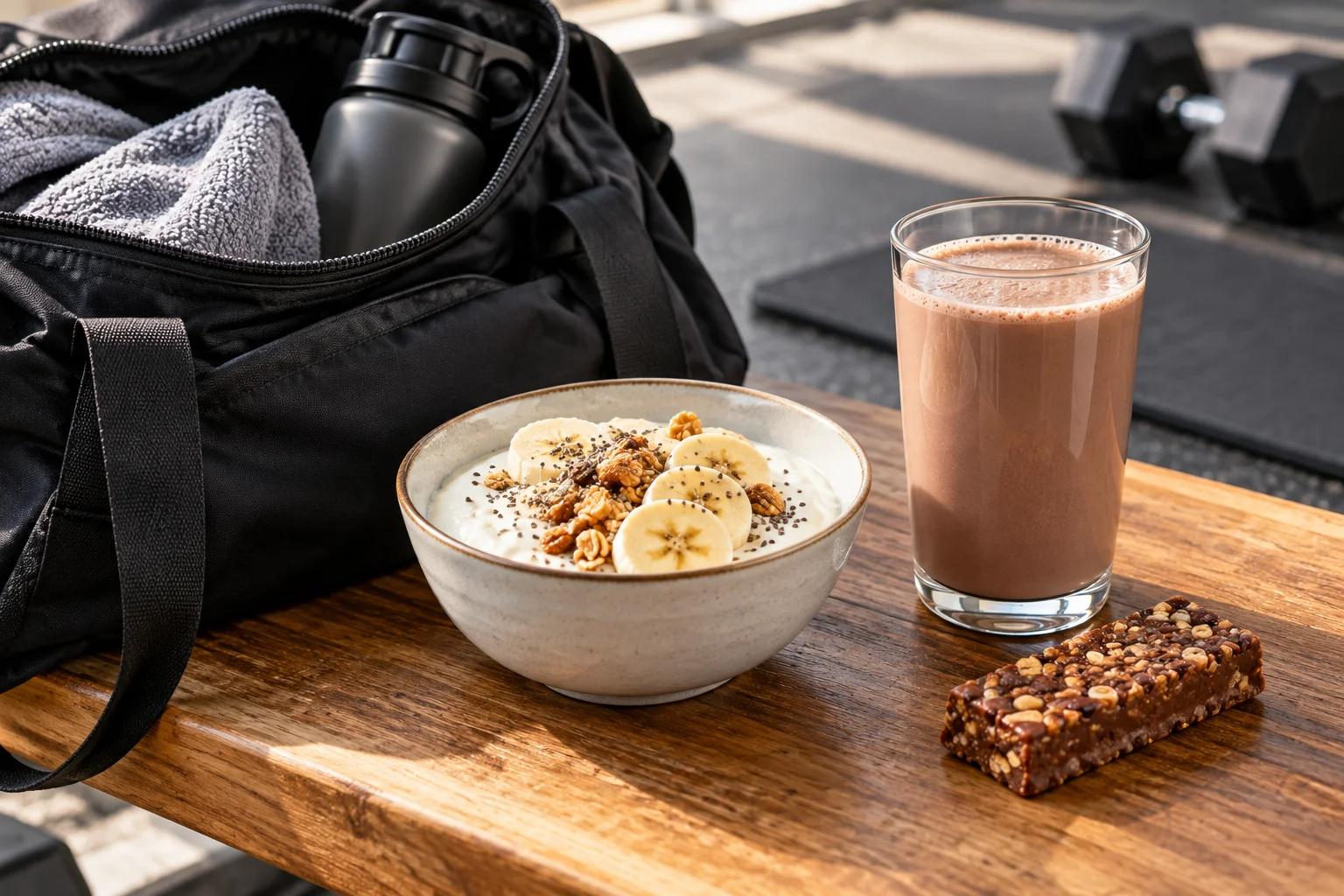
After a workout, aim for about 20 to 40 grams of high-quality protein (roughly 0.25 to 0.4 grams per kilogram of body weight), ideally with some carbohydrate, within about two hours. Good options include Greek yogurt with fruit, chocolate milk, a 20-gram protein bar, cottage cheese or a turkey sandwich. The "anabolic window" is wider than once thought.
Key takeaways
- Daily protein comes first. Hitting about 1.4–2.0 g/kg per day, split into 3–4 evenly spaced doses, matters more than the exact minute you eat after training.
- Each dose should be 20–40 g of a complete protein, which supplies about 2–3 g of leucine.
- Timing gets more important when you train fasted, when meals are spaced far apart, or when you train twice in one day.
- Add carbohydrate after long or hard endurance sessions to refill glycogen. Plant eaters can hit the same targets with soy or pea-rice blends.
What should you eat after a workout?
A good recovery snack supplies complete protein for muscle repair, carbohydrate to restock glycogen (stored fuel in muscle and liver) and fluid. The mix depends on the session:
- Strength training (45–75 minutes): protein first. 20–40 g of protein with 20–40 g of carbohydrate is plenty.
- Long or hard endurance work (60+ minutes): carbohydrate matters as much as protein, especially if you train again within hours.
- Short or easy sessions: your next regular meal is enough.
About the 3:1 carb-to-protein ratio. A 3:1 or 4:1 carbohydrate-to-protein ratio is often credited to the International Society of Sports Nutrition (ISSN). Its 2017 nutrient timing position stand (opens in a new tab) (Kerksick et al.) does not state a fixed ratio. Instead, when glycogen must be restored quickly (under four hours of recovery), it lists aggressive carbohydrate refeeding at about 1.2 g/kg of body weight per hour, or about 0.8 g/kg/h of carbohydrate combined with 0.2–0.4 g/kg/h of protein. For a 70 kg (154 lb) athlete, that is roughly 56 g of carbohydrate and 14–28 g of protein per hour. With a full day before your next session, the exact mix matters far less.
How much protein after a workout?
The ISSN position stand on protein and exercise (opens in a new tab) (Jäger et al., 2017; also available as an open repository copy (opens in a new tab)) sets these benchmarks:
- Per dose: about 0.25 g of high-quality protein per kg of body weight, or an absolute 20–40 g. The nutrient timing stand gives the range as 0.25–0.40 g/kg per dose.
- Leucine: 700–3,000 mg per dose. Leucine is the amino acid that most strongly switches on muscle protein synthesis (MPS).
- Daily total: 1.4–2.0 g/kg for most exercising people. Lifters trying to keep muscle while eating in a calorie deficit may need 2.3–3.1 g/kg.
- Spacing: doses spread evenly, every 3–4 hours, across the day.
| Body weight | Post-workout protein (g, at 0.25–0.4 g/kg) |
|---|---|
| 120 lb (54 kg) | 14–22 |
| 150 lb (68 kg) | 17–27 |
| 180 lb (82 kg) | 21–33 |
| 210 lb (95 kg) | 24–38 |
Use the upper end if you are older (roughly 65+), since aging muscle responds less to small doses, or after a full-body session. For snack-sized targets on rest days, see how much protein a snack should have.
Does timing matter? The anabolic window, with nuance
Timing advice online ranges from 30 minutes to two hours. Our position, based on the ISSN position stands: total daily protein and a solid per-meal dose matter most, and the post-workout window is hours wide, not minutes. Eating within about two hours is a sensible default, not a deadline.
What the evidence says:
- The ISSN nutrient timing stand states that protein eaten "immediately to 2-h post" exercise strongly increases MPS. It adds that protein before or after training can help, and that your pre-workout meal changes how much the post-workout feeding matters.
- The ISSN protein stand says the best time to eat protein is "likely a matter of individual tolerance," because both pre- and post-workout protein work. It adds that the anabolic effect of exercise lasts at least 24 hours, though it fades the longer you wait.
- A 2013 meta-analysis in the Journal of the International Society of Sports Nutrition (Schoenfeld, Aragon and Krieger) found that the apparent benefit of eating protein close to training largely disappeared once total daily protein was accounted for.
When timing matters more
The wide window assumes you ate reasonably recently. Tighten it in these cases:
- You trained fasted. Lifting before breakfast means no meal is still being digested. Aragon and Schoenfeld note the "eat within 30 minutes" idea rests largely on studies of fasted training, so fasted lifters should eat protein soon after finishing.
- Your meals are far apart. Aragon and Schoenfeld suggest keeping your pre- and post-workout meals no more than about 3–4 hours apart for a typical 45–90 minute session. If you had a large mixed meal before training, 5–6 hours is reasonable.
- You train twice in one day. If the next session is under four hours away, refuel right away using the ISSN's per-hour carbohydrate and protein amounts above.
Otherwise, eat when convenient within a couple of hours and focus on your daily total. Medical News Today's reviewed guide to post-exercise eating (opens in a new tab) lands on a similar couple-of-hours window.
Best post-workout protein snacks
Ranked for a typical strength session. Whole-food values are our calculations from USDA FoodData Central (opens in a new tab) per-100 g data, scaled to the serving shown and rounded (FDC IDs below the table). Bar values come from labels recorded in Open Food Facts (opens in a new tab) and match our catalog. For how we judge snacks, see how to choose a healthy protein snack.
| Rank | Snack | Protein (g) | Carbs (g) | Calories | Why it works |
|---|---|---|---|---|---|
| 1 | 6 oz (170 g) nonfat plain Greek yogurt + 1 medium banana + 1 tbsp honey | ~19 | ~50 | ~270 | Milk protein plus quick carbs |
| 2 | 1 cup (226 g) 2% cottage cheese + ½ cup pineapple chunks | ~24 | ~22 | ~225 | Casein-rich, filling, cheap |
| 3 | 3 oz (85 g) deli turkey breast on 2 slices whole-wheat bread | ~26 | ~30 | ~255 | A real meal in snack form |
| 4 | Whey shake (1 scoop, usually 20–25 g protein; check the label) + 1 medium banana | 21–26 | 30+ | ~210–250 | Fast-digesting, high in leucine |
| 5 | 3 large eggs, scrambled without added fat, + 1 slice whole-wheat toast | ~23 | ~15 | ~300 | Complete protein, cheap |
| 6 | 3 oz (85 g) canned light tuna in water + 30 g whole-wheat crackers | ~20 | ~21 | ~200 | Shelf-stable and lean |
| 7 | 2 cups low-fat chocolate milk | ~17 | ~51 | ~320 | Protein, carbs, fluid and sodium |
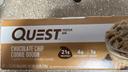
| 8 | Quest Chocolate Chip Cookie Dough bar (60 g) | 21 | 20 (12 fiber, 1 sugar) | 190 | Most protein per calorie of the bars here |
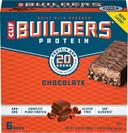
| 9 | Clif Builders Chocolate bar (68 g) | 20 | 31 (17 sugar) | 280 | Built-in carbs suit endurance work |
| 10 | Ready-to-drink milk protein shake | 20–30 (check label) | Varies | Varies | Convenient; no prep |
USDA FDC IDs: nonfat Greek yogurt 170894 (opens in a new tab), banana 173944 (opens in a new tab), honey 169640 (opens in a new tab), 2% cottage cheese 172182 (opens in a new tab), pineapple 169124 (opens in a new tab), deli turkey breast 174572 (opens in a new tab), whole-wheat bread 172688 (opens in a new tab), whole egg 171287 (opens in a new tab), canned light tuna 173709 (opens in a new tab), whole-wheat crackers 172749 (opens in a new tab), low-fat chocolate milk 170881 (opens in a new tab). Bar labels change, so check the package: Open Food Facts also lists a newer Quest formulation at 250 calories and 25 g of protein.
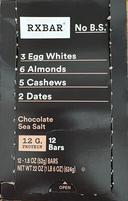
On bars after training. Bars are easy to keep in a gym bag. After lifting, a bar with 20 g of protein does the job. Quest has 21 g of protein for 190 calories (11.1 g of protein per 100 calories) and 1 g of sugar, so pair it with a banana or an apple if you want carbohydrate. Clif Builders' 31 g of carbohydrate and 17 g of sugar make sense after a long ride or run, less so as an everyday snack. RXBAR Chocolate Sea Salt, at 12 g of protein and 200 calories, works better as a pre-workout bite than as a full recovery dose. Compare more high-protein bars with 20 g+, and read are protein bars healthy? for the trade-offs.
For options you can keep in a locker or car, see our list of high-protein snacks on the go.
Pre-workout protein snacks
Before training, choose something lighter and lower in fat and fiber:
- 1–3 hours before: a small meal with 15–25 g of protein and some carbs, such as Greek yogurt with oats and berries, or a turkey wrap.
- 30–60 minutes before: something smaller, such as a banana with a string cheese, half a protein bar or a glass of milk.
- Skip right before training: large amounts of fat, high-fiber bars (10 g+ fiber) and big servings of sugar alcohols, which can upset your stomach mid-workout.
A protein snack before training also shortens the gap to your next meal.
Plant-based post-workout options
Plant proteins support muscle gain when the dose is right:
- Eat a slightly larger serving. Many plant proteins have less leucine per gram than whey, so aim for 25–40 g of protein to reach the same leucine level.
- Combine sources. Pea protein is relatively low in methionine, and rice protein is low in lysine, so blends cover each other's gaps. Soy is a complete protein on its own.
| Plant snack | Protein (g) | Calories |
|---|---|---|
| 1 cup (155 g) shelled edamame, prepared | ~18 | ~190 |
| 8 oz (227 g) extra-firm tofu + 1 brown rice cake | ~23 | ~225 |
| Pea-rice protein shake (1 scoop) + fruit | 20–25 (check label) | Varies |
| 3 tbsp (30 g) hemp hearts on ½ cup (40 g dry) oats | ~15 | ~320 |
| 1 cup unsweetened soy milk + 1 medium banana | ~8 | ~185 |
USDA FDC IDs: edamame 168411 (opens in a new tab), extra-firm tofu 174290 (opens in a new tab), brown rice cake 170250 (opens in a new tab), hemp seed 170148 (opens in a new tab), oats 173904 (opens in a new tab), unsweetened soy milk 175215 (opens in a new tab), banana 173944 (opens in a new tab).
The soy milk and hemp options fall short of 20 g, so add a scoop of pea or soy protein if either is your whole recovery snack. See all vegan protein snacks for packaged plant-based bars, or best protein snacks for our overall ranking.
Frequently asked questions
How soon after a workout should I eat protein?
Within about two hours is a sensible target, not a hard deadline. The ISSN says protein taken from immediately to two hours after training strongly stimulates muscle building, and that the effect of exercise lasts at least 24 hours. Eat sooner if you trained fasted or your last meal was more than three to four hours earlier.
Is a protein bar a good post-workout snack?
It can be, if it gives at least 20 grams of a complete protein such as milk, whey or soy. Quest Chocolate Chip Cookie Dough has 21 grams and Clif Builders Chocolate has 20 grams per bar. After long endurance sessions, pick a bar with more carbohydrate or add a piece of fruit. Watch added sugar if bars are a daily habit.
Is chocolate milk good after a workout?
Yes, for many people. One cup of low-fat chocolate milk gives about 8 to 9 grams of milk protein plus roughly 25 grams of carbohydrate, fluid and some sodium. Two cups bring protein to about 17 grams, still slightly under the 20-gram target. It suits endurance athletes well, but treat it as a recovery drink, not a daily habit.
Should I eat protein before or after a workout?
Either works, and doing both is fine. A 2017 ISSN review notes that trials giving the same protein dose right before or right after resistance training found no clear difference in strength or muscle gains. What matters more is that your pre- and post-workout meals are not spaced too far apart and that you reach your daily protein total.
How much protein do I need after a workout?
About 0.25 to 0.4 grams per kilogram of body weight, or roughly 20 to 40 grams for most adults. From complete proteins such as whey, milk, eggs, meat or soy, that amount supplies roughly 2 to 3 grams of leucine. Older adults and people doing full-body sessions tend to benefit from the upper end of the range.
Sources
- Jäger R, et al. International Society of Sports Nutrition position stand: protein and exercise. J Int Soc Sports Nutr. 2017;14:20. doi:10.1186/s12970-017-0177-8 (opens in a new tab) (open repository copy, UNC Chapel Hill (opens in a new tab))
- Kerksick CM, et al. International Society of Sports Nutrition position stand: nutrient timing. J Int Soc Sports Nutr. 2017;14:33. doi:10.1186/s12970-017-0189-4 (opens in a new tab)
- Aragon AA, Schoenfeld BJ. Nutrient timing revisited: is there a post-exercise anabolic window? J Int Soc Sports Nutr. 2013;10:5 (opens in a new tab)
- Schoenfeld BJ, Aragon AA, Krieger JW. The effect of protein timing on muscle strength and hypertrophy: a meta-analysis. J Int Soc Sports Nutr. 2013;10:53 (opens in a new tab)
- Medical News Today. What should you eat after working out? (opens in a new tab)
- USDA FoodData Central (opens in a new tab) (food-level FDC IDs are listed under each table)
- Open Food Facts (opens in a new tab)
More background reading is on our resources page.