Are Protein Bars Healthy?
By Editorial Team. Updated . 11 min read.
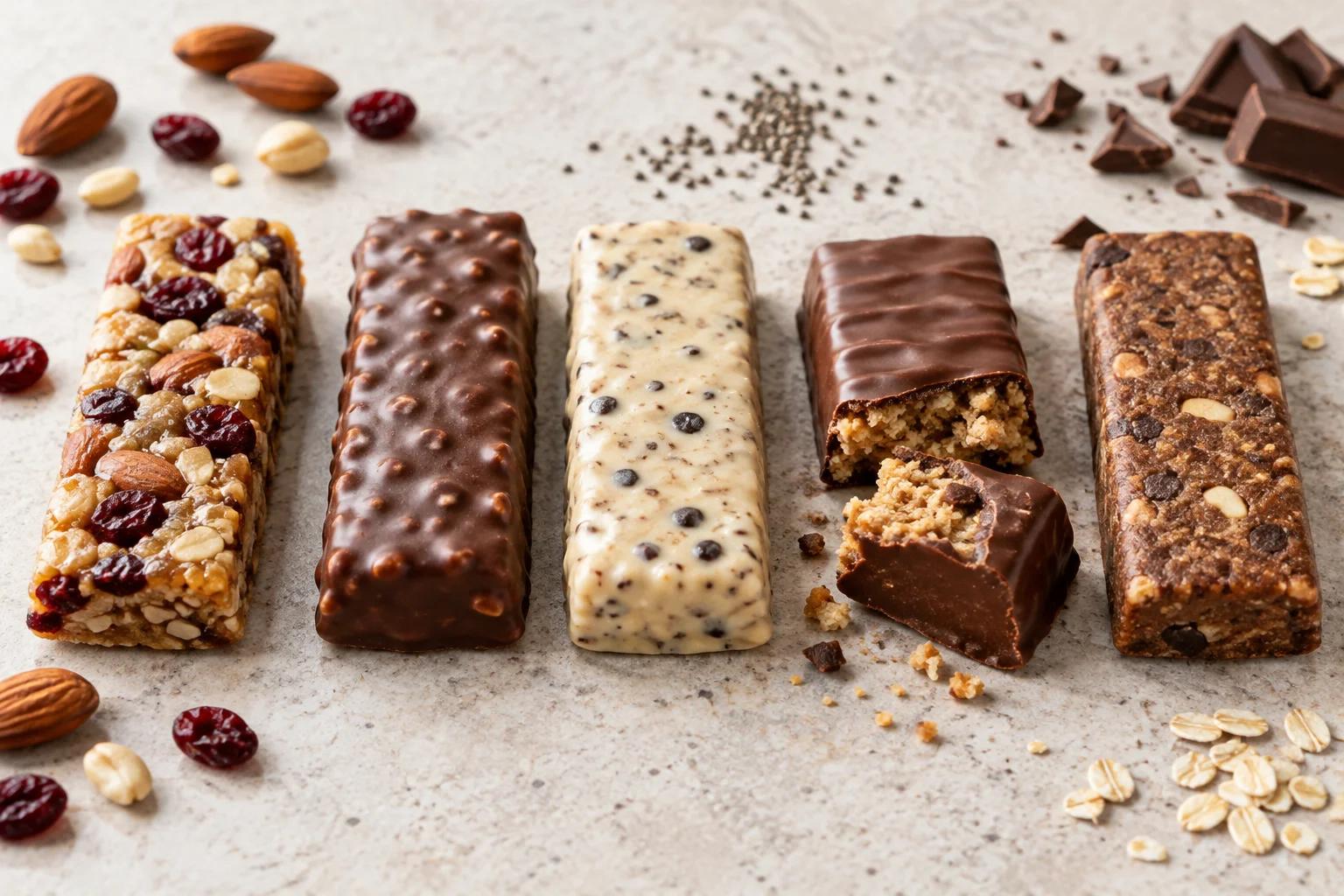
Protein bars can be healthy when they have 10 to 15 grams of protein, under about 8 grams of added sugar and 3 grams or more of fiber, and a short ingredient list. Many are closer to candy, high in added sugar, sugar alcohols and ultra-processed ingredients. Treat them as a convenience, not a replacement for whole foods.
Key takeaways
- In our analysis of 2,102 US Open Food Facts records for protein bars, the median bar had 17.5 g of sugar per 100 g and only 5.9 g of protein per 100 calories.
- 88% of rated bars were NOVA group 4 (ultra-processed); 79% of graded bars scored Nutri-Score D or E.
- Look for 10 g+ protein, 7 g+ protein per 100 calories, under 8 g added sugar, 3 g+ fiber.
- "Zero sugar" usually means sugar alcohols or sweeteners, which differ for blood sugar and digestion.
- A bar a day is fine for most people. Bars for every snack is where trouble starts.
Are protein bars healthy? The short answer
It depends entirely on the bar. "Protein bar" is a marketing term, not a regulated category: it covers both whey-and-fiber bars and chocolate-coated rice crisps with a little soy protein.
The data shows the spread. We analyzed 2,102 US protein bar records in the Open Food Facts (opens in a new tab) database. The median bar had about 25 g of protein per 100 g, which sounds strong, but also about 17.5 g of sugar per 100 g. Only about 17% had 5 g of sugar or less per 100 g, and only about 8.5% delivered 10 g or more of protein per 100 calories.
The good: why protein bars can earn a place
- Convenience. A bar survives a gym bag, glove box or flight; few whole-food proteins do.
- A reliable protein dose. A good bar gives a known 15 to 20 g, useful after training or between distant meals.
- Portion control. A wrapped 200-calorie bar is easier to stop at than a bag of trail mix.
- Better than the alternative. Against a vending-machine pastry, a decent bar wins on protein, fiber and fullness.
The bad: sugar, sugar alcohols, ultra-processing and calories
Added sugar
Many bars rely on syrups, chocolate coatings and sweetened crisps. The FDA requires added sugars (opens in a new tab) to be listed separately on the label, so this is easy to check. The 2025–2030 Dietary Guidelines advise keeping added sugars to no more than 10 g per meal, according to the AAFP summary (opens in a new tab). A bar with 15 g of added sugar uses more than that in one snack.
Our 8 g ceiling is a practical cutoff. Cleveland Clinic (opens in a new tab) is stricter, suggesting no more than 2 g of added sugar in a snack bar.
Sugar alcohols and sweeteners: what "zero sugar" really means
Low-sugar bars swap sugar for sugar alcohols (polyols such as erythritol, maltitol and sorbitol), the rare sugar allulose, or high-intensity sweeteners (sucralose, stevia, monk fruit). They behave differently.
Blood sugar. Polyols are only partly absorbed, so they raise blood glucose far less than sugar, but not equally. One review put the glycemic index of erythritol at 0, sorbitol at 9 and xylitol at 13, versus 35 for maltitol and 65 for sucrose (Livesey, Nutrition Research Reviews (opens in a new tab)). A maltitol bar beats a sugary one, but it is the polyol most likely to nudge blood sugar. If you manage diabetes, see high-protein snacks for diabetics and talk to your doctor or dietitian.
Your gut. Unabsorbed polyols reach the colon, pull in water and are fermented, which can mean gas, cramping and loose stools. Foods likely to supply 50 g of sorbitol a day must warn "Excess consumption may have a laxative effect" (21 CFR 184.1835 (opens in a new tab)). One bar will not get you there, but several bars plus sugar-free gum add up, and many people react to far less.
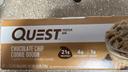
How to spot them. The "Sugar alcohol" label line is voluntary unless the package makes a sugar claim (21 CFR 101.9 (opens in a new tab)), so scan ingredients for "-itol" words. Quest Chocolate Chip Cookie Dough lists erythritol, stevia and sucralose; one Open Food Facts record shows 6 g of polyols per bar (opens in a new tab).
Erythritol and heart health. In a 2023 Nature Medicine study, people with higher blood erythritol had more heart attacks, strokes and deaths over three years (Witkowski et al. (opens in a new tab)). It is an observational association in people already at higher cardiac risk and does not prove cause, but it argues against large daily amounts.
Allulose. FDA lets brands leave allulose out of Total and Added Sugars (FDA guidance (opens in a new tab)), so a "1 g sugar" bar may still hold several grams of it.
The 2025–2030 Dietary Guidelines also advise limiting nonnutritive sweeteners. To avoid sweeteners entirely, for yourself or a child, pick date-sweetened bars (RXBAR, Larabar) or a bar with modest added sugar (the KIND bar below).
Sodium: usually modest, but check
FDA calls 5% of the Daily Value (115 mg) or less per serving low and 20% (460 mg) or more high (FDA: Sodium in Your Diet (opens in a new tab)). The five bars in our table run from 10 to about 220 mg. Check savory and meat-based bars closely; if you watch your blood pressure, favor 5% DV or less.
Ultra-processing
Using the NOVA classification, 88% of rated bars in our dataset were group 4, ultra-processed. Typical markers are protein isolates, added fibers, sugar alcohols, emulsifiers and flavorings. Bars based on nuts, dates and egg whites, such as RXBAR and Larabar, are NOVA group 3 in Open Food Facts but usually lower in protein.
Calories
Many bars carry 230 to 300 calories, like a full-size candy bar: fine as a meal bridge or post-workout snack, easy to overdo as a "light" one.
Is it OK to eat a protein bar every day?
For most healthy adults, yes, one good bar a day is fine. The concerns are cumulative:
- Two or three bars a day can mean a lot of sugar alcohols or added fiber, which commonly causes gas and bloating.
- Daily bars crowd out whole foods, like the potassium in fruit or the varied fiber in vegetables and legumes.
- Rotating protein sources (yogurt, eggs, edamame, tuna, jerky) gives a broader nutrient profile than any single bar.
If you eat one daily, make it a bar that passes the checklist below.
Are protein bars good for weight loss?
They help if they replace a less filling snack, not if added on top. Protein is the most satiating macronutrient, so a 190-calorie bar with 21 g of protein will hold you longer than 190 calories of crackers. But a 280-calorie bar with 17 g of sugar is not a diet food. For weight loss, look for bars under 220 calories with 15 g+ of protein, or more protein-dense whole foods. See protein snacks for weight loss and our list of low-calorie high-protein snacks.
How to spot a healthy protein bar
Run any bar through these six checks:
- Protein: 10 g or more. 15 to 20 g is better if the bar is your main snack.
- Protein density: 7 g or more per 100 calories. Protein ÷ calories × 100. Explained in protein per 100 calories.
- Added sugar: under 8 g. Under 5 g is better. Check "Includes Xg Added Sugars," not just total sugar.
- Fiber: 3 g or more. 10 g+ usually means isolated fibers (chicory root, polydextrose, soluble corn fiber) that can bloat.
- Sweeteners: know what replaced the sugar. Scan for "-itol" words, allulose, sucralose and stevia. Maltitol affects blood sugar most; erythritol barely does.
- Protein source: complete and listed early. Whey, milk protein, egg white, soy or a pea-rice blend are good. Collagen is incomplete, so a bar built on collagen counts for less than its label suggests.
For a fuller label walk-through, including sodium, see how to choose a healthy protein snack.
How popular protein bars compare
Sorted by protein per 100 calories. Per-bar values from Open Food Facts, checked October 2026; brands reformulate, so check the package.
| Bar | Calories | Protein (g) | Protein per 100 kcal | Sugar, g (added) | Fiber (g) | Sodium (mg) | Sweetened with | NOVA | Verdict |
|---|---|---|---|---|---|---|---|---|---|
| Quest Chocolate Chip Cookie Dough (60 g) | 190 | 21 | 11.1 | 1 (0) | 12 | 220 | Erythritol, stevia, sucralose | 4 | Most protein-dense; sugar alcohols and added fiber |
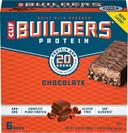
| Clif Builders Chocolate (68 g) | 280 | 20 | 7.1 | 17 (not listed) | Varies by source | 213 | Cane syrup, cane sugar, brown rice syrup | 4 | Good protein, but sugar near a candy bar |
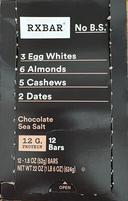
| RXBAR Chocolate Sea Salt (52 g) | 200 | 12 | 6.0 | 14 (0; sugar from dates) | 5 | 190 | Dates | 3 | Short ingredient list, no sugar alcohols |
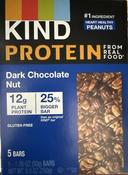
| KIND Protein Dark Chocolate Nut (50 g) | 240 | 12 | 5.0 | 8 (6) | 5 | 125 | Glucose syrup, honey, sugar | 4 | Nut-based and filling, low protein density |
| Larabar Cashew Cookie (48 g) | 230 | 4 | 1.7 | 16 (0) | 3 | 10 | Dates | 3 | Whole-food bar, not really a protein bar |
Sources: Open Food Facts records for Quest (opens in a new tab), Clif Builders (opens in a new tab) (record last updated in 2021, and it does not list added sugars), RXBAR (opens in a new tab), KIND (opens in a new tab) and Larabar (opens in a new tab).
Honest notes on the "watch out" bars. Clif Builders has 20 g of protein, but at 17 g of sugar it suits a long workout better than everyday snacking. Larabar is a fine fruit-and-nut snack, but 4 g of protein keeps it off a high-protein shortlist. Quest is the most protein-dense, though people sensitive to sugar alcohols or added fibers may not tolerate it well. RXBAR lists no sugar alcohols or high-intensity sweeteners and has 0 g added sugar on the current US label; its sugar comes from dates, but 14 g is still a lot for a 200-calorie bar.
Compare more options in protein bars by protein per calorie, our low-sugar protein snacks list, and plant-based choices among vegan protein snacks.
Frequently asked questions
Is it bad to eat a protein bar every day?
Not for most healthy people, if the bar is a good one. One bar a day with at least 10 grams of protein, under 8 grams of added sugar and some fiber can fit a balanced diet. Problems arise when bars replace whole foods several times a day, or when daily bars are high-sugar or heavy in sugar alcohols.
Do protein bars make you gain weight?
Only if they add calories you would not otherwise eat. Many bars carry 200 to 300 calories, about the same as a candy bar. Eaten on top of regular meals and snacks, that can lead to weight gain. Used to replace a less filling snack, a high-protein, lower-calorie bar can support weight control.
Can a protein bar replace a meal?
Occasionally, in a pinch. Most bars provide 200 to 300 calories and lack the vegetables, fruit, whole grains and range of micronutrients a meal should supply. If you must, choose a bar with 15 to 20 grams of protein and at least 5 grams of fiber, and add a piece of fruit or a glass of milk.
Why do protein bars make me bloated?
Common culprits are sugar alcohols such as erythritol, maltitol and sorbitol, and added fibers such as chicory root (inulin), polydextrose or soluble corn fiber. These reach the large intestine partly undigested, where gut bacteria ferment them and produce gas. Smaller portions, or bars without these ingredients, usually help sensitive people.
Are protein bars ultra-processed?
Most are. In our analysis of 2,102 US Open Food Facts records for protein bars, 88 percent of those with a NOVA rating were classified as group 4, ultra-processed. Bars made mostly from nuts, dates and egg whites tend to score lower. Ultra-processed does not automatically mean unhealthy, but it is worth limiting.
Are protein bars high in sodium?
Usually not. The five bars we compare range from about 10 to 220 milligrams of sodium per bar, at most around 10 percent of the 2,300 mg Daily Value. FDA treats 20 percent or more per serving as high. Savory and meat-based bars can run higher, so check the %DV on the label.
Sources
- Dietary Guidelines for Americans 2025–2030 (opens in a new tab) (primary source)
- FDA: Added Sugars on the Nutrition Facts Label (opens in a new tab)
- AAFP summary of the Dietary Guidelines for Americans 2025–2030 (opens in a new tab)
- FDA: Sodium in Your Diet (opens in a new tab)
- FDA guidance on declaring allulose on Nutrition Facts labels (opens in a new tab)
- 21 CFR 184.1835, Sorbitol (opens in a new tab)
- 21 CFR 101.9, Nutrition labeling of food (opens in a new tab)
- Livesey G. Health potential of polyols as sugar replacers. Nutrition Research Reviews, 2003 (opens in a new tab)
- Witkowski M, et al. The artificial sweetener erythritol and cardiovascular event risk. Nature Medicine, 2023 (opens in a new tab)
- Cleveland Clinic: How To Choose the Best Health Bars (opens in a new tab)
- Open Food Facts (opens in a new tab) US product data: our analysis of 2,102 US Open Food Facts records for protein bars, implausible records removed.
More background reading is on our resources page.