Shop
Best Protein Powder for Baking, Plus the High-Protein Snack Pantry to Stock
By Editorial Team. Updated . 21 min read.
Store links may be affiliate links. We may earn a commission; it never changes what we recommend.
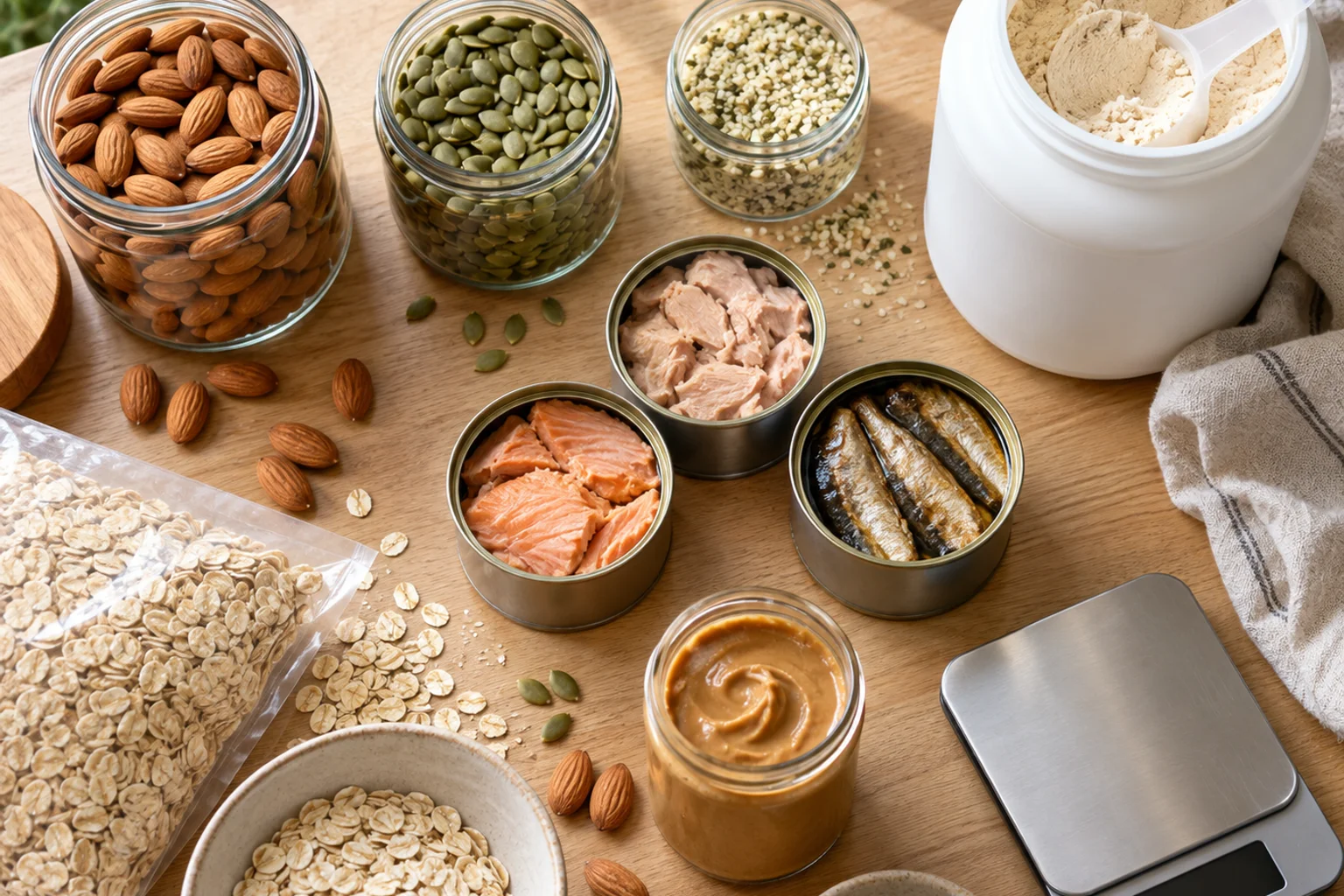
The best protein powder for baking depends on the bake: whey isolate gives chewy cookies and bars, micellar casein gives thicker, cakey results, and an unflavored pea and rice blend works for dairy-free recipes. Replace no more than about 25% of the flour with powder. A starter snack pantry needs about 12 items.
Some store links are affiliate links; we may earn a commission. It never changes what we recommend.
Key takeaways
- Swap protein powder for up to about 25% of the flour by weight, and add 1 to 2 tablespoons of liquid or fat per scoop.
- Whey bakes chewy and dissolves into wet batter, casein absorbs more liquid and bakes cakey, and pea protein needs the most added liquid.
- Isolate whey is about 90% protein or more by weight; concentrate is roughly 70 to 80%; collagen is incomplete and should not replace a complete protein.
- Pumpkin seeds (8 to 9 g per ounce) and hemp hearts (9 to 10 g) lead the nuts-and-seeds chart; almonds and pistachios have about 6 g.
- An instant-read thermometer is the one tool jerky cannot do without, because beef must reach 160°F (71°C).
- Buy powder and canned goods in bulk; buy nuts and seeds for about four weeks, because their oils go rancid.
What should a high-protein snack pantry include?
A high-protein snack pantry takes about 12 items, and most are cheap and shelf-stable: a protein powder, natural peanut butter, rolled oats, eggs, Greek yogurt, canned fish, canned chickpeas, two kinds of nuts or seeds, and a few seasonings. Every buy link below has an "Add to list" button, and we keep the advice brand-neutral. We never quote prices, because they change weekly.
Nutrition figures are estimates based on USDA FoodData Central values; your label wins whenever it disagrees.
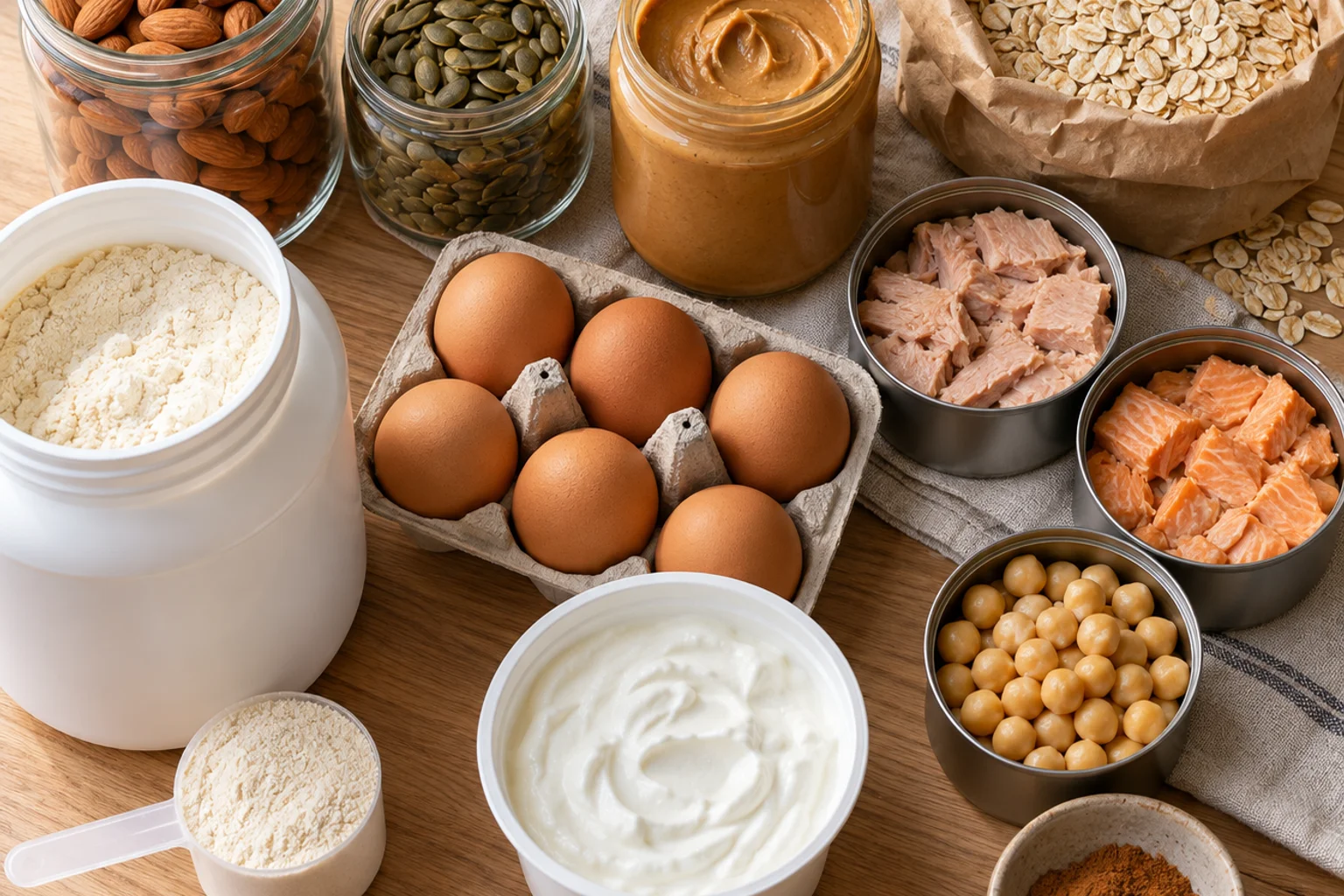
Pick the kit that matches what you want to make first and add the next later.
Starter pantry (about 12 items)
| Item | Why you want it | What to look for |
|---|---|---|
| Whey protein isolate (shop at Amazon, opens in a new tab) | Adds 20–25 g protein per scoop to bars, balls and yogurt | Unflavored or vanilla; a sweetener you tolerate; a third-party seal |
| Natural peanut butter (shop at Amazon, opens in a new tab) | Binder and protein: about 7–8 g per 2 tbsp | Ingredients: peanuts and salt, nothing else |
| Rolled oats (shop at Amazon, opens in a new tab) | Fiber and structure for bars and balls | Old-fashioned, not instant; certified gluten-free if needed |
| Large eggs (shop at Whole Foods, opens in a new tab) | About 6 g protein each for bites and hard-boiled snacks | Cartons with a pack date; refrigerated, uncracked |
| Plain nonfat Greek yogurt (shop at Whole Foods, opens in a new tab) | Dips, bark, puddings | Plain; about 15 g or more protein per cup at minimum |
| Light tuna in water (shop at Amazon, opens in a new tab) | No-cook protein: about 20 g per can | Light or skipjack; water-packed; pouches for travel |
| Canned chickpeas (shop at Amazon, opens in a new tab) | Roasting, hummus, cookie dough bites | Low sodium or no salt added; ingredients: chickpeas, water |
| Raw almonds (shop at Amazon, opens in a new tab) | Crunch and about 6 g protein per ounce | Raw or dry-roasted, no added oil; fresh smell |
| Pumpkin seeds (shop at Amazon, opens in a new tab) | About 8–9 g protein per ounce, nut-free | Shelled pepitas; no off smell |
| Honey (shop at Amazon, opens in a new tab) | Binder for balls and bars | Single ingredient; any type works |
| Ground cinnamon (shop at Amazon, opens in a new tab) | Flavor without sugar | Jar dated within the past year |
| Kosher salt (shop at Amazon, opens in a new tab) | Seasoning for every savory snack | Plain, no additives needed |
No-bake bar kit
| Item | Why you want it | What to look for |
|---|---|---|
| Casein protein (shop at Amazon, opens in a new tab) | Thickens bars and gives a dense, chewy texture | Micellar casein; plain or vanilla |
| Almond butter (shop at Amazon, opens in a new tab) | Alternative binder, about 7 g per 2 tbsp | Ingredients: almonds, maybe salt |
| Medjool dates (shop at Amazon, opens in a new tab) | Natural sweetness and stickiness | Soft, plump, pitted if you prefer |
| Protein crisps (shop at Amazon, opens in a new tab) | Crunch with added protein | Whey or soy; check protein per ounce |
| Dark chocolate chips (shop at Amazon, opens in a new tab) | Coating or mix-in | 60% cacao or more; short ingredient list |
| 8x8 baking pan (shop at Amazon, opens in a new tab) | Sets bars into even squares | Metal or glass; parchment-lined |
| Parchment paper (shop at Amazon, opens in a new tab) | Lifts bars out cleanly | Sheets or rolls |
| Cookie scoop (shop at Amazon, opens in a new tab) | Uniform protein balls | 1 tablespoon size |
Plant-based kit
| Item | Why you want it | What to look for |
|---|---|---|
| Pea protein (shop at Amazon, opens in a new tab) | Plant powder with about 20 g per scoop | Unflavored isolate; third-party tested |
| Extra-firm tofu (shop at Whole Foods, opens in a new tab) | Tofu jerky, crisp cubes | Extra- or super-firm; packed in water |
| Tempeh (shop at Whole Foods, opens in a new tab) | Whole-soybean protein, about 15–20 g per 3 oz | Firm block, even color |
| Textured vegetable protein (shop at Amazon, opens in a new tab) | Jerky-like chew, crumbles | Ingredient list: defatted soy flour only |
| Red lentils (shop at Amazon, opens in a new tab) | Quick-cooking, lentil crackers | Dry, whole, uniform color |
| Hemp hearts (shop at Amazon, opens in a new tab) | About 9–10 g protein per 3 tbsp | Light green-tan, mild nutty smell |
| Nutritional yeast (shop at Amazon, opens in a new tab) | Cheesy flavor, some protein | Fortified or unfortified; flakes |
| Roasted edamame (shop at Amazon, opens in a new tab) | Ready-to-eat crunch | Dry roasted, lightly salted |
Storage kit
| Item | Why you want it | What to look for |
|---|---|---|
| Wide-mouth mason jars (shop at Amazon, opens in a new tab) | Jerky, nuts, bar crumbs | Tight lid with a good seal |
| Glass meal-prep containers (shop at Amazon, opens in a new tab) | Fridge storage for egg bites and yogurt snacks | Lids that seal, oven-safe glass |
| Freezer bags (shop at Amazon, opens in a new tab) | Portions of bars and meat | Freezer-rated, zip-top |
| Freezer labels (shop at Amazon, opens in a new tab) | Date everything | Removable, marker included |
| Refrigerator thermometer (shop at Amazon, opens in a new tab) | Confirms 40°F (4°C) or below | Dial or digital, sits on a shelf |
| Oxygen absorbers (shop at Amazon, opens in a new tab) | Extends shelf life of dried snacks | Right size for your jar; use fresh packs |
| Food-safe desiccant packets (shop at Amazon, opens in a new tab) | Keeps dried food crisp | Labeled food safe |
| Insulated snack bag (shop at Amazon, opens in a new tab) | Carries perishables | Fits an ice pack |
For storage details, see fridge and freezer storage for protein snacks and how to preserve homemade protein snacks.
What is the best protein powder for baking?
The best protein powder for baking is the one that matches the texture you want: whey isolate for chewy cookies and bars, micellar casein for thick, cakey bakes, and an unflavored pea and rice blend for dairy-free recipes. Choose by type and label, not by the front of the tub. Unflavored or vanilla powders with a short ingredient list are the most flexible.
This is general baking guidance and our own reasoning from how these proteins behave, not the result of test batches.
| Powder type | Best for | Texture in a bake | Swap caution |
|---|---|---|---|
| Whey protein isolate (shop at Amazon, opens in a new tab) | Chewy cookies, bars, pancakes, muffins | Dissolves into wet ingredients; chewy and dense, dry if overbaked | Bake slightly cooler and shorter than the original recipe |
| Whey concentrate | Cookies and bars where a creamy taste helps | Similar to isolate, a little softer | Same as isolate; keeps a bit of fat and lactose |
| Micellar casein (shop at Amazon, opens in a new tab) | Cakes, brownies, thick batters, puddings | Absorbs more liquid; thicker, cakey, can turn dense or gummy | Add liquid or fat; do not swap one-for-one with whey |
| Egg white protein (shop at Amazon, opens in a new tab) | Dairy-free cakes, meringue-style bakes | Light and firm; foams when mixed | Fully bake it; useful with a little leavening |
| Pea protein (shop at Amazon, opens in a new tab) | Vegan cookies, brownies, banana bread | Absorbs a lot of liquid; earthy taste, can be gritty | Add 2–4 tbsp liquid per scoop and pair with cocoa |
| Pea and rice blend (shop at Amazon, opens in a new tab) | Vegan baking in general | Milder and more balanced than pea alone | Add liquid; finely milled blends bake smoother |
| Collagen peptides (shop at Amazon, opens in a new tab) | Not recommended as the main protein | Dissolves cleanly; adds no structure | Incomplete protein; use only as a small add-on |
Whey vs casein vs plant protein for baking
Whey protein bakes chewy and dense because it dissolves into wet ingredients, while casein protein absorbs more liquid and gives thicker, cakey results. Plant proteins such as pea and soy absorb the most liquid and can taste earthy or gritty. A common fix is a blend of whey and casein, so the dough stays soft but still holds its shape.
Is whey or casein better for baking? Neither wins every time. Pick whey for cookies and bars, casein for cake and brownie batters, and a blend if you want both. Is plant protein good for baking? It is a fair choice when you need dairy-free or vegan results; the most neutral options are unflavored pea isolate, soy protein isolate or a pea and rice blend.
Can you replace flour with protein powder?
Yes, but only partly. Protein powder has no gluten, so it cannot rebuild the structure that flour gives. A widely used rule of thumb is to replace up to about 25% of the flour by weight and to add liquid or fat to make up for the powder's dryness.
- Weigh the flour in the recipe, then remove up to 25% of it. In a recipe with 1 cup (about 120 g) of flour, that is up to 30 g, roughly one scoop of whey.
- Add the same weight of powder in place of the flour you removed.
- Add 1 to 2 tablespoons of liquid or fat per scoop of whey; use 2 to 4 tablespoons for casein or pea protein.
- Mix the powder into the wet ingredients first, then fold in the dry ones, to avoid clumps.
- Lower the oven temperature by about 25°F (14°C) and check 3 to 5 minutes early, since protein-rich batters dry out and brown faster.
Do not use powder as a flour swap in yeast bread or anything that needs a high rise.
Whey, casein, egg white, soy and plant powders in detail
Whey is the liquid left after milk is made into cheese. It is a complete protein, high in leucine, and the default for most snack recipes.
- Concentrate is roughly 70 to 80% protein by weight. It keeps a little lactose and fat, usually tastes creamier, and generally costs less per pound.
- Isolate is filtered further to about 90% protein or more with minimal lactose. It mixes thinner and is a better pick for lactose-sensitive people.
- Hydrolysate is whey that has been partly broken down for faster digestion. It tastes more bitter and costs more, and it gives no practical advantage in baking or bars.
Chocolate whey protein (shop at Amazon, opens in a new tab) works well in bars and balls where chocolate is already in the recipe. In no-bake recipes casein makes dense, clay-like doughs, so it needs more liquid or nut butter than whey.
Soy protein is a complete plant protein and the easiest plant powder to bake with. Pea protein is lower in methionine but high in lysine, and rice protein is low in lysine on its own, so it is rarely worth buying alone. A pea and rice blend combines the two amino acid profiles, which makes a blend the safest single tub for most vegans. Collagen dissolves cleanly and has no taste, but it has no tryptophan and is low in leucine, so it is an incomplete protein and a weaker trigger for muscle building than whey, soy or egg. Powdered peanut butter (defatted peanut flour) gives roughly 5 to 6 g protein in two tablespoons, but it is a flavor booster, not a complete protein powder.
In baked recipes, strongly flavored powders can turn bitter. Unflavored powder plus your own cinnamon and vanilla extract (shop at Amazon, opens in a new tab) gives more control.
How do you read a protein powder label?
To read a protein powder label, run four checks that take under a minute: protein per scoop against scoop weight, protein per 100 calories, the ingredient list, and a third-party testing seal. A tub can say 25 g protein and still be a poor value, so compare the numbers rather than the front of the tub.
1. Protein per scoop against scoop size
A scoop of pure whey isolate weighs about 28 to 33 g and gives roughly 25 g of protein. If the scoop weighs 45 g and gives 25 g, the rest is something else: sweeteners, thickeners, flavor, or cheaper carbs. Divide protein grams by scoop grams. Above 0.75 (75%) is solid for a flavored blend; unflavored isolate can reach 0.85 to 0.9.
2. Protein per 100 calories
Divide protein by calories and multiply by 100. A good whey is about 22 to 25 g protein per 100 kcal, and a result under about 15 g per 100 kcal suggests added fat or sugar. This is the same ranking we use on the site, described in how to choose a healthy protein snack and protein per 100 calories.
3. Sweeteners and other ingredients
The ingredients should be the protein, a flavor, a sweetener, and perhaps a thickener or lecithin. Common sweeteners are sucralose, stevia, monk fruit and sugar. None is dangerous at normal serving sizes, but some people have digestive trouble with sugar alcohols. Pick the one you tolerate; unflavored is the simplest for cooking.
4. Third-party testing seals
Supplements are not pre-approved by the FDA, so quality varies. Third-party programs help close the gap.
- NSF Certified for Sport tests products for a list of banned substances and checks that the label matches what is in the container. It also audits the manufacturing facility.
- Informed Choice is a similar program that tests batches for banned substances.
A seal is good evidence but not a guarantee. It tells you the sampled batch passed a defined list of tests, not that the product tastes best, is the best value, or suits your health. Check the program's own website, which lists certified products, rather than trusting a logo on the tub.
Red flags: amino spiking and proprietary blends
Amino spiking means adding cheap free amino acids such as glycine or taurine to raise the lab-measured nitrogen, and therefore the claimed protein. The label then overstates real protein. Warning signs:
- A protein number that looks too high for the scoop weight.
- Free-form amino acids listed in the ingredients of a product sold as pure protein.
- A "proprietary blend" that hides the amounts of each protein source.
- Claims like "50 g of protein per scoop" with no matching scoop size.
When in doubt, choose a clear ingredient list and a third-party seal. The NIH Office of Dietary Supplements has plain-language supplement fact sheets.
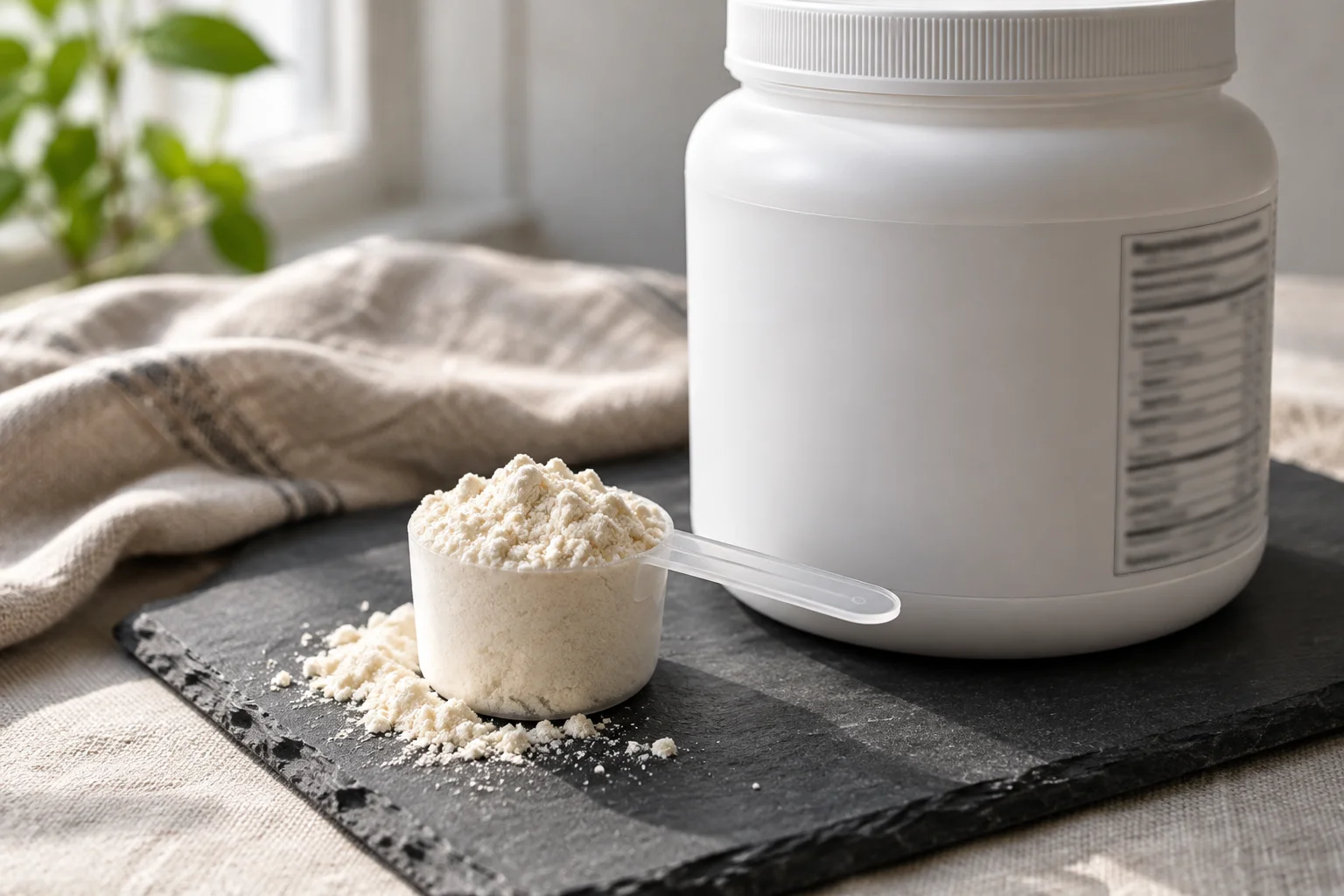
Which nuts and seeds have the most protein per ounce?
Hemp hearts and shelled pumpkin seeds have the most protein per ounce among common nuts and seeds, at about 8 to 10 g per 1 oz (28 g). Peanuts follow with about 7 g, then sunflower kernels, almonds and pistachios at about 6 g. Walnuts and cashews are lower, at 4 to 5 g. Nuts and seeds are calorie dense, so measure with a scale.
| Food (1 oz / 28 g) | Protein (about) | Notes |
|---|---|---|
| Hemp hearts (shop at Amazon, opens in a new tab) | 9–10 g | Soft, mild; sprinkle on yogurt |
| Pumpkin seeds (shop at Amazon, opens in a new tab) (shelled) | 8–9 g | Highest among the common seeds |
| Peanuts (shop at Amazon, opens in a new tab) | 7 g | A legume; cheap and filling |
| Sunflower kernels (shop at Amazon, opens in a new tab) | 6 g | Nut-free option |
| Almonds (shop at Amazon, opens in a new tab) | 6 g | Whole, raw or dry-roasted |
| Pistachios (shop at Amazon, opens in a new tab) (shelled) | 6 g | Good snack when you shell them |
| Ground flaxseed (shop at Amazon, opens in a new tab) | 5 g | Store cold to prevent rancidity |
| Cashews (shop at Amazon, opens in a new tab) | 4–5 g | Creamy; blends well |
| Chia seeds (shop at Amazon, opens in a new tab) | 4–5 g | Absorbs liquid; great in puddings |
| Walnuts (shop at Amazon, opens in a new tab) | 4 g | High in omega-3 fat |
Protein-per-ounce numbers differ between sources because of rounding and shelled versus in-shell weights, so trust the label on your bag. For sizing a portion to your goals, see how much protein a snack should have.
Nut butters: read the ingredient list
The best natural peanut butter (shop at Amazon, opens in a new tab) has two ingredients: peanuts and salt. Almond butter (shop at Amazon, opens in a new tab) and sunflower seed butter (shop at Amazon, opens in a new tab) should read the same way. Added sugar, palm oil and hydrogenated oils are common in mainstream jars and add nothing to protein. Tahini (shop at Amazon, opens in a new tab) is a good dip base with about 5 to 6 g of protein per 2 tablespoons.
Natural jars separate: oil rises to the top. Stir it back in once when you open the jar, then store it in the fridge to slow separation and rancidity.
How long do nuts and seeds last before they go rancid?
Nuts and seeds keep about 3 months in an airtight container in a cool, dark cupboard, because their oils oxidize. Rancid nuts smell like paint, old crayons or cardboard and taste bitter. Eating them is unpleasant rather than acutely dangerous, but the flavor ruins a recipe.
- For longer storage, freeze them. In the fridge, many last 6 months; in the freezer, a year.
- Walnuts, pecans, hemp hearts and ground flax spoil fastest, so store them cold.
- Smell before you buy from bulk bins and check the use-by date on packaged nuts.
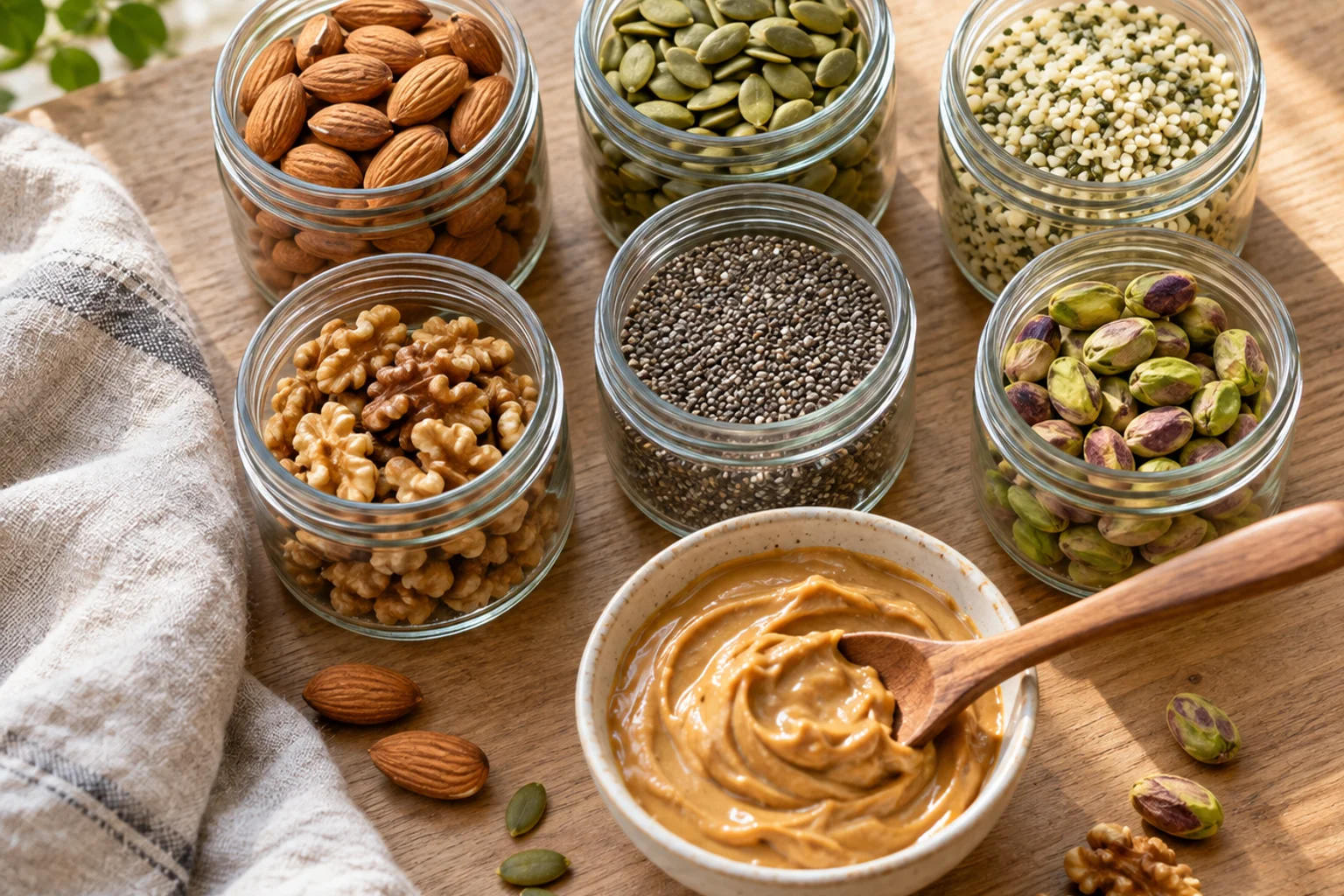
Which meat, fish, eggs and dairy should you buy?
Meat, fish, eggs and dairy are the perishable core of the pantry, so buy them last on a store trip and get them cold fast. The two-hour rule applies: do not leave them out for more than two hours, or one hour above 90°F (32°C).
Canned fish: tuna vs salmon, water or oil, cans and mercury
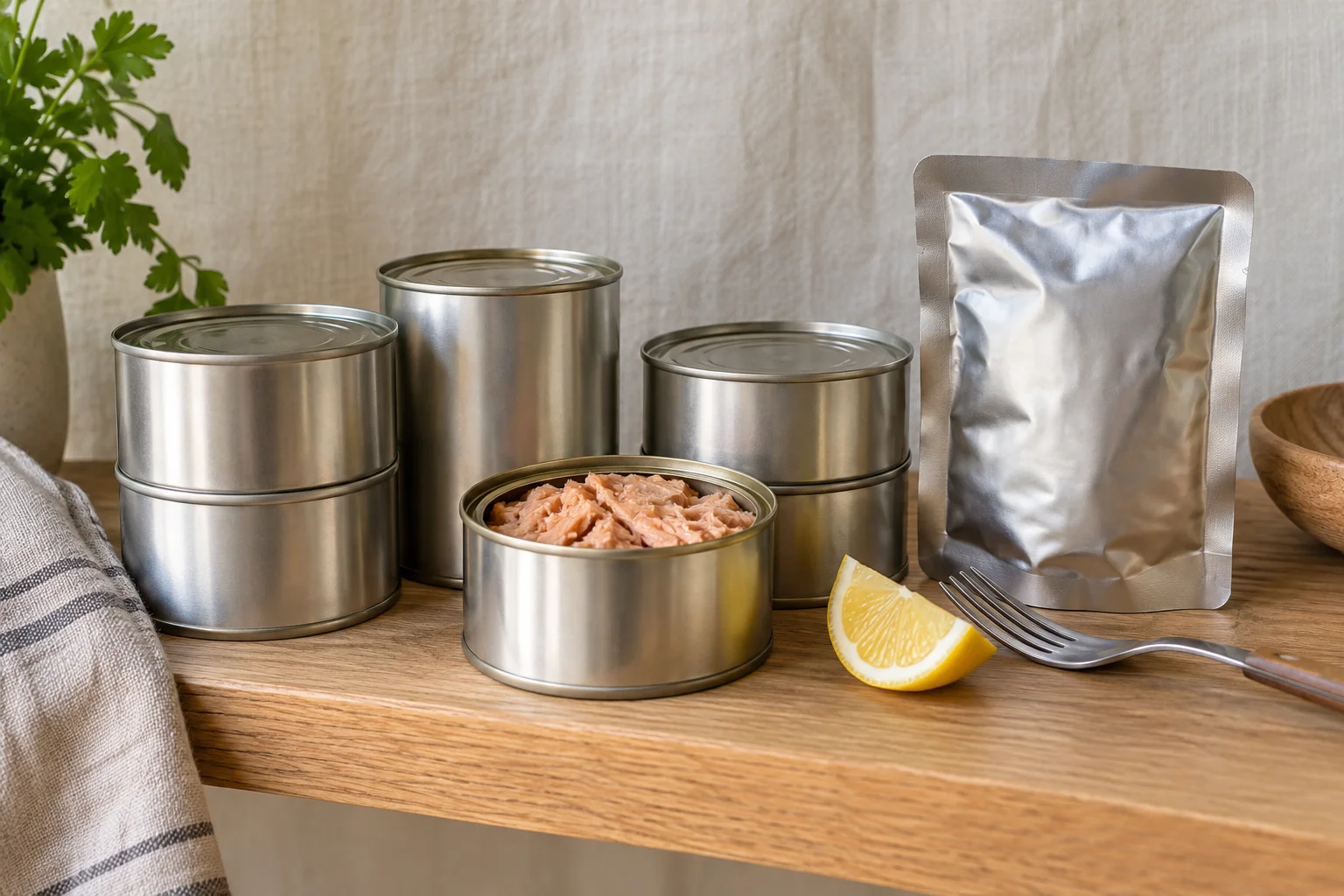
Light tuna in water (shop at Amazon, opens in a new tab), canned wild salmon (shop at Amazon, opens in a new tab) and sardines in olive oil (shop at Amazon, opens in a new tab) are the cheapest ready-to-eat proteins you can buy.
Canned tuna and canned salmon are close in protein, about 17 to 22 g per 3 oz (85 g) of drained fish. Tuna is usually leaner, and salmon has more fat and more omega-3 fatty acids. Per-can protein depends on drained weight and can size, so read the grams per serving, and check whether the serving is drained fish or the whole can.
- Water versus oil: water-packed light tuna is leaner, with about 20 g protein and under 120 calories per 5 oz can. Oil-packed is richer and keeps more omega-3 fats when the fish is naturally fatty, such as sardines. Olive oil is fine; drain it if you are counting calories.
- Cans and BPA: some can linings have contained bisphenol A. Many manufacturers now advertise BPA-free linings, and pouches avoid the question and travel well.
- Salt: choose "no salt added" or low sodium if you eat canned fish often.
- Mercury: the FDA and EPA advice about eating fish groups canned light tuna (mostly skipjack) among the "Best Choices," about 2 to 3 servings a week. Albacore (white) tuna and yellowfin are "Good Choices," about 1 serving a week, because they contain more mercury. A serving is about 4 ounces (113 g). Salmon and sardines are low in mercury. Pregnant or breastfeeding people and young children should follow the FDA chart directly.
Eggs
Large eggs (shop at Whole Foods, opens in a new tab) give about 6 g of protein each. Buy cartons kept in the refrigerated case, check the pack date, and open the carton to be sure none are cracked. Store eggs at or below 40°F (4°C). Liquid egg whites (shop at Whole Foods, opens in a new tab) add protein with almost no fat; look for pasteurized and a single ingredient.
Greek yogurt, skyr and cottage cheese
Read the label in this order: ingredients, protein, sugar.
- Buy plain nonfat Greek yogurt (shop at Whole Foods, opens in a new tab) or plain skyr (shop at Whole Foods, opens in a new tab). Plain yogurt has about 0 to 9 g sugar per cup, all from milk (lactose). Flavored cups can have 15 g or more of added sugar.
- Look for at least 15 g of protein per cup; most plain Greek yogurt is about 20 to 25 g per cup.
- Low-fat cottage cheese (shop at Whole Foods, opens in a new tab) gives roughly 24 to 28 g per cup. Look for short ingredient lists and sodium under about 400 mg per half cup, as brands vary a lot.
- Other protein-rich dairy for recipes: part-skim mozzarella (shop at Whole Foods, opens in a new tab), part-skim ricotta (shop at Whole Foods, opens in a new tab), Parmigiano-Reggiano (shop at Whole Foods, opens in a new tab), sharp cheddar (shop at Whole Foods, opens in a new tab) and ultra-filtered milk (shop at Whole Foods, opens in a new tab).
Which plant proteins belong in the pantry?
Plant proteins are cheap and shelf-stable, and most are low in one or two amino acids, so vary them across the day.
- Edamame: frozen shelled edamame (shop at Whole Foods, opens in a new tab) has about 17 to 18 g protein per cup and is one of the few complete plant proteins. Dry-roasted edamame (shop at Amazon, opens in a new tab) is the ready-to-eat version.
- Tofu: extra-firm tofu (shop at Whole Foods, opens in a new tab) holds shape for baking and tofu jerky and has about 10 g protein per 3 oz. Soft and silken tofu are for blending into puddings. If the package says "super firm," it needs little or no pressing.
- Tempeh: tempeh (shop at Whole Foods, opens in a new tab) is a fermented soybean cake with a firm bite and about 15 to 20 g protein per 3 oz. Some brands include grains, so check the ingredients if you need pure soy. Steam it for 10 minutes before marinating to soften any bitterness.
- TVP: textured vegetable protein (shop at Amazon, opens in a new tab) is defatted soy flour, about 12 g protein per 1/4 cup dry. Rehydrate it in broth for jerky-style snacks.
- Lentils: red lentils (shop at Amazon, opens in a new tab) cook in about 15 minutes and give roughly 18 g protein per cooked cup.
- Chickpeas: canned chickpeas (shop at Amazon, opens in a new tab) give about 7 g per half cup. Rinse and drain to cut sodium by about 40%. Other beans, like canned black beans (shop at Amazon, opens in a new tab), work for savory dips, and hummus (shop at Whole Foods, opens in a new tab) is a ready dip.
- Nutritional yeast: nutritional yeast (shop at Amazon, opens in a new tab) adds a cheesy flavor and about 8 g protein per 1/4 cup.
What do you need to make jerky at home?
To make jerky at home you need lean meat, an instant-read thermometer, a way to dry it at a steady low temperature, and a marinade. The thermometer is the one non-negotiable item, because USDA FSIS says beef must reach 160°F (71°C) and poultry 165°F (74°C) before or at the start of drying.
| Item | Why you want it | What to look for |
|---|---|---|
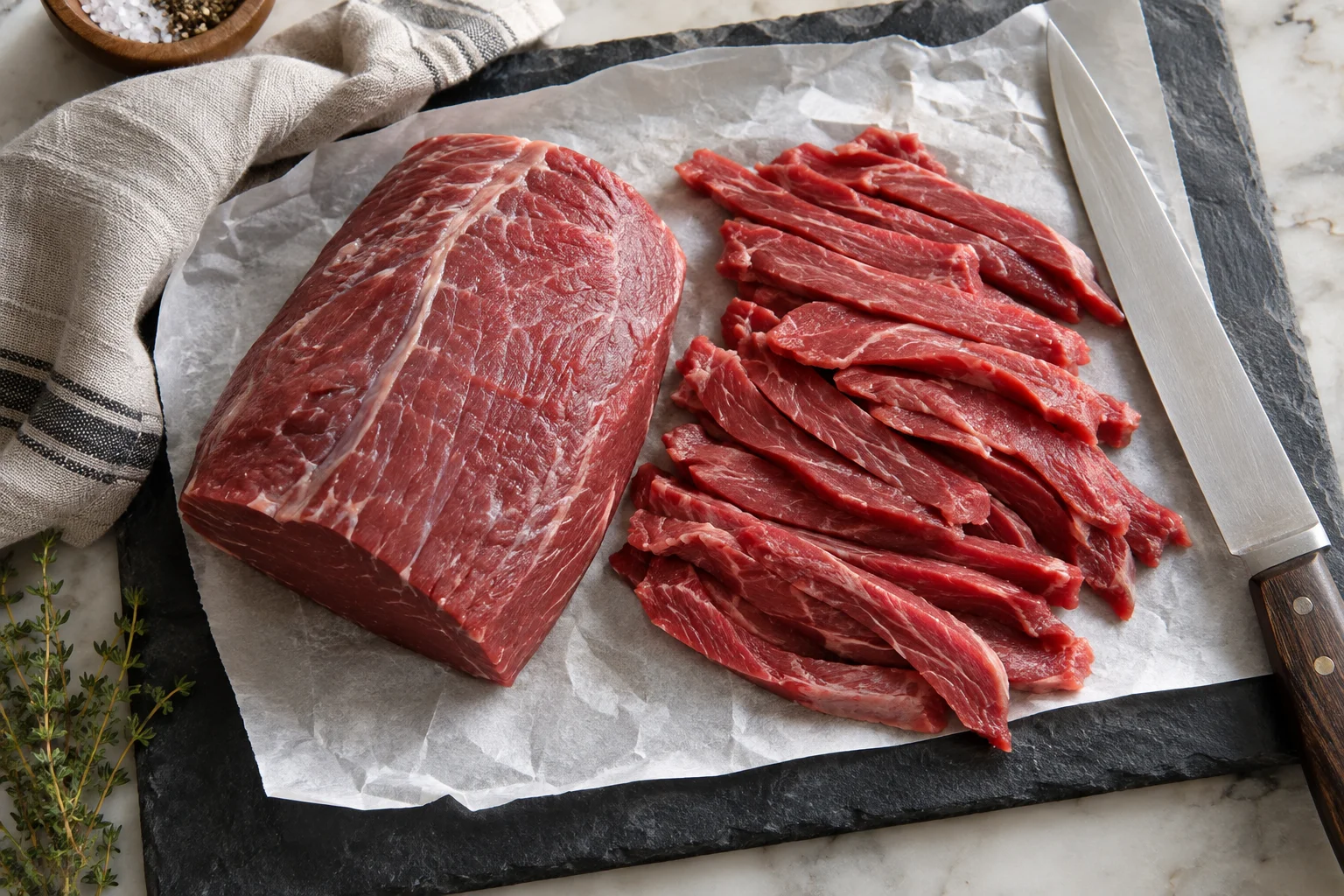
| Beef eye of round (shop at Whole Foods, opens in a new tab) | Very lean, uniform grain, slices cleanly | Trimmed, little visible fat; ask the butcher to slice |
| Instant-read thermometer (shop at Amazon, opens in a new tab) | Verifies 160°F (71°C) beef and 165°F (74°C) poultry | Reads in 2 to 5 seconds; thin probe tip |
| Dehydrator with temperature control (shop at Amazon, opens in a new tab) | Steady drying at 130–140°F (54–60°C) | Adjustable up to 160°F or more; stainless trays |
| Wire rack (shop at Amazon, opens in a new tab) | Oven-method drying that fits a half sheet | Oven-safe, not plated |
| Rimmed sheet pans (shop at Amazon, opens in a new tab) | Catches drips, holds the rack | Heavy-gauge aluminum, no warping |
| Low-sodium tamari (shop at Amazon, opens in a new tab) | Marinade base | Low sodium; tamari if you need gluten-free |
| Smoked paprika (shop at Amazon, opens in a new tab) | Smoke flavor without liquid smoke | Deep red, fragrant |
| Jerky gun (shop at Amazon, opens in a new tab) | Shapes ground-meat jerky | Only if you plan to make ground jerky |
Choose cuts with little fat, because fat turns rancid during storage. Top round (shop at Whole Foods, opens in a new tab) works as well as eye of round. For ground jerky, use 93% lean ground beef (shop at Whole Foods, opens in a new tab) or 99% lean ground turkey (shop at Whole Foods, opens in a new tab). Turkey breast cutlets (shop at Whole Foods, opens in a new tab) and boneless skinless chicken breast (shop at Whole Foods, opens in a new tab) work for poultry jerky and need to reach 165°F (74°C).
Ask the butcher to slice the roast 1/8 to 1/4 inch (3 to 6 mm) thick across or with the grain. A butcher with a slicer will do it in a minute and save you the hard part. If you slice at home, freeze the meat for about 30 minutes first. For method and temperatures, see homemade beef jerky in 2 hours.
Which kitchen tools are worth buying and which can you skip?
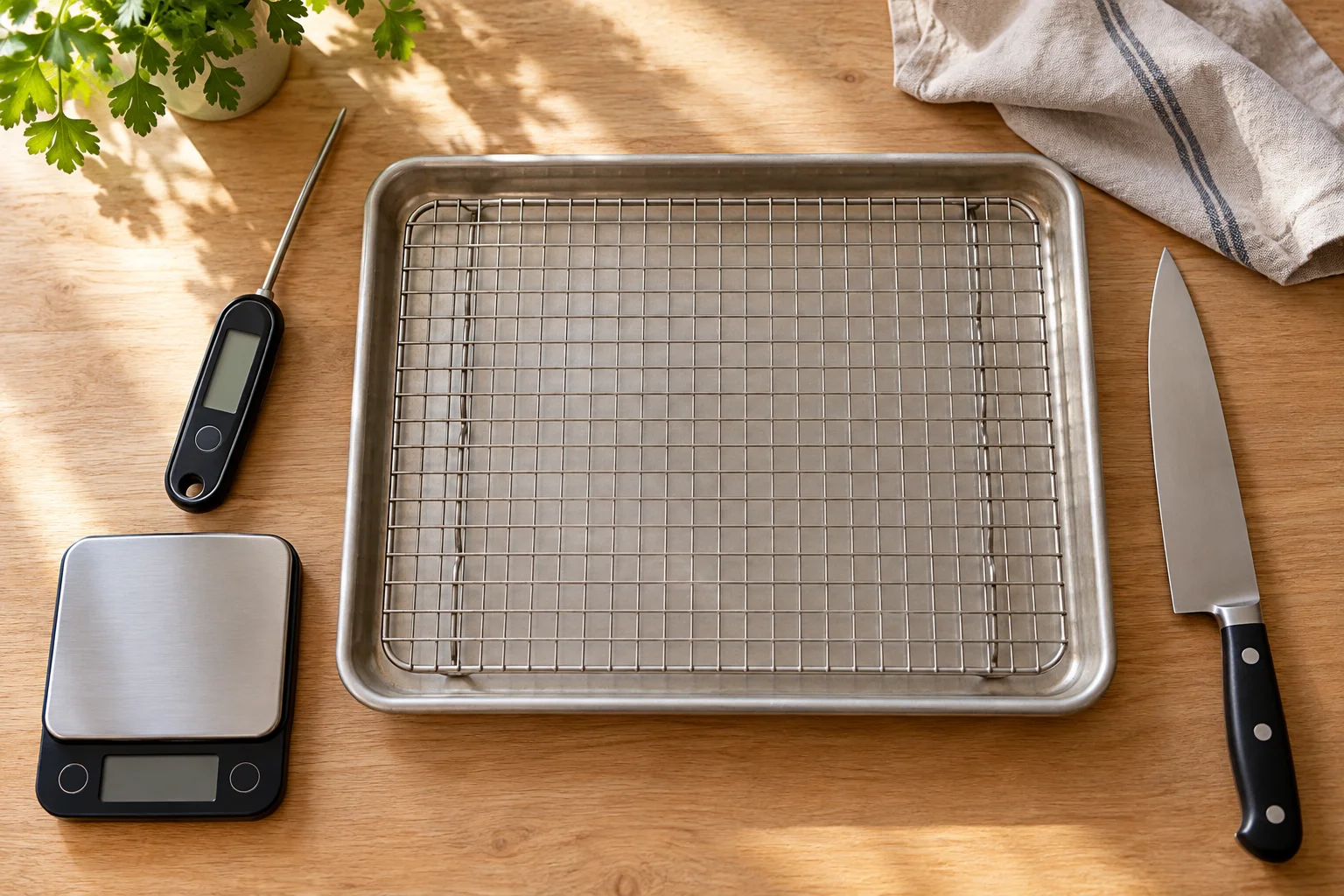
Spend money in this order: thermometer, scale, then everything else. The thermometer and scale cost little, while a dehydrator or vacuum sealer only pays off once you make the same snack regularly.
| Tool | Verdict | Why |
|---|---|---|
| Instant-read thermometer | Essential | It is the only way to verify 160°F (71°C) in beef or 165°F (74°C) in poultry. Safety, not guesswork. |
| Kitchen scale (shop at Amazon, opens in a new tab) | Strongly recommended | Weighing is faster and more accurate than cups, and protein math needs grams. |
| Dehydrator | Worth it for regular jerky | Pick one adjustable to 160°F or more. Most cheap fixed-temperature models run too cool for the safe approach. |
| Air fryer (shop at Amazon, opens in a new tab) | Optional | Good for roasted chickpeas and cheese crisps. A "dehydrate" setting is a bonus, but check its lowest temperature. |
| Food processor (shop at Amazon, opens in a new tab) | Worth it if you make bars | Turns dates and nuts into dough in seconds. |
| Vacuum sealer (shop at Amazon, opens in a new tab) | Wait | Great for freezer storage and bulk meat. Needs bags (shop at Amazon, opens in a new tab). Mason jars and freezer bags work well first. |
| Jerky gun | Only for ground jerky | A piping bag does the same job. |
| Meat slicer (shop at Amazon, opens in a new tab) | Skip | Your butcher or a sharp chef's knife (shop at Amazon, opens in a new tab) is enough. |
Skip jerky seasoning kits (a few spices do it) and single-purpose bar molds (a baking pan and parchment do the job).
Should you buy protein snack ingredients in bulk?
Buy protein powder, oats, dry lentils and canned fish in bulk, and buy nuts, seeds and perishables in small amounts. Powder stays stable for 12 months or longer when sealed and kept dry, while nut and seed oils go rancid in 2 to 3 months at room temperature.
| Item | Bulk verdict | Why |
|---|---|---|
| Protein powder | Good | Stable for 12 months or longer if sealed and dry; scoop with a dry spoon |
| Rolled oats, dry lentils, TVP | Good | Months to years in a cool, dry place |
| Canned fish, chickpeas, beans | Good | Shelf-stable for a year or more |
| Meat, if you freeze it in portions | Good | Keeps indefinitely at 0°F (−18°C), quality holds for months |
| Spices | Small amounts | Lose flavor in about a year |
| Nuts, seeds, nut butters | Poor | Oils go rancid in 2 to 3 months at room temperature |
| Ground flax, hemp hearts, walnuts | Poor | Spoil fastest; buy small and refrigerate |
| Greek yogurt, cottage cheese | Poor | Short fridge life; buy what you will finish |
| Fresh herbs and produce | Poor | Wilt before you use them |
A good rule is to buy powder for three months, nuts for four weeks, and perishables for the week ahead. Write the purchase date on each container with freezer labels (shop at Amazon, opens in a new tab).
Is it better to buy protein snack ingredients online or in store?
Online works well for shelf-stable and bulky goods: protein powder, oats, canned fish, seeds, spices, storage containers and tools. Prices are easy to compare, and you avoid carrying heavy boxes. In store, or delivery with refrigerated handling, works better for raw meat, fish, eggs, dairy, tofu and tempeh.
Shop in store to pick a specific cut or ask for slicing. If you order perishables online, choose a grocery service that delivers them refrigerated and put them straight in the fridge. Do not leave a delivery on the porch for more than two hours (one hour if it is above 90°F / 32°C), and check that frozen items arrive hard.
Using the shopping list on this site
Tap "Add to list" next to any item, then open your list. You can send it to Amazon (verified items go into your cart; others open as search links), to Whole Foods for fresh meat and dairy, to Instacart for delivery or pickup, or print it for a butcher or farmers' market. Search links show whatever the store ranks first, so compare the listing to the label guidance here before you check out.
How do you plan a first shopping trip?
Start with the 12-item starter pantry, add one kit for your first project, and skip gadgets until you have made three snacks.
- Add the starter pantry table to your list.
- Choose one kit for your first project: jerky, bars or plant-based snacks.
- Buy the thermometer if you plan to cook any meat.
- Start with the formula for building your own high-protein snacks.
A tub of powder, a jar of nuts, a few cans and a thermometer will already beat most store-bought options on price and protein quality.
Shop this article
83 ingredients and tools. Add them to your list, then send it to Amazon, Whole Foods or Instacart.
Protein powders
- Whey protein isolate (unflavored or vanilla)Amazon (opens in a new tab)Whole Foods (opens in a new tab)Instacart (opens in a new tab)
- Micellar casein protein powderAmazon (opens in a new tab)Whole Foods (opens in a new tab)Instacart (opens in a new tab)
- Pea protein isolateAmazon (opens in a new tab)Whole Foods (opens in a new tab)Instacart (opens in a new tab)
- Egg white protein powderAmazon (opens in a new tab)Whole Foods (opens in a new tab)Instacart (opens in a new tab)
- Plant protein blend (pea + rice)Amazon (opens in a new tab)Whole Foods (opens in a new tab)Instacart (opens in a new tab)
- Collagen peptides (unflavored)Amazon (opens in a new tab)Whole Foods (opens in a new tab)Instacart (opens in a new tab)
- Chocolate whey protein powderAmazon (opens in a new tab)Whole Foods (opens in a new tab)Instacart (opens in a new tab)
Meat & fish
- Light tuna in water (cans or pouches)Amazon (opens in a new tab)Whole Foods (opens in a new tab)Instacart (opens in a new tab)
- Canned wild salmonAmazon (opens in a new tab)Whole Foods (opens in a new tab)Instacart (opens in a new tab)
- Sardines in olive oilAmazon (opens in a new tab)Whole Foods (opens in a new tab)Instacart (opens in a new tab)
- Beef eye of round roastWhole Foods (opens in a new tab)Instacart (opens in a new tab)
- Beef top round (London broil)Whole Foods (opens in a new tab)Instacart (opens in a new tab)
- 93% lean ground beefWhole Foods (opens in a new tab)Instacart (opens in a new tab)
- 99% lean ground turkeyWhole Foods (opens in a new tab)Instacart (opens in a new tab)
- Turkey breast cutletsWhole Foods (opens in a new tab)Instacart (opens in a new tab)
- Boneless skinless chicken breastWhole Foods (opens in a new tab)Instacart (opens in a new tab)
Eggs & dairy
- Large eggsWhole Foods (opens in a new tab)Instacart (opens in a new tab)
- Plain nonfat Greek yogurtWhole Foods (opens in a new tab)Instacart (opens in a new tab)
- Liquid egg whites (carton)Whole Foods (opens in a new tab)Instacart (opens in a new tab)
- Plain skyr (Icelandic yogurt)Whole Foods (opens in a new tab)Instacart (opens in a new tab)
- Low-fat cottage cheeseWhole Foods (opens in a new tab)Instacart (opens in a new tab)
- Part-skim mozzarella (shredded or sticks)Whole Foods (opens in a new tab)Instacart (opens in a new tab)
- Part-skim ricottaWhole Foods (opens in a new tab)Instacart (opens in a new tab)
- Parmigiano-Reggiano (wedge)Whole Foods (opens in a new tab)Instacart (opens in a new tab)
- Sharp cheddar cheeseWhole Foods (opens in a new tab)Instacart (opens in a new tab)
- Milk (or ultra-filtered milk)Whole Foods (opens in a new tab)Instacart (opens in a new tab)
Beans, soy & plant protein
- Canned chickpeasAmazon (opens in a new tab)Whole Foods (opens in a new tab)Instacart (opens in a new tab)
- Extra-firm or super-firm tofuWhole Foods (opens in a new tab)Instacart (opens in a new tab)
- TempehWhole Foods (opens in a new tab)Instacart (opens in a new tab)
- Textured vegetable protein (TVP)Amazon (opens in a new tab)Whole Foods (opens in a new tab)Instacart (opens in a new tab)
- Red lentils (dry)Amazon (opens in a new tab)Whole Foods (opens in a new tab)Instacart (opens in a new tab)
- Nutritional yeastAmazon (opens in a new tab)Whole Foods (opens in a new tab)Instacart (opens in a new tab)
- Dry-roasted edamame (store-bought)Amazon (opens in a new tab)Whole Foods (opens in a new tab)Instacart (opens in a new tab)
- Frozen shelled edamameWhole Foods (opens in a new tab)Instacart (opens in a new tab)
- Canned black beansAmazon (opens in a new tab)Whole Foods (opens in a new tab)Instacart (opens in a new tab)
- HummusWhole Foods (opens in a new tab)Instacart (opens in a new tab)
Nuts, seeds & nut butters
- Natural peanut butter (peanuts + salt)Amazon (opens in a new tab)Whole Foods (opens in a new tab)Instacart (opens in a new tab)
- Raw almondsAmazon (opens in a new tab)Whole Foods (opens in a new tab)Instacart (opens in a new tab)
- Pumpkin seeds (pepitas)Amazon (opens in a new tab)Whole Foods (opens in a new tab)Instacart (opens in a new tab)
- Almond butterAmazon (opens in a new tab)Whole Foods (opens in a new tab)Instacart (opens in a new tab)
- Hemp hearts (shelled hemp seeds)Amazon (opens in a new tab)Whole Foods (opens in a new tab)Instacart (opens in a new tab)
- Dry-roasted peanuts, unsaltedAmazon (opens in a new tab)Whole Foods (opens in a new tab)Instacart (opens in a new tab)
- Sunflower seed kernelsAmazon (opens in a new tab)Whole Foods (opens in a new tab)Instacart (opens in a new tab)
- Shelled pistachiosAmazon (opens in a new tab)Whole Foods (opens in a new tab)Instacart (opens in a new tab)
- Ground flaxseedAmazon (opens in a new tab)Whole Foods (opens in a new tab)Instacart (opens in a new tab)
- Raw cashewsAmazon (opens in a new tab)Whole Foods (opens in a new tab)Instacart (opens in a new tab)
- Chia seedsAmazon (opens in a new tab)Whole Foods (opens in a new tab)Instacart (opens in a new tab)
- Walnut halvesAmazon (opens in a new tab)Whole Foods (opens in a new tab)Instacart (opens in a new tab)
- Sunflower seed butter (nut-free)Amazon (opens in a new tab)Whole Foods (opens in a new tab)Instacart (opens in a new tab)
- TahiniAmazon (opens in a new tab)Whole Foods (opens in a new tab)Instacart (opens in a new tab)
Oats, grains & binders
- Old-fashioned rolled oatsAmazon (opens in a new tab)Whole Foods (opens in a new tab)Instacart (opens in a new tab)
- Whey or soy protein crispsAmazon (opens in a new tab)Whole Foods (opens in a new tab)Instacart (opens in a new tab)
Sweeteners & chocolate
- HoneyAmazon (opens in a new tab)Whole Foods (opens in a new tab)Instacart (opens in a new tab)
- Medjool datesAmazon (opens in a new tab)Whole Foods (opens in a new tab)Instacart (opens in a new tab)
- Dark chocolate chips (60%+)Amazon (opens in a new tab)Whole Foods (opens in a new tab)Instacart (opens in a new tab)
- Pure vanilla extractAmazon (opens in a new tab)Whole Foods (opens in a new tab)Instacart (opens in a new tab)
Sauces, spices & flavor
- Ground cinnamonAmazon (opens in a new tab)Whole Foods (opens in a new tab)Instacart (opens in a new tab)
- Kosher saltAmazon (opens in a new tab)Whole Foods (opens in a new tab)Instacart (opens in a new tab)
- Low-sodium soy sauce or tamariAmazon (opens in a new tab)Whole Foods (opens in a new tab)Instacart (opens in a new tab)
- Smoked paprikaAmazon (opens in a new tab)Whole Foods (opens in a new tab)Instacart (opens in a new tab)
Kitchen tools
- 8x8-inch baking panAmazon (opens in a new tab)Instacart (opens in a new tab)
- Parchment paperAmazon (opens in a new tab)Whole Foods (opens in a new tab)Instacart (opens in a new tab)
- Cookie scoop (1 tablespoon)Amazon (opens in a new tab)Instacart (opens in a new tab)
- Refrigerator/freezer thermometerAmazon (opens in a new tab)Instacart (opens in a new tab)
- Instant-read meat thermometerAmazon (opens in a new tab)Instacart (opens in a new tab)
- Food dehydrator with temperature control (to 160°F+)Amazon (opens in a new tab)Instacart (opens in a new tab)
- Oven-safe wire cooling racks (fit half-sheet)Amazon (opens in a new tab)Instacart (opens in a new tab)
- Rimmed half-sheet pansAmazon (opens in a new tab)Instacart (opens in a new tab)
- Jerky gun (for ground-meat jerky)Amazon (opens in a new tab)Instacart (opens in a new tab)
- Digital kitchen scale (grams)Amazon (opens in a new tab)Instacart (opens in a new tab)
- Air fryer (with dehydrate setting)Amazon (opens in a new tab)Instacart (opens in a new tab)
- Food processorAmazon (opens in a new tab)Instacart (opens in a new tab)
- Electric meat slicer (optional)Amazon (opens in a new tab)Instacart (opens in a new tab)
- Sharp chef's knife or slicing knifeAmazon (opens in a new tab)Instacart (opens in a new tab)
Storage & preserving supplies
- Wide-mouth mason jarsAmazon (opens in a new tab)Instacart (opens in a new tab)
- Glass meal-prep containers with lidsAmazon (opens in a new tab)Instacart (opens in a new tab)
- Zip-top freezer bagsAmazon (opens in a new tab)Whole Foods (opens in a new tab)Instacart (opens in a new tab)
- Freezer labels and markerAmazon (opens in a new tab)Instacart (opens in a new tab)
- Oxygen absorbers (100–300 cc)Amazon (opens in a new tab)Instacart (opens in a new tab)
- Food-safe silica gel desiccant packetsAmazon (opens in a new tab)Instacart (opens in a new tab)
- Insulated snack bag with ice packAmazon (opens in a new tab)Instacart (opens in a new tab)
- Vacuum sealerAmazon (opens in a new tab)Instacart (opens in a new tab)
- Vacuum sealer bags/rollsAmazon (opens in a new tab)Instacart (opens in a new tab)
Frequently asked questions
Is pea protein powder good for baking?
Yes, with limits. Unflavored pea protein isolate is the most neutral plant option and soaks up a lot of liquid, so add 2 to 4 extra tablespoons of milk or water per scoop. It tastes earthy, so pair it with cocoa, peanut butter or cinnamon, and use a pea and rice blend for a more balanced amino acid profile.
Do pumpkin seeds have more protein than almonds?
Yes. Shelled pumpkin seeds have about 8 to 9 g of protein per ounce (28 g), while almonds have about 6 g. Hemp hearts are slightly higher at 9 to 10 g per ounce. Almonds are lower in protein per calorie, but they add vitamin E and crunch, so many people keep both in the pantry.
Does canned tuna have more protein than canned salmon?
They are close. Both give roughly 17 to 22 g of protein per 3 oz (85 g) of drained fish, and tuna in water is usually leaner. Salmon has more fat and more omega-3s. Per-can protein depends on drained weight and can size, so compare the label's grams of protein per serving.
Do you need a vacuum sealer to store homemade snacks?
No. Wide-mouth mason jars, freezer bags with the air pressed out and a few oxygen absorbers handle most snacks for weeks or months. A vacuum sealer pays off mainly for bulk meat in the freezer, where removing air limits freezer burn. Buy one after you have made three or four batches.
Whey isolate or concentrate: which should I buy?
Isolate is about 90% protein or more by weight with very little lactose, so it suits lactose-sensitive people and gives more protein per scoop. Concentrate is roughly 70 to 80% protein, usually tastes creamier, and costs less per gram. Both are complete proteins, so either works in no-bake recipes.
How do I know a protein powder is safe and accurately labeled?
Look for a third-party seal such as NSF Certified for Sport or Informed Choice, which test for banned substances and label accuracy. Seals reduce risk but are not a guarantee. Be wary of long proprietary blends, a protein number that seems too high for the scoop weight, and added single amino acids.
Why does protein powder taste chalky, and how do I fix it?
Chalkiness comes from coarse particles, little fat and some plant proteins. Pick a finely milled whey isolate or a blend, mix the powder into wet ingredients before adding dry ones, and add fat from nut butter, yogurt or banana. Letting batter or dough rest 10 minutes also softens the texture.
Is collagen powder a good protein source for snacks?
Not as a main source. Collagen lacks tryptophan and is low in leucine, so it is an incomplete protein and less effective than whey, soy or egg for muscle building. It dissolves easily and is fine as an add-on, but do not use it to replace the protein powder in a recipe.
Sources
- FDA and EPA: Advice About Eating Fish (opens in a new tab)
- NIH Office of Dietary Supplements: Dietary Supplement Fact Sheets (opens in a new tab)
- USDA FoodData Central (opens in a new tab)
- NSF Certified for Sport (opens in a new tab)
- USDA FSIS: Jerky and Food Safety (opens in a new tab)
More reading on protein, sugar and snack labels is collected on our resources page.