Start here
Homemade High-Protein Snacks: The Mix-and-Match Formula and 20 Easy Combos
By Editorial Team. Updated . 23 min read. 4 recipes, each under 2 hours.
Store links may be affiliate links. We may earn a commission; it never changes what we recommend.
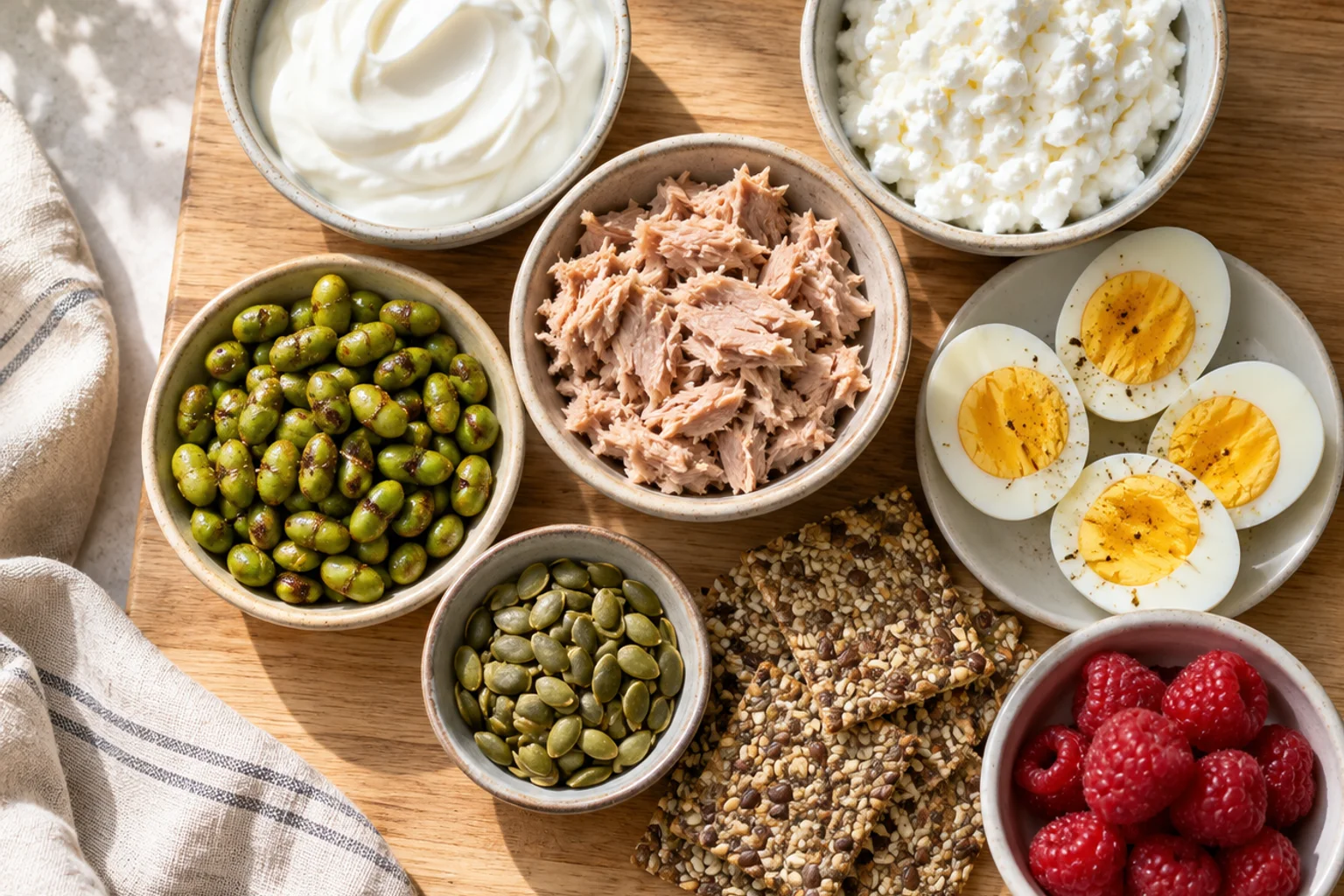
Homemade high protein snacks follow one formula: a protein anchor, a fiber or carb carrier, a little crunch or fat, and a flavor. Pick one from each part and you can build a snack with 15–25 g of protein in under 10 minutes, often with no cooking. Below are the numbers, 20 combos and four recipes.
The 15–25 g range in this guide is a target for homemade snacks. It is separate from the site's method for rating packaged snacks, which uses its own per-serving limits; see how to choose a healthy protein snack.
Key takeaways
- Homemade high protein snacks combine four parts: protein anchor, fiber or carb carrier, crunch or fat, and flavor.
- The target for a homemade snack is 15–25 g of protein, at least 3 g of fiber and about 150–300 calories.
- The best anchors give 17–22 g of protein per 100 calories: liquid egg whites, light tuna, deli turkey, canned chicken and Greek yogurt.
- One swap adds 8–20 g of protein to a snack you already eat, and only 2 of the 20 combos need protein powder.
- A 30-minute weekly prep session makes five snacks with 17–27 g of protein each.
- Eggs, yogurt, cottage cheese, canned fish and powder usually cost less per 20 g of protein than bars or packaged jerky.
What is the formula for homemade high protein snacks?
The formula for a homemade high protein snack has four parts: a protein anchor (15–25 g of protein), a fiber or carb carrier (3–6 g of fiber), a little fat or crunch (1–2 tablespoons), and a flavor. Choose the anchor first because it sets the protein, then add the other three.
Most snacks fail for one of two reasons. They are mostly carbohydrate (crackers, fruit, granola), so you are hungry again in an hour, or they are protein with nothing around it (a lone slice of turkey), so nobody wants to eat them twice. The formula fixes both.
| Part | Job | Typical amount | Examples |
|---|---|---|---|
| Protein anchor | Fullness and the protein number | 15–25 g protein | Greek yogurt, cottage cheese, tuna, eggs, whey |
| Fiber or carb carrier | Slows digestion, adds volume | 3–6 g fiber | Berries, cucumber, seed crackers, oats, edamame |
| Fat or crunch | Texture and staying power | 1–2 tablespoons | Pumpkin seeds, almonds, hemp hearts, olive oil |
| Flavor | Makes you want it again | A spoonful or a pinch | Cinnamon, everything seasoning, Dijon, honey, hot sauce |
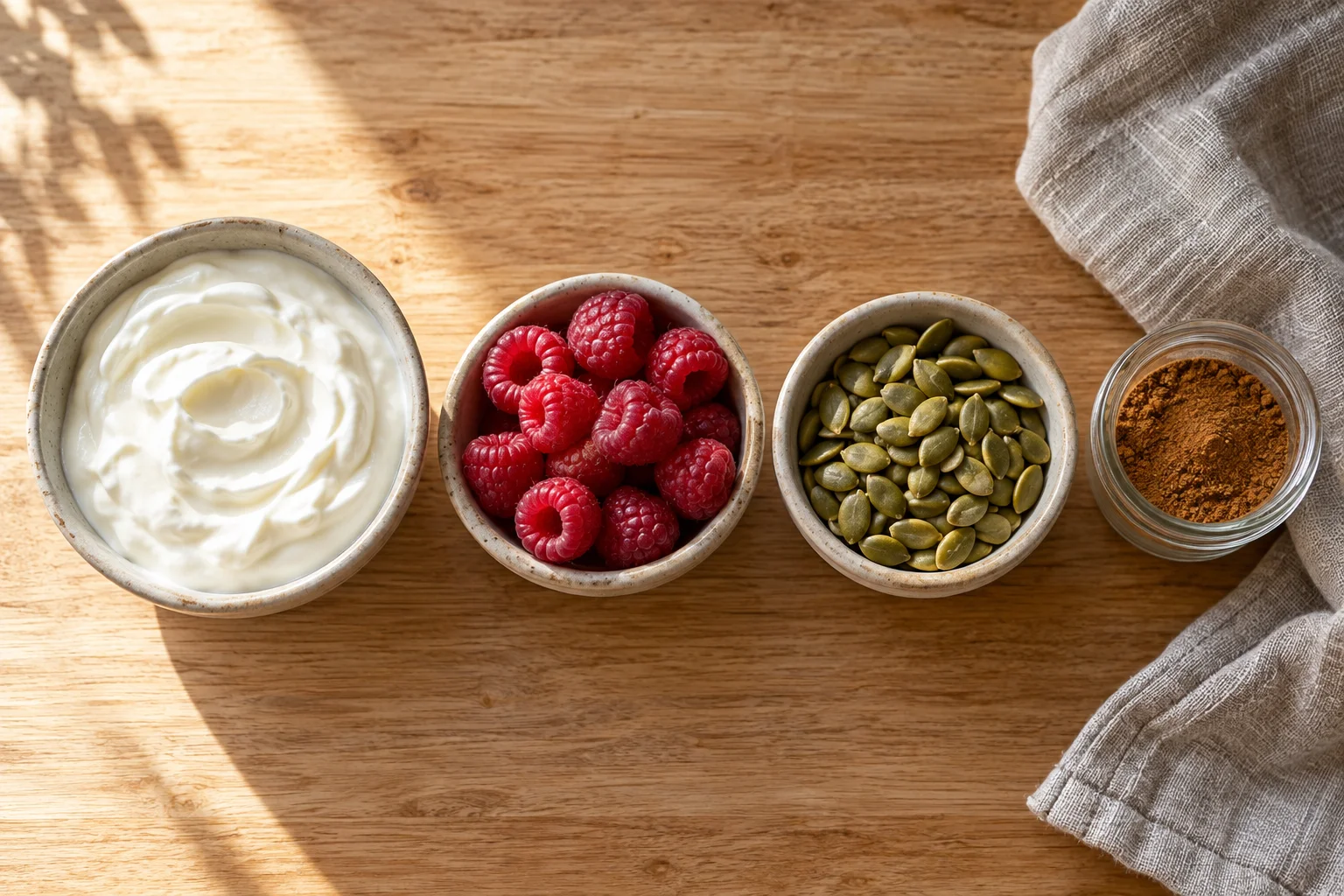
Read the table as a build order. Pick a carrier that suits your mood, add a small amount of crunch or fat, and finish with flavor. A bowl of yogurt, berries, pumpkin seeds and cinnamon follows the formula. So does canned tuna on cucumber rounds with Dijon and a few seed crackers.
Why does each part of the formula matter?
Each part of the formula covers a gap the others leave. The anchor supplies protein and fullness, the carrier adds fiber and volume, crunch or fat adds texture and staying power, and flavor decides whether you make the snack again. Leave one out and the snack usually ends up too light or too dull to repeat.
The protein anchor: fullness and protein per 100 calories
Protein is the most filling macronutrient per calorie, and it takes more energy to digest than carbohydrate or fat. A snack with 15–25 g of protein tends to hold you longer than a 200-calorie snack with 3 g. Our guide on how much protein a snack should have covers the research; the working range here is 15–25 g.
Protein per 100 calories is grams of protein divided by calories, times 100. Greek yogurt at about 17 g of protein for 100 calories scores 17. A handful of almonds scores about 4. The protein per 100 calories guide explains the math. A score above 10 makes a solid anchor, and above 15 an excellent one.
The fiber or carb carrier: steadier blood sugar
Fiber-rich foods slow how fast a meal leaves your stomach and soften the blood sugar rise that follows carbohydrate. Fruit, vegetables, beans, oats and seed crackers are the easiest carriers. Aim for at least 3 g of fiber per snack. The carrier also adds volume, which makes a 200-calorie snack feel like more food.
Fat and crunch: texture and staying power
A tablespoon of seeds or nuts turns a soft snack into one you want to finish, and fat slows digestion further. It also adds calories fast: fat has 9 calories per gram versus 4 for protein and carbohydrate. Measure it. One tablespoon of pumpkin seeds is about 50 calories, and a "handful" can quietly become 200.
Flavor: the part that decides whether you repeat it
Cinnamon, everything seasoning, Dijon, hot sauce, vanilla and a teaspoon of honey add almost no calories and make plain anchors taste like something. Most people skip this step, which is why plain yogurt and canned tuna get a bad reputation.
How much protein should a homemade snack have?
A homemade snack should have about 15–25 g of protein, at least 3 g of fiber and roughly 150–300 calories. Those figures are a target for homemade snacks, not the site's healthy-snack criteria. Smaller eaters and kids can aim for 8–12 g of protein.
Targets for homemade snacks:
- About 150–300 calories
- At least 15 g of protein (15–25 g is the range to aim for)
- At least 3 g of fiber
- 8 g or more of protein per 100 calories for the whole snack, and 15 g or more for the anchor alone
The site's method for packaged snacks works per serving: 10 g or more of protein, under 200 calories, 5 g or less of total sugar, 3 g or more of fiber and under 400 mg of sodium, ranked by grams of protein per 100 calories. A homemade snack built for 15–25 g of protein often runs 200–300 calories, so it will not always pass the under-200 cut. Use the homemade target to build a snack and the site method to judge a packaged one.
A post-workout snack can run higher in carbohydrate and calories (see post-workout protein snacks), and a calorie-restricted plan may land at the low end (see low-calorie high-protein snacks).
Which protein anchors give the most protein per 100 calories?
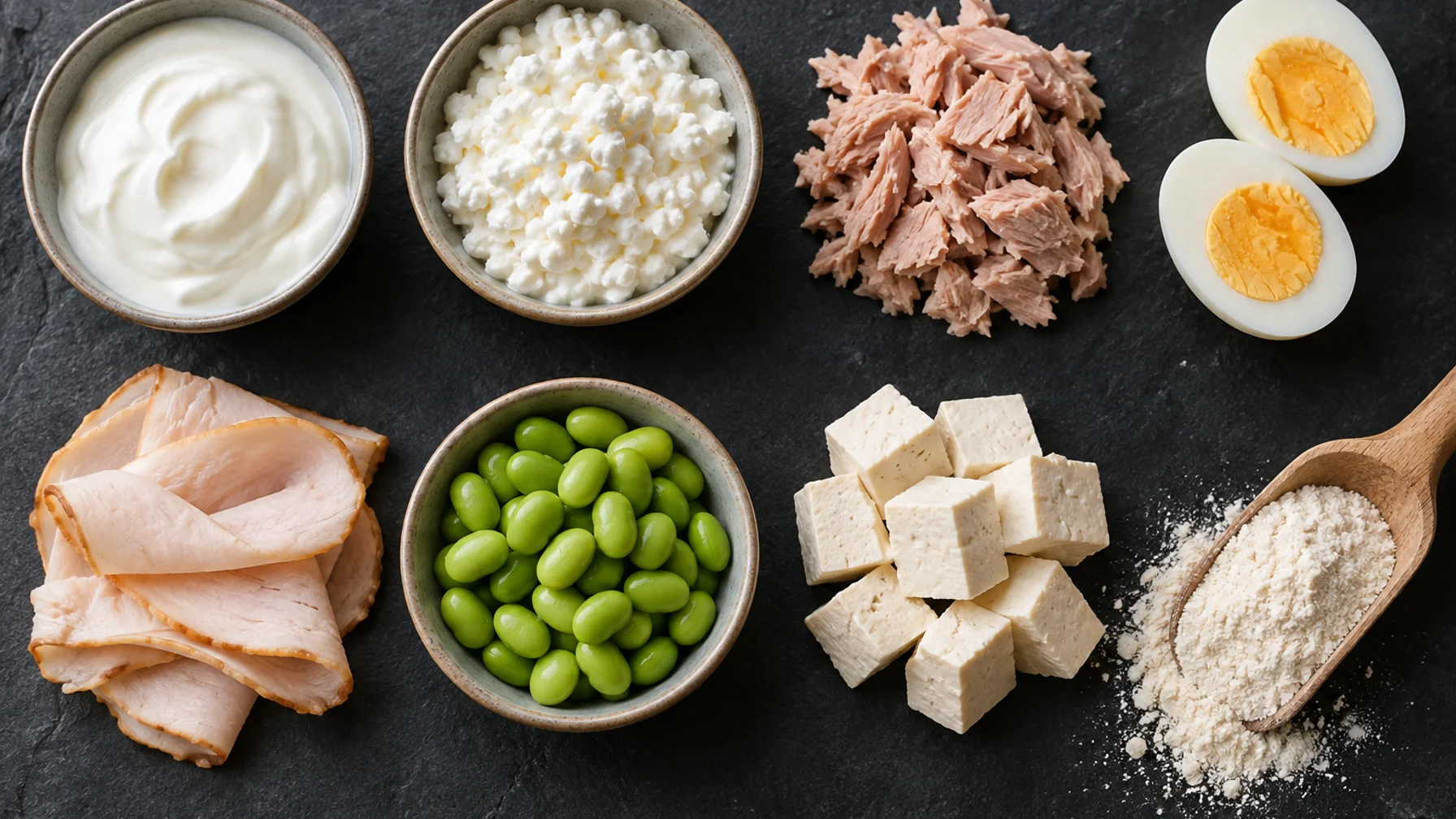
Liquid egg whites, light tuna, deli turkey, canned chicken and Greek yogurt give 17–22 g of protein per 100 calories, with whey isolate (23) and collagen (26) higher still. Skyr and canned salmon follow at 14–15. Pick your anchor from this list and a 15–25 g snack stays modest in calories.
Values are estimates rounded from USDA FoodData Central entries for plain, unflavored versions, so check your own label. Protein per 100 calories is rounded to the nearest whole number. A few notes on reading the table:
- Collagen has the highest ratio but is an incomplete protein. It lacks tryptophan and is low in other essential amino acids, so it supports a snack and should not be the only protein in it.
- Hemp hearts, pumpkin seeds and chickpeas work better as the crunch or carrier than as the anchor, because their protein per calorie is low.
- Whey, casein and pea protein are the cheapest way to reach 25 g, and they stir into almost anything. Whey dissolves quickly, casein thickens into pudding, and pea protein suits plant-based diets.
- Quark, a fresh dairy cheese similar to skyr, works like Greek yogurt in these combos. Check its label for protein.
- Jerky is convenient but only middling at about 10 g per 100 calories, and its sodium adds up fast. Making your own gives you control; see homemade beef jerky in 2 hours.
How do you mix and match anchors into sweet, savory, crunchy or creamy snacks?
A mix-and-match matrix pairs each protein anchor with a flavor direction. Read across a row to see how one anchor can turn sweet, savory, crunchy or creamy, then change only one column at a time while you experiment so you can tell what worked.
| Anchor | Sweet | Savory | Crunchy | Creamy |
|---|---|---|---|---|
| Greek yogurt or skyr | Berries, cinnamon, a teaspoon of honey | Cucumber, garlic powder, olive oil, black pepper | Pumpkin seeds, protein crisps, freeze-dried berries | Stir in 1/2 scoop whey; chia pudding |
| Cottage cheese | Raspberries, cinnamon, rolled oats | Cherry tomatoes, everything seasoning | Seed crackers, rice cakes | Blend smooth with ranch seasoning |
| Eggs or egg whites | Egg-white oatmeal with cinnamon | Hard-boiled with everything seasoning | Crackers, raw bell pepper strips | Mash with Greek yogurt and Dijon |
| Tuna, salmon or canned chicken | Rarely sweet; try apple slices with Dijon for a sweet-tart bite | Dijon, lemon, black pepper, celery | Cucumber rounds, mini peppers, crackers | Greek yogurt or hummus binder |
| Deli turkey or jerky | Apple slices with turkey and a dab of mustard | Roll around string cheese or hummus | Almonds, snap peas | Wrap around a thin layer of cottage cheese |
| Edamame, tofu or tempeh | Cinnamon-roasted tofu cubes | Chili-lime seasoning, tamari, sriracha | Roasted edamame, sunflower seeds | Blended tofu dip with tahini |
| Protein powder | Chocolate casein pudding, banana shake | Unflavored pea protein in a savory yogurt dip | Protein crisps mixed in | Shaken with milk; whipped into yogurt |
| Cheese | Mozzarella stick with fruit | Cheddar cubes with tomatoes | Parmesan shards with crackers | Ricotta with honey and cinnamon |
If a combination tastes flat, it almost always needs acid (lemon, vinegar, mustard) or salt for savory snacks, or cinnamon and vanilla for sweet ones. Smoked salmon swaps in for canned salmon in the savory column if you want a richer taste, though it is saltier.
How do you add protein to snacks you already eat?
Most snacks gain 8–20 g of protein from one swap: whey stirred into yogurt, egg whites in batter, cottage cheese blended smooth, hemp hearts on top, or Greek yogurt in place of sour cream or mayo. Protein powder is optional here, since four of these five swaps use whole foods.
Stir powder into yogurt without clumps. Put the powder in the bowl first, add 2 tablespoons of yogurt, and mash it into a thick paste with the back of a spoon. Then fold in the rest. Dumping powder on top of a full cup is what creates dry pockets. Half a scoop (15 g) of whey protein isolate (shop at Amazon, opens in a new tab) adds about 12 g of protein and barely changes the taste.
Keep whey out of boiling liquids, because hot liquid makes it curdle into clumps. Let oatmeal or soup cool to warm first, then whisk the powder into a little cool milk or water before stirring it in.
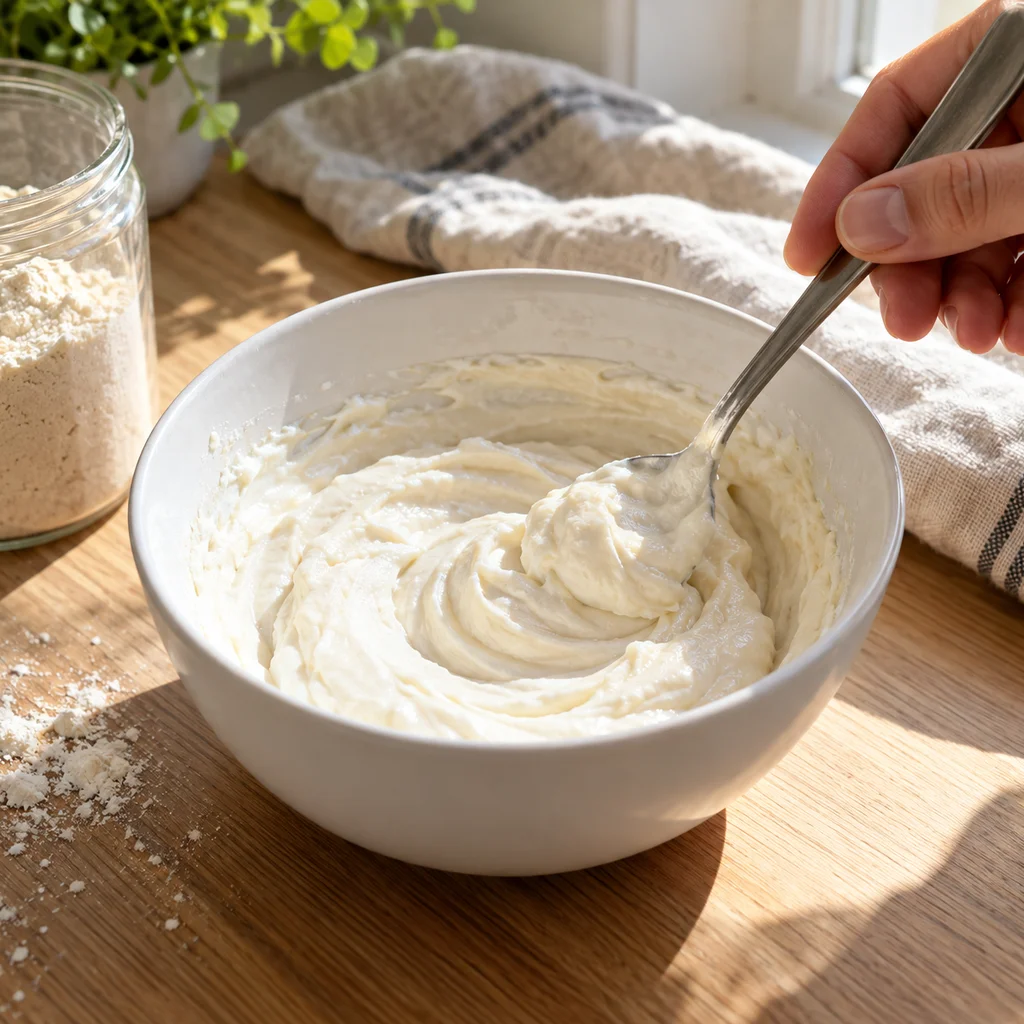
Swap part of the flour for oat flour and whey. In pancakes, muffins or no-bake bars, replace up to a quarter of the flour by weight with whey, and use oat flour (shop at Amazon, opens in a new tab) for the rest. Whey bakes up drier, so add 1–2 tablespoons of extra liquid. Casein soaks up far more moisture, so use less of it and add more liquid.
Use egg whites in batters. Replace one whole egg with two egg whites (or 1/4 cup of liquid egg whites (shop at Whole Foods, opens in a new tab)) to add about 7 g of protein for fewer calories. Stir whites into hot oatmeal and cook for a minute to set them. Never stir raw whites into cold, uncooked snacks.
Blend cottage cheese smooth. Two minutes in a blender with a splash of milk turns cottage cheese (shop at Whole Foods, opens in a new tab) into a thick, ricotta-like cream for dips, pancake batter or a swirl in chia pudding. A 1/2 cup serving carries about 12 g of protein.
Sprinkle hemp hearts and seeds. Three tablespoons of hemp hearts (shop at Amazon, opens in a new tab) add about 10 g of protein and a mild nutty flavor to yogurt, salads, oatmeal and smoothies, with no cooking.
Swap Greek yogurt for sour cream or mayo. In dips, tuna salad and egg salad, Greek yogurt (shop at Whole Foods, opens in a new tab) gives the same creaminess with 2–3 times the protein and far fewer calories.
Add collagen to hot drinks. Collagen dissolves in hot coffee or tea without clumping, so it is the one powder that works there. It is an incomplete protein, so treat the 18 g as a top-up.
Sprinkle nutritional yeast on savory snacks. Two tablespoons add about 4–5 g of protein and a cheesy flavor to popcorn, roasted chickpeas or egg bites.
What are 20 easy high protein snacks you can make in 10 minutes?
Twenty easy high protein snacks follow the formula and take about 10 minutes or less, with 14–27 g of protein each: four sweet, four savory, four crunchy, four on-the-go and four kid-size. Amounts and totals are listed per combo, and the values are rounded estimates for comparing snacks, not for counting to the gram.
Sweet
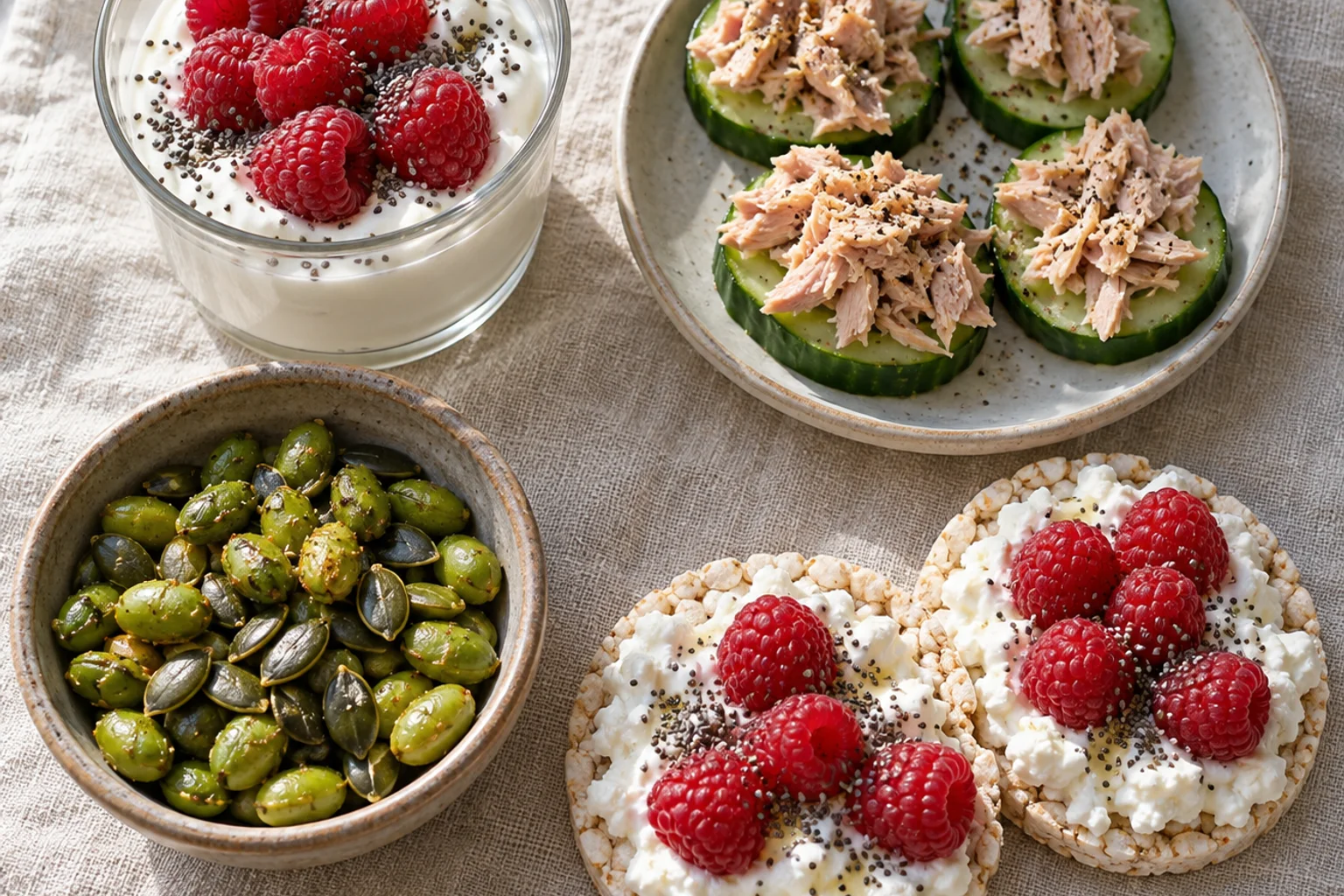
- Berry-chia yogurt cup: 3/4 cup (170 g) plain Greek yogurt (shop at Whole Foods, opens in a new tab), 1/2 cup (70 g) frozen berries (shop at Whole Foods, opens in a new tab) and 1 tablespoon chia seeds (shop at Amazon, opens in a new tab). About 19 g protein, 195 calories, 6 g fiber. Let the chia sit for 5 minutes to thicken.
- Chocolate-peanut skyr: 3/4 cup (170 g) plain skyr (shop at Whole Foods, opens in a new tab), 1 tablespoon cocoa powder (shop at Amazon, opens in a new tab), 2 tablespoons powdered peanut butter (shop at Amazon, opens in a new tab) and 1 teaspoon honey (shop at Amazon, opens in a new tab). About 24 g protein, 200 calories, 3 g fiber.
- Cinnamon-oat cottage cheese: 1/2 cup (113 g) cottage cheese, 1/4 cup (20 g) rolled oats (shop at Amazon, opens in a new tab), 1/2 cup raspberries, a shake of cinnamon (shop at Amazon, opens in a new tab) and 1 teaspoon maple syrup (shop at Amazon, opens in a new tab). Let it sit 5 minutes so the oats soften a little. About 17 g protein, 220 calories, 5 g fiber.
- Chocolate casein pudding: 1 scoop (33 g) micellar casein (shop at Amazon, opens in a new tab), 1 tablespoon cocoa, 1/3 cup (80 ml) milk (shop at Whole Foods, opens in a new tab) and 1/2 cup frozen berries. Stir for a minute until thick, then rest 5 minutes. About 27 g protein, 210 calories, 4 g fiber.
Savory
- Tuna-hummus cucumber rounds: 2.5 oz (70 g) drained light tuna (shop at Amazon, opens in a new tab), 2 tablespoons hummus (shop at Whole Foods, opens in a new tab) and 1 sliced cucumber. About 20 g protein, 170 calories, 3 g fiber.
- Everything cottage cheese bowl: 3/4 cup (170 g) cottage cheese, 1 cup cherry tomatoes, 1 teaspoon everything bagel seasoning (shop at Amazon, opens in a new tab) and 2 seed crackers (shop at Amazon, opens in a new tab). About 22 g protein, 260 calories, 4 g fiber.
- Turkey-hummus pepper roll-ups: 3 oz (85 g) deli turkey (shop at Whole Foods, opens in a new tab) spread with 2 tablespoons hummus, rolled and served with 1 cup bell pepper strips. About 18 g protein, 160 calories, 3 g fiber.
- Egg-and-edamame plate: 2 hard-boiled eggs (shop at Whole Foods, opens in a new tab), 1/2 cup (80 g) cooked shelled edamame (shop at Whole Foods, opens in a new tab) and a pinch of kosher salt. Microwave frozen edamame for 3 minutes. About 21 g protein, 235 calories, 4 g fiber.
Crunchy
- Roasted edamame and pepitas: 1 oz (about 1/4 cup) dry-roasted edamame (shop at Amazon, opens in a new tab) and 1 tablespoon pumpkin seeds (shop at Amazon, opens in a new tab). About 16 g protein, 180 calories, 5 g fiber.
- Cheese and cracker stack: 2 mozzarella sticks (shop at Whole Foods, opens in a new tab) with 6 seed crackers. About 16 g protein, 240 calories, 3 g fiber.
- Cottage cheese rice cakes: 2 rice cakes (shop at Amazon, opens in a new tab), 1/2 cup cottage cheese, 1 tablespoon hemp hearts, 1/2 cup raspberries and a drizzle of honey. About 18 g protein, 265 calories, 5 g fiber.
- Tuna-Dijon crackers: 3 oz (85 g) drained light tuna mixed with 1 teaspoon Dijon (shop at Amazon, opens in a new tab), spooned onto 6 seed crackers. About 22 g protein, 190 calories, 3 g fiber.
On-the-go
- Jerky, apple and almonds: 1.5 oz (42 g) beef jerky (store-bought or homemade), 1 small apple and 10 almonds (shop at Amazon, opens in a new tab). About 17 g protein, 300 calories, 5 g fiber.
- Shaker and banana: 1 scoop whey protein isolate (shop at Amazon, opens in a new tab) shaken with 1 cup (240 ml) cold water, plus 1 small banana. About 26 g protein, 215 calories, 3 g fiber.
- Sriracha chicken celery boats: 3 oz (85 g) canned chicken (shop at Amazon, opens in a new tab) mixed with 2 tablespoons Greek yogurt and 1 teaspoon sriracha (shop at Amazon, opens in a new tab), piled on 2 celery stalks, with 4 crackers on the side. About 20 g protein, 190 calories, 3 g fiber.
- Egg, cheese and carrot box: 2 hard-boiled eggs, 1 mozzarella stick, 1 cup baby carrots and a pinch of salt, packed in a bento snack box (shop at Amazon, opens in a new tab) with an ice pack. About 20 g protein, 265 calories, 4 g fiber.
Kid-friendly
Honey is not safe for children under 12 months. For kids under 4, cut grapes lengthwise and keep nuts out of the box. Portions here are kid-size, so protein is lower than the adult target.
- Turkey-cheese pinwheels: 2 slices deli turkey wrapped around 1 mozzarella stick, cut into rounds. About 14 g protein, 115 calories.
- Ranch cottage cheese dip: 1/2 cup (113 g) cottage cheese blended smooth with 1/2 teaspoon ranch seasoning (shop at Amazon, opens in a new tab), served with carrot and cucumber sticks. About 14 g protein, 140 calories.
- Peanut yogurt apple dip: 1/2 cup (113 g) Greek yogurt, 1 tablespoon natural peanut butter (shop at Amazon, opens in a new tab) and 1 teaspoon honey, with half an apple sliced. About 15 g protein, 220 calories. Swap in sunflower seed butter (shop at Amazon, opens in a new tab) for a nut-free version.
- Cheese-and-edamame plate: 1/2 cup shelled edamame, 1 oz (28 g) cheddar (shop at Whole Foods, opens in a new tab) in small cubes and 1/2 cup blueberries. About 16 g protein, 250 calories, 5 g fiber.
For more kid-focused ideas, see high-protein snacks for kids, and for more savory options see savory high-protein snacks.
Which combos fit vegetarian, dairy-free, nut-free or no-fridge needs?
Vegetarian combos, counting eggs and dairy, are 1, 2, 3, 4, 6, 8, 9, 10, 11, 14, 16, 18, 19 and 20. Dairy-free combos are 5, 7, 8, 9, 12 and 13. Every combo is free of peanuts and tree nuts except 2, 13 and 19, and 19 becomes nut-free with sunflower seed butter. Check cracker and hummus labels for your own allergens.
For a desk with no fridge, combos 9, 13 and 14 and the trail mix recipe below keep at room temperature. Only combos 4 and 14 use protein powder, so the rest work if you have none.
Recipes: four homemade high protein snacks in 30 minutes or less
When you want something more finished than a combo, these four cards use the same formula with exact amounts. Add the ingredients to your shopping list with one tap on each card. Nutrition values are estimates calculated from USDA FoodData Central entries for the listed ingredients.
Protein Yogurt Power Bowl
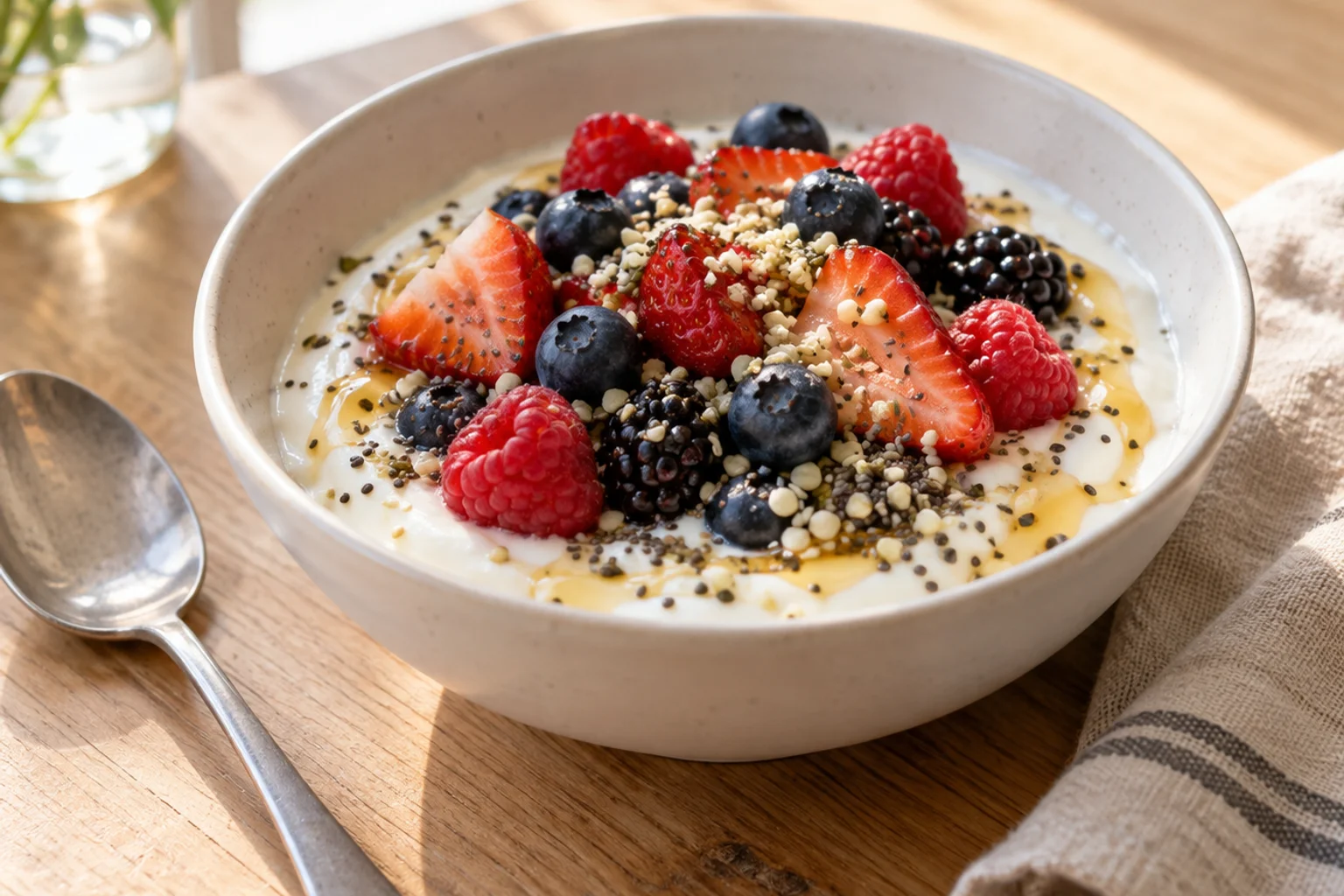
This is the formula at full size: a double anchor (yogurt plus whey), berries and chia as carriers, hemp hearts for crunch and honey for flavor. The paste method keeps the powder from clumping.
Recipe · Easy · gluten-free, vegetarian
Protein Yogurt Power Bowl
A thick, creamy yogurt bowl with about 27 g of protein and 7 g of fiber per serving, ready in 5 minutes.
- Prep
- 5 min
- Cook
- 0 min
- Total
- 5 min
- Makes
- 2 bowls (about 1 1/4 cups each)
- Protein
- 27g
- Calories
- 270
- Carbs
- 25g
- Fat
- 7.5g
- Fiber
- 7g
- Sodium
- 90mg
Per serving, approximate.
Ingredients
- 1 1/2 cups (340 g) plain nonfat Greek yogurt (shop at Whole Foods, opens in a new tab)
- 1/2 scoop (15 g) vanilla or unflavored whey protein isolate (shop at Amazon, opens in a new tab)
- 1 cup (140 g) frozen mixed berries, partly thawed (shop at Whole Foods, opens in a new tab)
- 2 tbsp (24 g) chia seeds (shop at Amazon, opens in a new tab)
- 1 tbsp (10 g) hemp hearts (shop at Amazon, opens in a new tab)
- 2 tsp (14 g) honey (shop at Amazon, opens in a new tab)
- 1/2 tsp ground cinnamon (shop at Amazon, opens in a new tab)
Equipment
Steps
- Put the whey in a medium bowl, add 3 tablespoons of the yogurt, and mash with the back of a spoon for 30 seconds until you have a smooth, thick paste with no dry pockets.
- Fold in the remaining yogurt until the mixture is uniform and thick, about 1 minute.
- Stir in the chia seeds and cinnamon, then let the bowl sit for 5 minutes while the chia absorbs moisture and thickens the yogurt.
- Divide between two bowls. Top each with half of the berries, half of the hemp hearts and 1 teaspoon of honey.
- Eat right away, or cover and refrigerate for up to 3 days, adding the hemp hearts and berries just before eating so they stay crisp and bright.
Storage: Fridge up to 3 days in a covered jar at or below 40°F (4°C). Not suitable for freezing once mixed.
Tips and variations: swap the berries for diced apple and cinnamon in fall. For a chocolate version, use chocolate whey and add 1 teaspoon of cocoa. If you prefer a looser bowl, thin with 2 tablespoons of milk.
Cottage Cheese Snackle Box
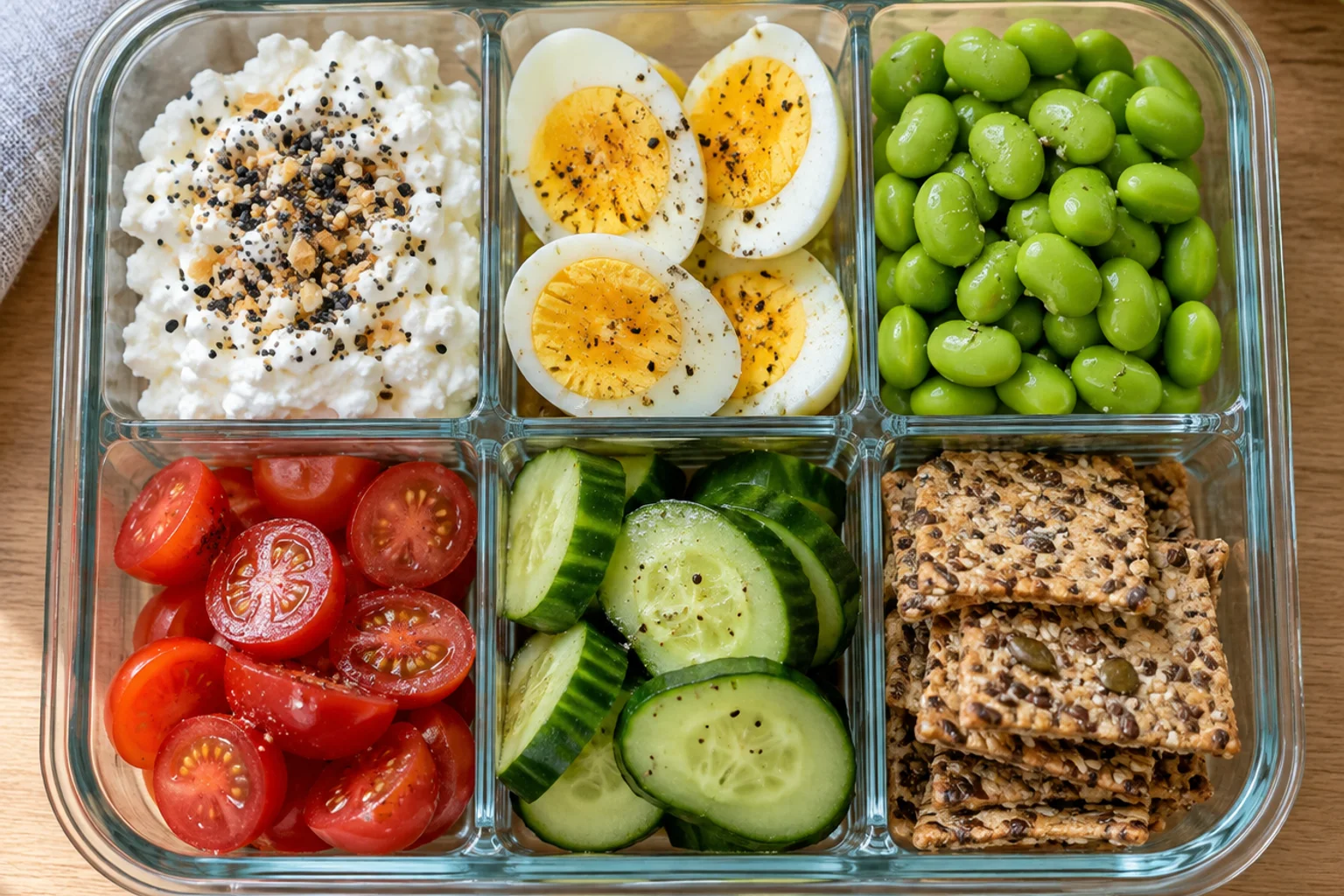
A "snackle box" is a divided container with several small compartments, like a tackle box. This savory version packs a creamy anchor, an egg, edamame and crunchy vegetables. Cottage cheese is the main sodium source, so choose a lower-sodium brand if you can.
Recipe · Easy · vegetarian
Cottage Cheese Snackle Box
A savory divided snack box with about 25 g of protein, built from cottage cheese, eggs, edamame, vegetables and crackers.
- Prep
- 8 min
- Cook
- 12 min
- Total
- 20 min
- Makes
- 2 snack boxes
- Protein
- 25g
- Calories
- 280
- Carbs
- 21g
- Fat
- 11g
- Fiber
- 4.5g
- Sodium
- 600mg
Per serving, approximate.
Ingredients
- 1 cup (226 g) low-fat cottage cheese (shop at Whole Foods, opens in a new tab)
- 2 large eggs (shop at Whole Foods, opens in a new tab)
- 1/2 cup (80 g) frozen shelled edamame (shop at Whole Foods, opens in a new tab)
- 1 cup (150 g) cherry tomatoes
- 1 cup (120 g) sliced cucumber
- 6 whole-grain or seed crackers (shop at Amazon, opens in a new tab)
- 1 tsp everything bagel seasoning (shop at Amazon, opens in a new tab)
Equipment
Steps
- Bring a small pot of water to a gentle boil, lower in the eggs, and cook for 11 minutes at a steady simmer.
- While the eggs cook, microwave the edamame in a covered bowl with 1 tablespoon of water for 3 minutes, then drain and let cool for 5 minutes.
- Move the eggs to a bowl of ice water for 5 minutes, then peel and halve them.
- Spoon half of the cottage cheese into each snack box compartment and sprinkle with half of the everything seasoning.
- Fill the remaining compartments with the egg halves, edamame, tomatoes, cucumber and crackers, dividing evenly between the two boxes.
- Seal and refrigerate until you leave, or pack with an ice pack. Keep the boxes at or below 40°F (4°C) and eat within 3 days.
Storage: Fridge up to 3 days at or below 40°F (4°C). Pack crackers separately if they must stay crisp. Discard anything left out more than 2 hours (1 hour above 90°F/32°C).
Tips and variations: add 1 ounce (28 g) of cheddar cubes for about 7 more grams of protein and 115 calories. Add a spoonful of hummus for a dip. For a sweet snackle box, swap the vegetables for berries and stir a little cinnamon into the cottage cheese.
Tuna-Stuffed Mini Peppers
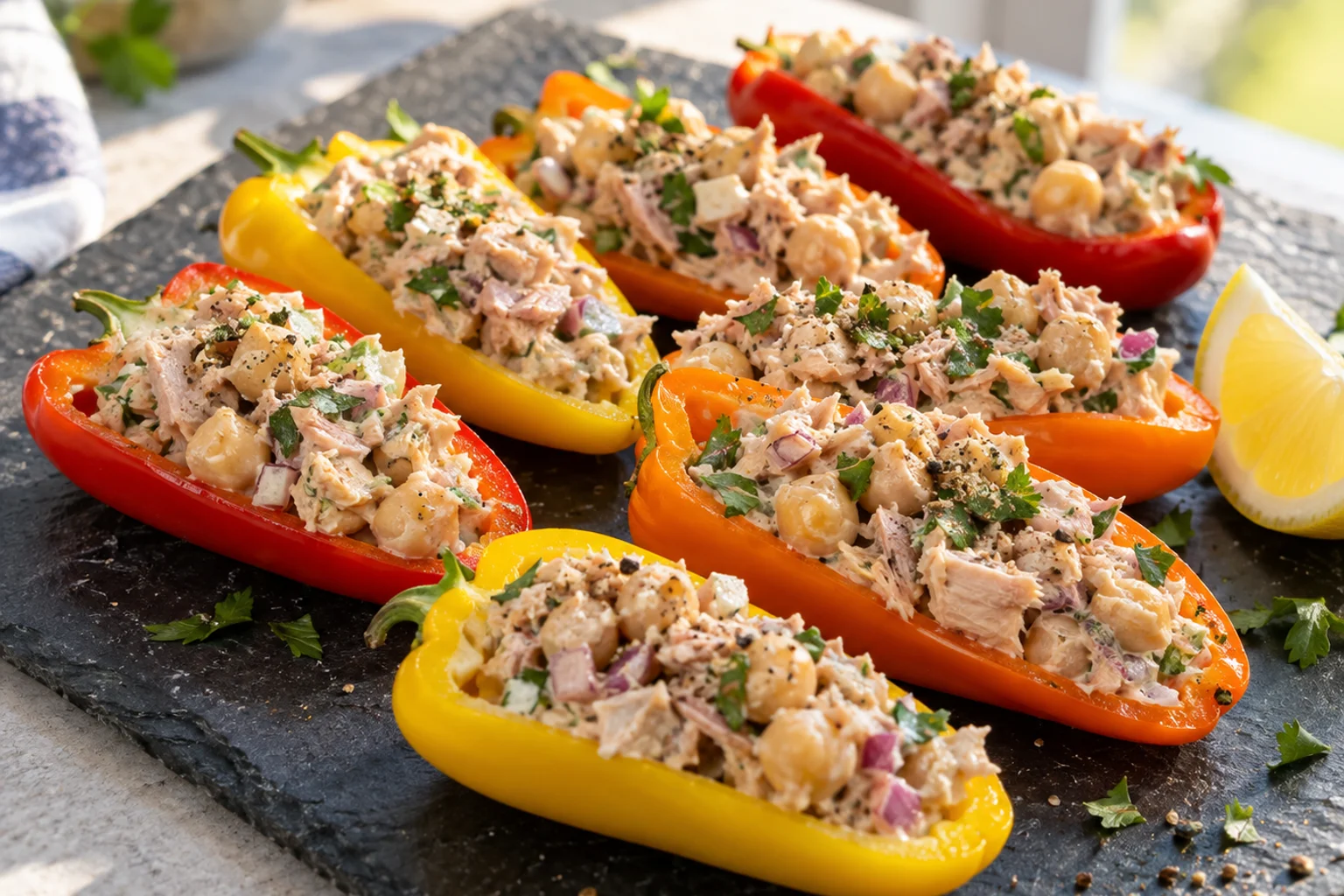
Sweet mini peppers hold a creamy tuna-chickpea filling. Greek yogurt replaces mayonnaise, and the mashed chickpeas bring fiber. Pregnant readers should follow FDA advice on fish servings per week and ask their doctor; the FDA lists light tuna among its lower-mercury choices.
Recipe · Easy · gluten-free
Tuna-Stuffed Mini Peppers
No-cook peppers filled with creamy tuna and chickpeas, about 23 g of protein per serving, ready in 15 minutes.
- Prep
- 15 min
- Cook
- 0 min
- Total
- 15 min
- Makes
- 3 servings (6 to 7 pepper halves each)
- Protein
- 23g
- Calories
- 160
- Carbs
- 12g
- Fat
- 2g
- Fiber
- 3g
- Sodium
- 380mg
Per serving, approximate.
Ingredients
- 2 cans (5 oz / 142 g each), drained light tuna in water (shop at Amazon, opens in a new tab)
- 1/2 cup (82 g) canned chickpeas, rinsed and drained (shop at Amazon, opens in a new tab)
- 1/3 cup (80 g) plain nonfat Greek yogurt (shop at Whole Foods, opens in a new tab)
- 1 tbsp Dijon mustard (shop at Amazon, opens in a new tab)
- 1 tbsp lemon juice
- 2 tbsp (15 g) finely diced celery
- 1/4 tsp coarse black pepper (shop at Amazon, opens in a new tab)
- 10 (about 200 g) mini sweet peppers, halved lengthwise and seeded
Equipment
Steps
- Drain the tuna very well, pressing out as much water as you can, then flake it into a medium bowl.
- Mash the chickpeas with a fork in a small bowl until about half are broken down and half remain chunky, then add them to the tuna.
- Add the Greek yogurt, Dijon, lemon juice, celery and black pepper, and stir until the mixture holds together, about 1 minute. Taste and add a pinch more pepper if needed.
- Slice each mini pepper in half lengthwise and scrape out the seeds with a small spoon.
- Mound about 2 tablespoons of the tuna mixture into each pepper half. Serve right away, or cover and refrigerate for up to 3 days at or below 40°F (4°C).
Storage: Fridge up to 3 days at or below 40°F (4°C); store the filling and the peppers separately for the crispest result. Do not freeze.
Tips and variations: use canned chicken or salmon instead of tuna. Add 1/4 teaspoon of smoked paprika or a few drops of hot sauce for heat. Serve the filling on cucumber rounds if peppers are out of season.
5-Minute Protein Trail Mix
Most trail mix is mostly nuts and candy. This one leans on roasted edamame and pumpkin seeds for a real protein number, with chocolate and freeze-dried berries for flavor. A serving is about half a cup.
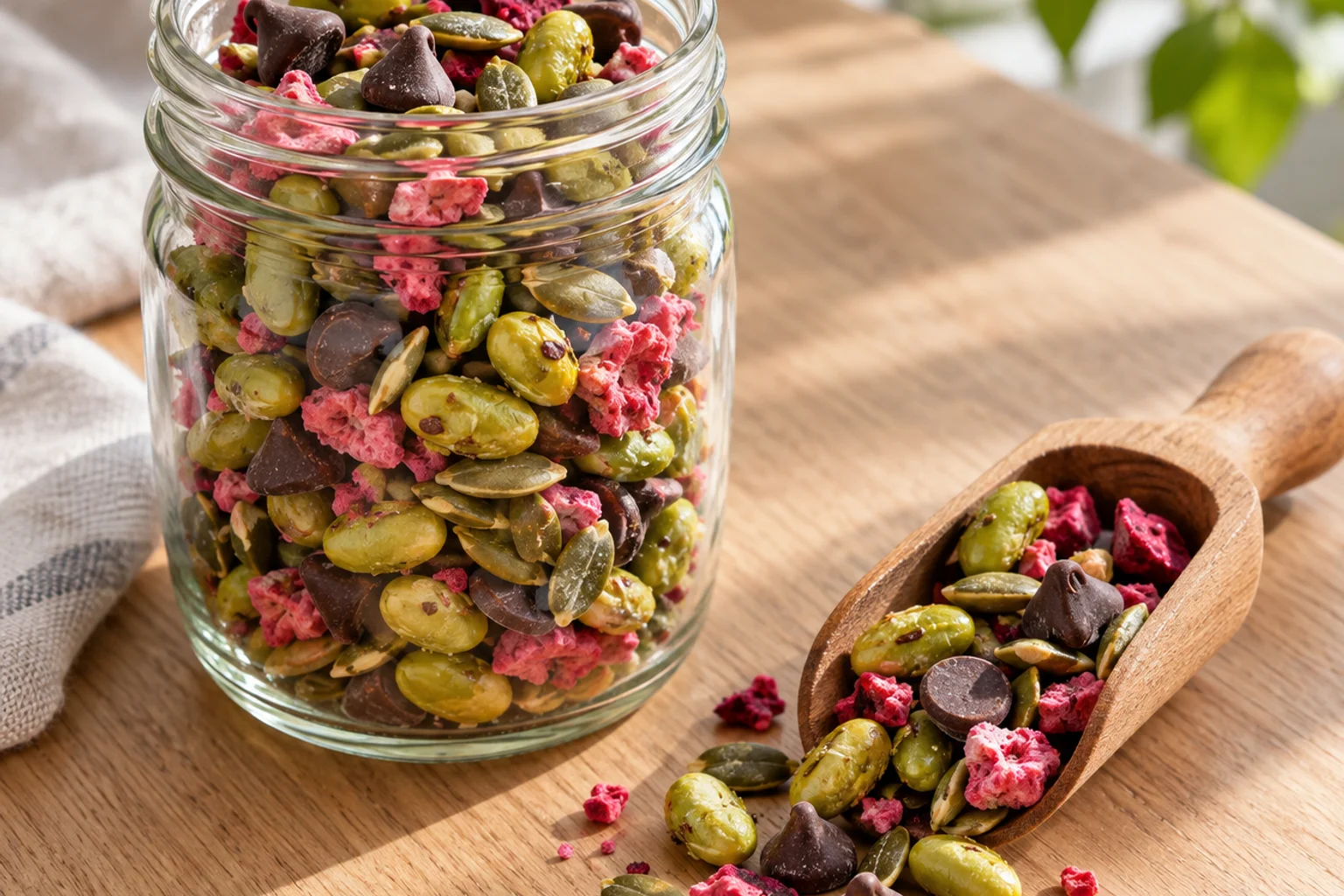
Recipe · Easy · gluten-free, vegetarian
5-Minute Protein Trail Mix
A shelf-stable mix of roasted edamame, pumpkin seeds, dark chocolate and freeze-dried berries with about 15 g of protein per serving.
- Prep
- 5 min
- Cook
- 0 min
- Total
- 5 min
- Makes
- 5 servings (about 1/2 cup / 45 g each)
- Protein
- 15g
- Calories
- 255
- Carbs
- 19g
- Fat
- 13g
- Fiber
- 6g
- Sodium
- 40mg
Per serving, approximate.
Ingredients
- 4 oz (113 g), about 1 cup dry-roasted edamame (shop at Amazon, opens in a new tab)
- 1/2 cup (65 g) hulled pumpkin seeds (pepitas) (shop at Amazon, opens in a new tab)
- 1/3 cup (50 g) dark chocolate chips, 60% or higher (shop at Amazon, opens in a new tab)
- 1/4 cup (about 28 g) freeze-dried berries (shop at Amazon, opens in a new tab)
Equipment
Steps
- Combine the roasted edamame, pumpkin seeds and chocolate chips in a large bowl and stir for 30 seconds until evenly mixed.
- Crumble the freeze-dried berries gently with your fingers into the bowl, leaving some pieces whole, and stir once more.
- Divide into five 1/2-cup portions in small jars or snack bags so you can grab one without overeating.
- Store at room temperature in a sealed container, away from heat. Do not leave it in a hot car, because the chocolate will melt.
Storage: Room temperature up to 2 weeks in an airtight jar or bag; up to 2 months in the fridge. Check the chocolate label if you need it to be dairy-free.
Tips and variations: stir in 1/2 cup of protein crisps (shop at Amazon, opens in a new tab) for about 10 more grams of protein across the batch. Swap the berries for 1/4 cup of unsweetened coconut for a tropical mix. Keep the chocolate in the fridge in summer.
How do you read labels when combining store-bought products?
Reading a label for a combined snack takes six checks: serving size, protein per 100 calories, added sugars, sodium, the ingredient list and sweeteners. Multiply every number on each label by the amount you actually eat, then compare the combined total with the homemade target above.
- Check the serving size first. A "serving" of cottage cheese may be 1/2 cup, but you will eat 3/4 cup.
- Calculate protein per 100 calories. Divide protein grams by calories and multiply by 100. Above 10 is a decent snack ingredient, and above 15 is an excellent anchor. A flavored yogurt at 12 g and 150 calories scores 8, while the plain version scores 17.
- Look at added sugars as well as total sugars. Plain dairy contains natural lactose (around 6–8 g in a serving of yogurt). Flavored yogurts, bars and sauces add sugar on top, and the label lists it separately as "Added Sugars." Aim for 5 g or less per snack when you can.
- Check sodium against the Daily Value. The FDA treats 5% of the Daily Value or less as low and 20% or more as high, and the full daily value is 2,300 mg. Cottage cheese, deli turkey, canned tuna and jerky can each carry 300–700 mg per serving, so a snack that stacks two of them adds up fast.
- Scan the ingredient list. Short is usually better. For protein powders, look for a clear protein source first, then a short list after it. For canned fish, look for "in water" if you want the lowest calories.
- Count sweeteners and sugar alcohols. "Sugar-free" bars and powders often use sugar alcohols that can upset some stomachs when you eat more than one serving.
Worked example: you pair 3/4 cup of cottage cheese (about 135 calories, 19 g protein, 400 mg sodium) with 6 seed crackers (90 calories, 2 g protein, 200 mg sodium). The total is 225 calories, 21 g protein (9 g per 100 calories) and 600 mg sodium. That is a good snack, but add deli turkey and you pass 1,000 mg quickly. Keep one salty ingredient per snack and let fruit, vegetables or yogurt be the other.
Deli meats and raw or smoked fish are not recommended without heating during pregnancy, according to food-safety guidance. If this applies to you, use heated deli meat or choose other anchors such as yogurt, cooked eggs and beans, and ask your doctor.
How do you prep a week of high protein snacks?
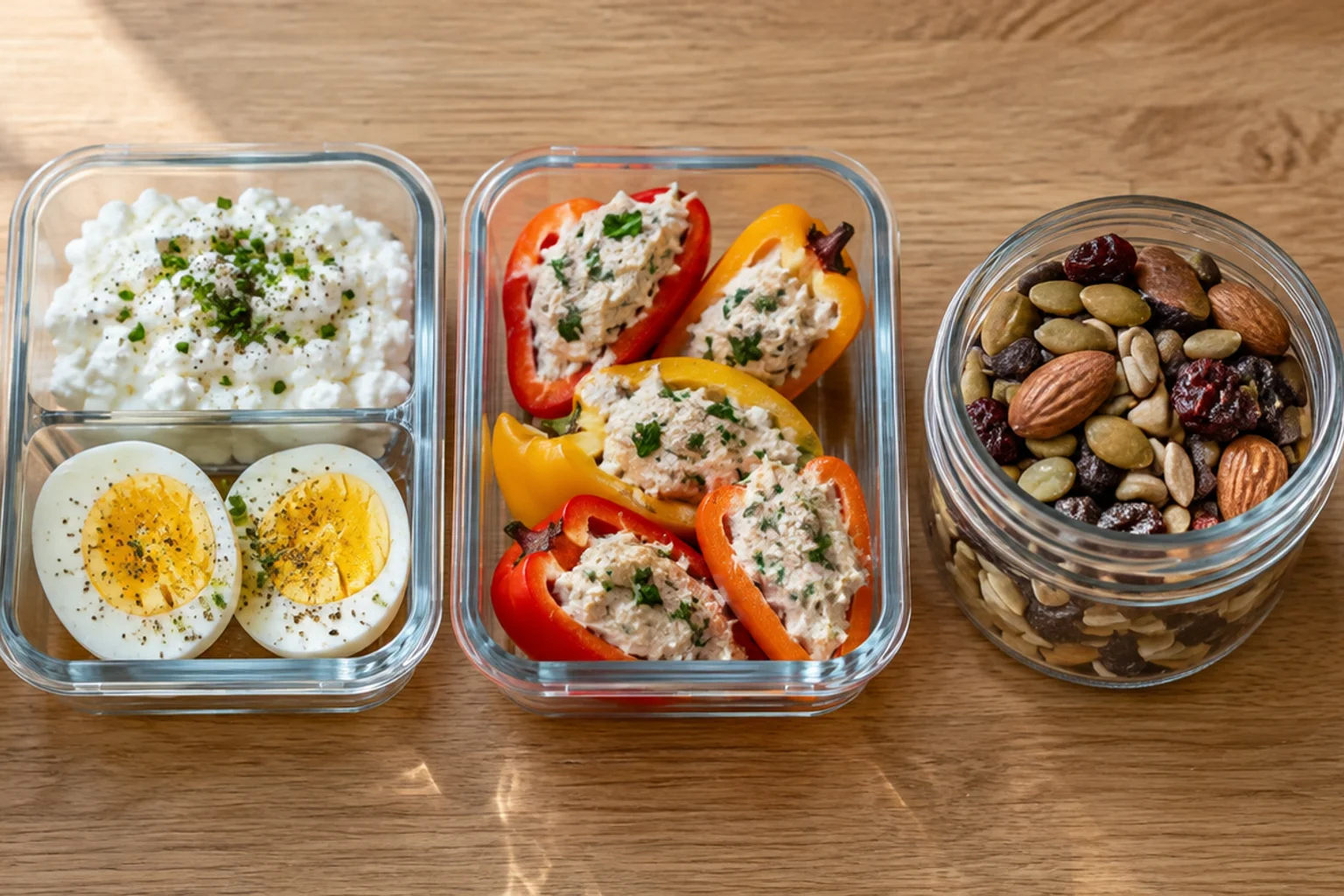
A 30-minute prep session once a week gives you five finished snacks plus a few loose components to mix during the week. The plan below uses this guide's recipes and combos, and each item stays in the fridge at or below 40°F (4°C) for up to 3 days.
| Day | Snack | Prep (done once) | Protein |
|---|---|---|---|
| Monday | Protein Yogurt Power Bowl, in jars | Mix the yogurt, whey and chia; hold the toppings | about 27 g |
| Tuesday | Cottage Cheese Snackle Box | Boil 6 eggs; wash and cut vegetables | about 25 g |
| Wednesday | Tuna-Stuffed Mini Peppers | Make the filling; halve the peppers | about 23 g |
| Thursday | Trail mix + string cheese | Portion 5 bags of trail mix | about 22 g |
| Friday | Jerky, apple and almonds | Portion almonds; slice apple at the last minute | about 17 g |
Use this template each week:
- Choose 3 anchors: one dairy (yogurt, cottage cheese), one savory (eggs, tuna, turkey) and one shelf-stable (jerky, edamame, powder).
- Choose 2 carriers: one fruit or vegetable, and one cracker, rice cake or oat.
- Choose 1 crunch and 2 flavors: pumpkin seeds or almonds, plus a savory and a sweet seasoning.
- Prep once. Boil eggs, rinse chickpeas, wash vegetables, and portion nuts and seeds into mason jars (shop at Amazon, opens in a new tab) or glass meal-prep containers (shop at Amazon, opens in a new tab).
- Assemble by Thursday. Keep wet and crunchy parts separate until the day you eat them.
USDA FSIS advises discarding perishable food left out more than 2 hours, or 1 hour above 90°F (32°C). If you carry snacks to work, use an insulated snack bag with an ice pack (shop at Amazon, opens in a new tab). For storage times, freezing and thawing details, see fridge and freezer storage for protein snacks, and for stocking the basics, see the protein snack pantry shopping guide.
How much does 20 grams of protein cost?
The cost of 20 g of protein is the package price divided by the total grams of protein in the package, times 20. A tub of Greek yogurt with 5 servings of 17 g holds 85 g of protein, so 20 g costs just under a quarter of the tub price. Do the same for a bar and compare.
Cost per 20 g protein = (package price ÷ total grams of protein in the package) × 20
Prices change by store and region, so the table below ranks sources by cost tier and gives no exact prices.
| Source of 20 g protein | Typical cost tier | Notes |
|---|---|---|
| Protein powder (scoop or two) | Lowest | Buying a large tub usually wins |
| Eggs and liquid egg whites | Low | Eggs vary a lot with market prices |
| Canned beans, tofu, edamame | Low | Lower protein per serving, so you eat more |
| Plain Greek yogurt, cottage cheese | Low to moderate | Large tubs are cheaper than single cups |
| Canned tuna, chicken, salmon | Moderate | Pouches cost more than cans |
| Deli turkey | Moderate | Sodium is high |
| Most protein bars | Moderate to high | Pay for packaging and convenience |
| Packaged beef jerky | High | Often the priciest source of protein per gram |
In many US stores, the staples near the top of this table cost well under a dollar or two per 20 g of protein, while many bars run a few dollars per 20 g and packaged jerky often costs more than that. Check your own receipts: the ranking is more stable than the exact prices. Homemade jerky shifts the balance back when beef is on sale.
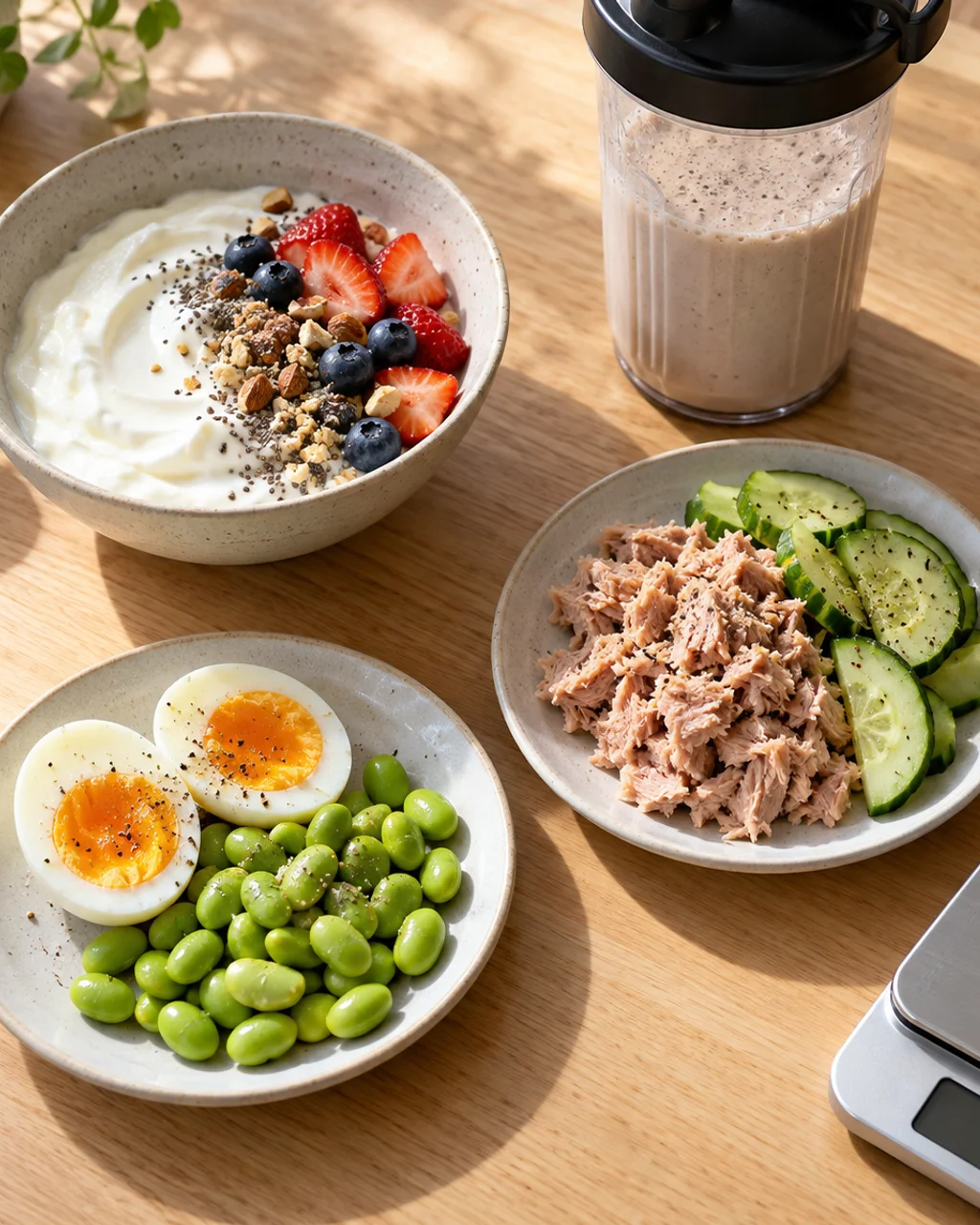
Bars win on convenience, shelf life and zero prep. The formula wins on price, fiber, variety and control over sugar and sodium. Many people use both: bars for the glove box, homemade for the rest of their snacks.
What else can you make at home? The rest of the homemade snack section
Eight other guides in this section cover each kind of homemade snack and each step after cooking, from express jerky to weekly storage. Build one snack from each column of the matrix this week, check it against the homemade target, and keep the combos you would eat again.
- Homemade beef jerky in 2 hours: express beef, ground-beef and turkey jerky using thin slices and a 160°F (71°C) pre-simmer.
- Savory meat, fish and egg snacks: egg bites, chicken chips, salmon and tuna bites, meatballs and roll-ups.
- No-bake protein balls and bars: protein balls, bars, cookie-dough bites and crispy bars.
- Plant-based protein snacks to make: roasted chickpeas, crunchy edamame, tofu jerky, spiced nuts and lentil crackers.
- Greek yogurt, cottage cheese and baked protein snacks: yogurt bark, dips, puddings, cheese crisps and protein muffins.
- How to preserve homemade protein snacks: drying, water activity, curing, vacuum sealing and shelf life.
- Fridge and freezer storage for protein snacks: temperatures, containers, thawing, a storage-time chart and a weekly prep plan.
- Protein snack pantry shopping guide: protein powders, nuts, seeds, canned fish, tools and storage gear.
When a combo wins, write the amounts on the inside of the lid or in your notes. In a month you will have a personal menu of ten or twelve snacks that need no recipe.
Shop this article
52 ingredients and tools. Add them to your list, then send it to Amazon, Whole Foods or Instacart.
Protein powders
- Whey protein isolate (unflavored or vanilla)Amazon (opens in a new tab)Whole Foods (opens in a new tab)Instacart (opens in a new tab)
- Pea protein isolateAmazon (opens in a new tab)Whole Foods (opens in a new tab)Instacart (opens in a new tab)
- Micellar casein protein powderAmazon (opens in a new tab)Whole Foods (opens in a new tab)Instacart (opens in a new tab)
- Collagen peptides (unflavored)Amazon (opens in a new tab)Whole Foods (opens in a new tab)Instacart (opens in a new tab)
- Powdered peanut butterAmazon (opens in a new tab)Whole Foods (opens in a new tab)Instacart (opens in a new tab)
Meat & fish
- Light tuna in water (cans or pouches)Amazon (opens in a new tab)Whole Foods (opens in a new tab)Instacart (opens in a new tab)
- Canned wild salmonAmazon (opens in a new tab)Whole Foods (opens in a new tab)Instacart (opens in a new tab)
- Canned chicken breastAmazon (opens in a new tab)Whole Foods (opens in a new tab)Instacart (opens in a new tab)
- Sliced roast turkey (deli, lower sodium)Whole Foods (opens in a new tab)Instacart (opens in a new tab)
Eggs & dairy
- Plain nonfat Greek yogurtWhole Foods (opens in a new tab)Instacart (opens in a new tab)
- Plain skyr (Icelandic yogurt)Whole Foods (opens in a new tab)Instacart (opens in a new tab)
- Low-fat cottage cheeseWhole Foods (opens in a new tab)Instacart (opens in a new tab)
- Large eggsWhole Foods (opens in a new tab)Instacart (opens in a new tab)
- Liquid egg whites (carton)Whole Foods (opens in a new tab)Instacart (opens in a new tab)
- Part-skim mozzarella (shredded or sticks)Whole Foods (opens in a new tab)Instacart (opens in a new tab)
- Milk (or ultra-filtered milk)Whole Foods (opens in a new tab)Instacart (opens in a new tab)
- Sharp cheddar cheeseWhole Foods (opens in a new tab)Instacart (opens in a new tab)
Beans, soy & plant protein
- Frozen shelled edamameWhole Foods (opens in a new tab)Instacart (opens in a new tab)
- Extra-firm or super-firm tofuWhole Foods (opens in a new tab)Instacart (opens in a new tab)
- TempehWhole Foods (opens in a new tab)Instacart (opens in a new tab)
- Canned chickpeasAmazon (opens in a new tab)Whole Foods (opens in a new tab)Instacart (opens in a new tab)
- HummusWhole Foods (opens in a new tab)Instacart (opens in a new tab)
- Dry-roasted edamame (store-bought)Amazon (opens in a new tab)Whole Foods (opens in a new tab)Instacart (opens in a new tab)
Nuts, seeds & nut butters
- Hemp hearts (shelled hemp seeds)Amazon (opens in a new tab)Whole Foods (opens in a new tab)Instacart (opens in a new tab)
- Pumpkin seeds (pepitas)Amazon (opens in a new tab)Whole Foods (opens in a new tab)Instacart (opens in a new tab)
- Chia seedsAmazon (opens in a new tab)Whole Foods (opens in a new tab)Instacart (opens in a new tab)
- Raw almondsAmazon (opens in a new tab)Whole Foods (opens in a new tab)Instacart (opens in a new tab)
- Natural peanut butter (peanuts + salt)Amazon (opens in a new tab)Whole Foods (opens in a new tab)Instacart (opens in a new tab)
- Sunflower seed butter (nut-free)Amazon (opens in a new tab)Whole Foods (opens in a new tab)Instacart (opens in a new tab)
Oats, grains & binders
- Oat flourAmazon (opens in a new tab)Whole Foods (opens in a new tab)Instacart (opens in a new tab)
- Old-fashioned rolled oatsAmazon (opens in a new tab)Whole Foods (opens in a new tab)Instacart (opens in a new tab)
- Whole-grain or seed crackersAmazon (opens in a new tab)Whole Foods (opens in a new tab)Instacart (opens in a new tab)
- Rice cakesAmazon (opens in a new tab)Whole Foods (opens in a new tab)Instacart (opens in a new tab)
- Whey or soy protein crispsAmazon (opens in a new tab)Whole Foods (opens in a new tab)Instacart (opens in a new tab)
Sweeteners & chocolate
- Frozen mixed berriesWhole Foods (opens in a new tab)Instacart (opens in a new tab)
- Unsweetened cocoa powderAmazon (opens in a new tab)Whole Foods (opens in a new tab)Instacart (opens in a new tab)
- HoneyAmazon (opens in a new tab)Whole Foods (opens in a new tab)Instacart (opens in a new tab)
- Pure maple syrupAmazon (opens in a new tab)Whole Foods (opens in a new tab)Instacart (opens in a new tab)
- Dark chocolate chips (60%+)Amazon (opens in a new tab)Whole Foods (opens in a new tab)Instacart (opens in a new tab)
- Freeze-dried berriesAmazon (opens in a new tab)Whole Foods (opens in a new tab)Instacart (opens in a new tab)
Sauces, spices & flavor
- Ground cinnamonAmazon (opens in a new tab)Whole Foods (opens in a new tab)Instacart (opens in a new tab)
- Everything bagel seasoningAmazon (opens in a new tab)Whole Foods (opens in a new tab)Instacart (opens in a new tab)
- Dijon mustardAmazon (opens in a new tab)Whole Foods (opens in a new tab)Instacart (opens in a new tab)
- SrirachaAmazon (opens in a new tab)Whole Foods (opens in a new tab)Instacart (opens in a new tab)
- Dry ranch seasoning mixAmazon (opens in a new tab)Whole Foods (opens in a new tab)Instacart (opens in a new tab)
- Coarse-ground black pepperAmazon (opens in a new tab)Whole Foods (opens in a new tab)Instacart (opens in a new tab)
Kitchen tools
- Digital kitchen scale (grams)Amazon (opens in a new tab)Instacart (opens in a new tab)
- Sharp chef's knife or slicing knifeAmazon (opens in a new tab)Instacart (opens in a new tab)
Storage & preserving supplies
- Leak-proof bento snack boxAmazon (opens in a new tab)Instacart (opens in a new tab)
- Wide-mouth mason jarsAmazon (opens in a new tab)Instacart (opens in a new tab)
- Glass meal-prep containers with lidsAmazon (opens in a new tab)Instacart (opens in a new tab)
- Insulated snack bag with ice packAmazon (opens in a new tab)Instacart (opens in a new tab)
Frequently asked questions
Can I eat protein powder snacks every day?
For most healthy adults, a scoop or two of whey, casein or pea protein a day (about 24–25 g of protein per 30 g scoop) is a convenient way to reach a protein goal. Keep whole foods in the mix, too. If you have kidney disease, ask your doctor how much protein is right for you.
Is collagen a good protein anchor?
Collagen adds protein cheaply and dissolves easily, about 18 g in a 20 g serving, but it is an incomplete protein that lacks tryptophan and is low in several other essential amino acids. Pair it with yogurt, eggs, dairy or whey so the snack gets a complete amino acid profile.
Are homemade protein bars healthier than store bought?
Homemade bars can be healthier because you control the sugar, sodium and ingredient list, but they are not automatically better. Compare both on the same numbers: protein per 100 calories, added sugar, fiber and sodium. A bar made with a lot of dates and honey can end up sweeter than a store-bought one.
What snack has 20 grams of protein?
Tuna-hummus cucumber rounds give about 20 g of protein for 170 calories. Tuna-Dijon crackers give about 22 g for 190 calories, and an egg-and-edamame plate gives about 21 g for 235 calories. All three take under 10 minutes and need no oven.
Can you make high protein snacks without protein powder?
Yes. Only 2 of the 20 combos in this guide use protein powder. Greek yogurt, skyr, cottage cheese, tuna, eggs, deli turkey and edamame each carry 9–20 g of protein per serving, so one of them plus a carrier and a crunch reaches 15–25 g without a scoop.
What can I eat for a high protein snack at work?
Roasted edamame with pumpkin seeds (about 16 g of protein) and jerky with an apple and almonds (about 17 g) keep at room temperature. For perishable boxes, pack an ice pack to stay at or below 40°F (4°C), and discard anything left out more than 2 hours.
Sources
- USDA FoodData Central (nutrient values for foods) (opens in a new tab)
- FDA: How to Understand and Use the Nutrition Facts Label (opens in a new tab)
- USDA FSIS: Food Safety (opens in a new tab)
- FoodSafety.gov (opens in a new tab)
- Harvard T.H. Chan School of Public Health: The Nutrition Source, Protein (opens in a new tab)
- FDA: Advice About Eating Fish (opens in a new tab)
More reading on protein, sugar and snack labels is collected on our resources page.