High-Protein Snacks for Kids: 25 Easy Ideas for Toddlers to Teens
By Editorial Team. Updated . 10 min read.
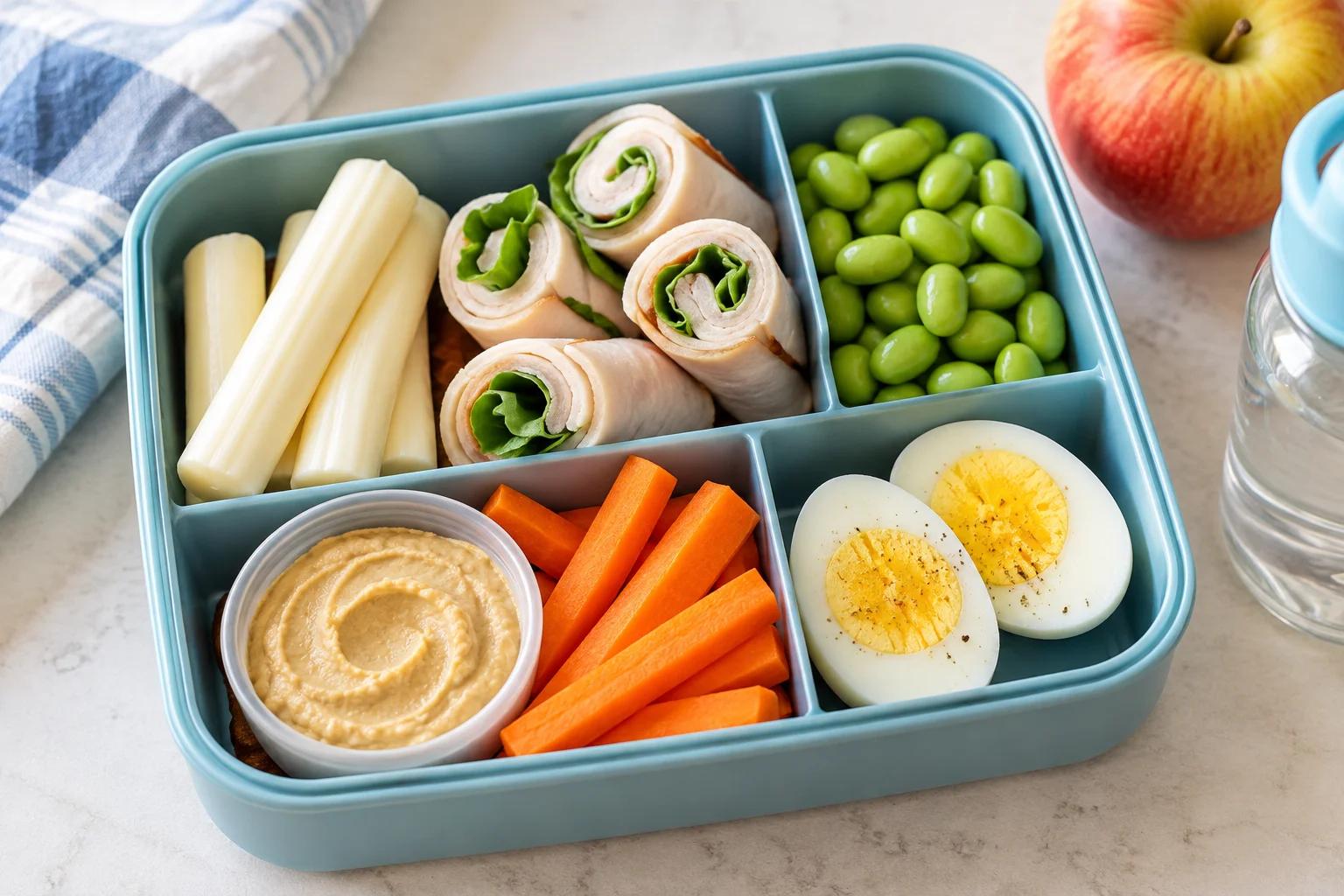
Most kids only need about 5 to 10 grams of protein per snack. Daily needs are roughly 13 grams for ages 1–3, 19 grams for ages 4–8 and 34 grams for ages 9–13, per the National Academies' RDAs. Easy high-protein kids' snacks include cheese sticks, yogurt, hard-boiled eggs, hummus with veggies, edamame and turkey roll-ups.
This article is informational and not medical advice. Talk to your pediatrician or a registered dietitian about your child's needs, especially if your child has food allergies or a medical condition.
Key takeaways
- 5–10 g of protein per snack covers most children; teen athletes may want 10–20 g.
- Most kids already get enough protein. The point of a protein snack is staying full until the next meal, not adding more.
- Under age 4, skip or modify whole nuts, spoonfuls of nut butter, hot dogs, meat sticks, big cheese chunks and whole grapes. See the choking table below.
- Keep added sugar low: the 2025–2030 Dietary Guidelines advise avoiding added sugars for children under 11.
- Hummus contains sesame and edamame is soy. "Nut-free" does not mean allergen-free.
How much protein do kids need in a snack?
Children need far less protein than adults. The Recommended Dietary Allowances from the National Academies (opens in a new tab) are:
| Age | Protein per day (g) | Suggested per snack (g) |
|---|---|---|
| 1–3 years | 13 | 3–5 |
| 4–8 years | 19 | 4–7 |
| 9–13 years | 34 | 7–12 |
| 14–18 girls | 46 | 10–15 |
| 14–18 boys | 52 | 10–20 |
The "per snack" column is our practical guide, assuming three meals and one or two snacks a day.
Do kids need extra protein? Usually not. Cow's milk has about 1 g of protein per ounce, and the American Academy of Pediatrics notes that children who drink the recommended amount of milk are likely getting all or most of the protein they need (opens in a new tab). A Cleveland Clinic dietitian (opens in a new tab) puts it more bluntly: children in most Western countries already eat two to three times the protein they need.
So the goal is a snack that keeps them full until dinner, ideally protein paired with fruit, vegetables or whole grains. For adult numbers, see how much protein a snack should have.
Best high-protein snacks for toddlers (ages 1–3)
Toddlers need soft foods in small pieces. The AAP's HealthyChildren.org choking guidance (opens in a new tab) recommends keeping high-risk foods away until at least age 4, depending on the child, and cutting food into pieces no bigger than half an inch.
| Snack | Serving | Protein (g) |
|---|---|---|
| Whole-milk plain yogurt | ½ cup | 4 |
| Scrambled egg, cut small | 1 egg | 6 |
| Cottage cheese | ¼ cup | 6 |
| Shredded or thinly sliced cheese | ½ oz | 3–4 |
| Mashed beans or hummus on soft toast | 2 tbsp + ½ slice | 3–4 |
| Smashed edamame (shelled, flattened) | ¼ cup | 4–5 |
| Shredded chicken | 1 oz | 7–8 |
| Thinly spread nut or seed butter on toast | 1 tsp + ½ slice | 2–3 |
Values are rounded from USDA FoodData Central (opens in a new tab).
Which protein snacks are choking hazards for young kids?
Many classic protein snacks appear on the CDC's choking-hazard list (opens in a new tab): whole or chopped nuts and seeds, spoonfuls of nut or seed butter, hot dogs, meat sticks and sausages, tough chunks of meat, large chunks of cheese (string cheese is named specifically) and whole beans. The CDC gives no age cutoff; the AAP uses about age 4.
| Food | Problem | Safer way to serve under 4 |
|---|---|---|
| Whole nuts and seeds | Small, hard | Skip; use a thin layer of nut or seed butter or finely ground nuts stirred into oatmeal |
| Spoonful of peanut or sunflower butter | Sticky, can block the airway | Spread thinly on toast or swirl into yogurt |
| Hot dogs, meat sticks, sausages | Round shape matches a small airway | Cut lengthwise, then chop into tiny pieces; rounds are not safe |
| String cheese, cheese cubes | Large chunks | Shred, grate or slice thin |
| Whole grapes, cherry tomatoes | Round, firm | Cut into small pieces, for example quartered lengthwise |
| Whole beans, edamame | Small, firm | Mash or flatten |
| Raw carrot sticks, apple chunks | Hard | Steam until soft, or grate |
| Popcorn, crunchy roasted chickpeas or edamame | Hard, small | Wait until age 4 or older |
Supervision matters as much as prep. The CDC advises keeping children seated while eating, never eating in the car or stroller, and watching them the whole time.
High-protein snacks for school lunchboxes (nut-free)
These nut-free options travel well. Still read labels for "may contain" warnings.
| Snack | Serving | Protein (g) | Needs ice pack? |
|---|---|---|---|
| String cheese | 1 stick | 6–7 | Yes (OK for a few hours) |
| Yogurt tube | 2 oz | 2–3 | Yes |
| Greek yogurt cup | 5.3 oz | 12–15 | Yes |
| Hard-boiled egg | 1 large | 6 | Yes |
| Turkey and cheese roll-ups | 1 oz each | 12 | Yes |
| Hummus + carrot and cucumber sticks | ¼ cup | 5 | Yes |
| Roasted chickpeas | 1 oz | 5–7 | No |
| Dry-roasted edamame | 1 oz | 11–14 | No |
| Sunflower seed butter + whole-grain crackers | 1 tbsp + 5 crackers | 4–5 | No |
| Pumpkin seeds (if seeds are allowed) | 1 oz | 8.5 | No |
| Milk or shelf-stable milk box | 8 fl oz | 8 | No (shelf-stable) |
| Mini whole-grain bagel with cream cheese and turkey | 1 | 10 | Yes |
Browse our nut-free protein snacks for packaged options. Roasted chickpeas and edamame live in our plant-based category, and yogurt and cheese in dairy.
Sunflower seed butter tip: It is a good peanut-butter substitute, but it looks similar, so some schools ask parents to label it.
Allergy-friendly protein snacks: what nut-free misses
Food allergies affect about 1 in 13 US children, roughly two per classroom (opens in a new tab), according to the CDC. The FDA (opens in a new tab) recognizes nine major allergens: milk, eggs, fish, crustacean shellfish, tree nuts, peanuts, wheat, soybeans and sesame (added in 2023). Most kids' protein staples contain at least one.
Three things parents often miss:
- "May contain" is voluntary. The FDA does not require precautionary labels, so a missing warning does not prove a product is safe. Contact the maker if it matters.
- Hummus usually contains tahini, which is sesame. Edamame and many bars contain soy.
- School policies vary. The CDC's voluntary school guidelines leave details to each district, so one school may ban nuts building-wide while another uses allergen-safe tables. Ask for the written policy before packing.
| If your child avoids | Protein swaps to try |
|---|---|
| Peanuts and tree nuts | Sunflower seed butter, pumpkin seeds (if allowed), roasted chickpeas, cheese |
| Milk | Eggs, edamame, hummus, turkey, soy milk |
| Eggs | Greek yogurt, cheese, beans, chicken |
| Soy | Chickpeas, dairy, eggs, meat |
| Sesame | Bean dip without tahini, yogurt dip, cheese |
| Wheat | Rice cakes or certified gluten-free crackers with cheese or bean dip |
For the gluten side, our gluten-free protein snacks guide explains certification labels.
Protein snacks for teen athletes
Teens who play sports have higher energy needs. A snack that pairs 10 to 20 g of protein with carbohydrate after practice is a practical way to refuel:
- Chocolate milk (1 cup): about 8 g protein plus carbs.
- Greek yogurt with granola and fruit: 15 to 20 g protein.
- Turkey or chicken sandwich on whole-grain bread: 15 to 25 g.
- Two eggs on toast: about 16 g.
- Edamame and a cheese stick: about 16 g.
- Tuna pouch with crackers: about 19 g.
Food comes first. The AAP's HealthyChildren.org page on supplements (opens in a new tab) says most young athletes who eat a well-balanced diet do not need protein supplements and would not benefit from them. More ideas: high-protein snacks on the go.
Are protein bars and shakes safe for kids?
They are generally unnecessary rather than dangerous, but there are good reasons to be cautious:
- Too much for small bodies. A 20-gram adult bar is more than a 4-year-old's entire daily RDA.
- Sugar alcohols and fibers. Erythritol, maltitol, chicory root and soluble corn fiber can cause gas, bloating or diarrhea in children.
- Sweeteners and caffeine. The 2025–2030 Dietary Guidelines advise avoiding added sugars for children under 11 and limiting nonnutritive sweeteners, according to the AAFP summary (opens in a new tab). Some coffee or mocha flavors contain caffeine.
- Displacing real food. A bar can replace a snack that would have included fruit, vegetables or dairy.
Packaged protein snacks for kids in our directory
How to read a kids' snack label (full method in how to choose a healthy protein snack):
- Added sugar: for children under 11, aim for 0 g.
- Sodium: the FDA calls 5% Daily Value or less low and 20% or more high (opens in a new tab), based on a 2,000-calorie diet, so a high-sodium snack weighs more for a small child.
- Allergens: reread the statement each time; recipes change.
| Snack (serving) | Protein (g) | Calories | g protein per 100 calories | Sugar (g) | Sodium (mg) | Allergens | Nut-free? |
|---|---|---|---|---|---|---|---|
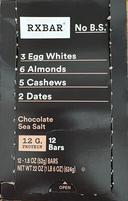
| RXBAR Chocolate Sea Salt (1 bar, 52 g) | 12 | 200 | 6.0 | 14 (0 added; sugar from dates) | 190 | Egg, tree nuts | No |
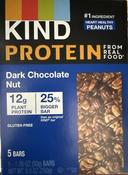
| KIND Protein Dark Chocolate Nut (1 bar, 50 g) | 12 | 240 | 5.0 | 8 (6 added) | 125 | Peanuts, tree nuts, soy | No |
| Seapoint Farms Dry Roasted Edamame, Sea Salt (snack pack, 22.5 g) | 10 | 100 | 10.0 | 1 | 115 | Soy | Yes |
| Parm Crisps Original (17 crisps, 28 g) | 14 | 160 | 8.8 | 0 | 530 | Milk | Yes |
| Biena Chickpea Snacks, Sea Salt (28 g) | 6 | 120 | 5.0 | 1 | 190 | None of the top 9 listed | Yes |
Per-serving values are calculated from the per-100 g data in Open Food Facts records (RXBAR (opens in a new tab), KIND (opens in a new tab), Seapoint Farms (opens in a new tab), Parm Crisps (opens in a new tab), Biena (opens in a new tab)). Labels change, so check the package.
Both bars contain nuts, and the KIND bar lists sugar, honey and glucose syrup, so it falls outside the no-added-sugar advice for under-11s. Roasted edamame is the most protein-dense nut-free pick. Parm Crisps carry 530 mg sodium (about 23% DV); a half portion suits younger kids. All crunchy items are for ages 4 and up. More: low-sugar protein snacks.
Picky eaters: adding protein without a fight
- Add, don't replace. Put cheese next to apple slices, or yogurt dip next to berries.
- Use dips. Hummus, Greek-yogurt ranch and bean dips make vegetables more appealing.
- Make "snack plates." Small portions of three or four foods (cheese, crackers, fruit, turkey) feel like a treat.
- Let them help. Kids who peel their own egg or roll their own turkey roll-up are more likely to eat it.
- Batch-cook. Egg muffins, turkey meatballs and baked tofu bites keep for 3 to 4 days in the fridge.
Frequently asked questions
How much protein does a child need per day?
The National Academies' Recommended Dietary Allowances are about 13 grams per day for ages 1 to 3, 19 grams for ages 4 to 8, and 34 grams for ages 9 to 13. Teens need about 46 grams (girls) to 52 grams (boys). Most children reach these amounts through regular meals and milk, without special products.
Can kids eat protein bars?
Occasionally, yes, but they are rarely necessary. Many adult protein bars contain 20 grams of protein, sugar alcohols, caffeine in some flavors, and sweeteners that can upset small stomachs. If you use one, pick a bar with simple ingredients and little added sugar, and treat it as a convenience, not a daily staple.
What are nut-free high-protein snacks for school?
Good nut-free options include string cheese, yogurt tubes or cups, hard-boiled eggs, turkey and cheese roll-ups, hummus with vegetables, roasted chickpeas, edamame, sunflower seed butter on crackers, and pumpkin seeds if your school allows seeds. Always check the school's allergy policy and read labels for 'may contain' warnings.
What is a good protein snack for picky eaters?
Start with familiar textures. Many picky eaters accept cheese cubes, yogurt with fruit, milk, scrambled egg 'muffins', or crackers with a dip like hummus or sunflower seed butter. Offering a new protein next to a food the child already likes, without pressure, tends to work better than hiding or insisting.
Do kids need protein powder or shakes?
Most healthy children do not. The American Academy of Pediatrics says most young athletes who eat a well-balanced diet do not need protein supplements and would not benefit from them, and less active kids need even less. Shakes can also crowd out whole foods. Ask your pediatrician about medical conditions or very restricted eating.
Is cow's milk a good protein source for kids?
Yes, for children who tolerate it. Cow's milk has about 1 gram of protein per ounce, so an 8-ounce cup gives about 8 grams. The American Academy of Pediatrics notes that kids who drink the recommended amount of milk likely get all or most of their protein. Soy milk comes close; many other plant milks have far less.
Allergy and medical note
This article is informational and not medical advice. Talk to your doctor or a registered dietitian. Always check labels and follow your child's allergy action plan.
Sources
- Dietary Guidelines for Americans 2025–2030 (opens in a new tab) (primary source)
- National Academies, Dietary Reference Intakes for Energy, Carbohydrate, Fiber, Fat, Fatty Acids, Cholesterol, Protein, and Amino Acids (2005) (opens in a new tab)
- CDC: Choking Hazards (opens in a new tab)
- American Academy of Pediatrics, HealthyChildren.org: Choking Prevention (opens in a new tab)
- American Academy of Pediatrics, HealthyChildren.org: Performance Enhancing Substances (opens in a new tab)
- American Academy of Pediatrics, HealthyChildren.org: Beyond Chicken Nuggets (opens in a new tab)
- Cleveland Clinic: Protein and Kids: How Much Is Too Much? (opens in a new tab)
- FDA: Food Allergies (opens in a new tab)
- CDC: Food Allergies in Schools (opens in a new tab)
- FDA: How to Understand and Use the Nutrition Facts Label (opens in a new tab)
- AAFP summary of the Dietary Guidelines for Americans 2025–2030 (opens in a new tab)
- USDA FoodData Central (opens in a new tab)
- Open Food Facts (opens in a new tab)
More background reading is on our resources page.