Gluten-Free Protein Snacks: 20 Label-Checked Picks and How to Avoid Hidden Gluten
By Editorial Team. Updated . 9 min read.
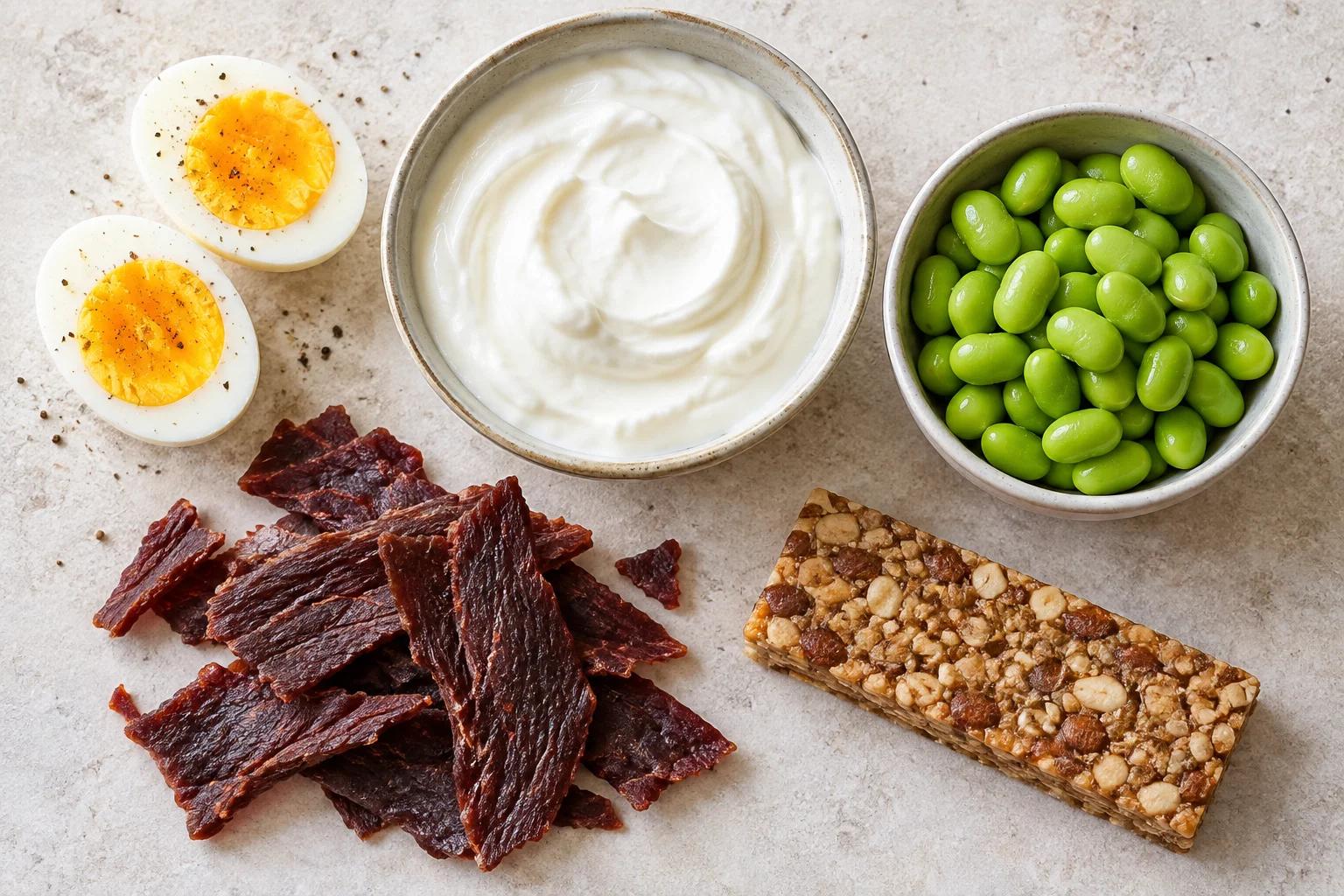
Many high-protein foods are naturally gluten-free: eggs, Greek yogurt, cheese, tuna, edamame, nuts and seeds. For packaged snacks, look for a gluten-free claim, which in the US means under 20 ppm of gluten, or a certification seal such as GFCO (10 ppm or lower). Watch for wheat-based soy sauce in jerky and oats, malt or wheat crisps in bars.
If you have celiac disease, follow your clinician's advice (your gastroenterologist or dietitian) on what is safe for you. This article is for general information and is not medical advice.
Key takeaways
- Whole foods like eggs, dairy, fish, legumes, nuts and seeds contain no wheat, barley or rye. Shrimp, tuna, nonfat Greek yogurt and 1% cottage cheese give the most protein per calorie.
- All 20 packaged picks below carry a gluten-free label in their Open Food Facts record, and five are tagged certified gluten-free. We checked each one and didn't assume.
- The usual hidden sources in protein snacks are soy sauce and teriyaki in jerky, and malt, regular oats or wheat crisps in bars and chips.
- Barley and rye are not major allergens under US law, so a "Contains" line won't flag them. Only the ingredient list or a gluten-free claim will.
Which protein snacks are naturally gluten-free?
Gluten is the protein in wheat, barley and rye and their crossbreeds (the federal rule names exactly these three grains). A food that never contains them, and doesn't pick them up during processing, is naturally gluten-free. Plain is the key word here.
| Food (plain) | Serving | Protein (g) | Calories | Protein per 100 calories | USDA FDC ID |
|---|---|---|---|---|---|
| Shrimp, cooked | 3 oz (85 g) | 20.4 | 84 | 24.2 | 175180 |
| Light tuna, canned in water, drained | 3 oz (85 g) | 16.5 | 73 | 22.6 | 173709 |
| Greek yogurt, plain, nonfat | 6 oz (170 g) | 17.3 | 100 | 17.3 | 170894 |
| Cottage cheese, 1% milkfat | ½ cup (113 g) | 14.0 | 81 | 17.2 | 173417 |
| Tofu, extra firm | 3 oz (85 g) | 8.5 | 70 | 12.1 | 174290 |
| Edamame, frozen, prepared | ½ cup (78 g) | 9.2 | 94 | 9.8 | 168411 |
| Mozzarella, part skim (string cheese) | 1 oz (28 g) | 6.9 | 72 | 9.6 | 170847 |
| Eggs, hard-boiled | 2 large (100 g) | 12.6 | 155 | 8.1 | 173424 |
| Pumpkin seed kernels | 1 oz (28 g) | 8.6 | 158 | 5.4 | 170556 |
| Almonds | 1 oz (28 g) | 6.0 | 164 | 3.7 | 170567 |
Values are scaled from per-100 g figures in USDA FoodData Central (opens in a new tab). Flavored yogurt, seasoned nuts, marinated tofu and flavored tuna can add gluten through malt, thickeners or soy sauce. Buy plain, or buy a version with a gluten-free claim.
Gluten-free packaged protein snacks
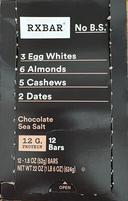
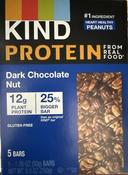
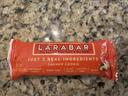
How we confirmed each pick: every product has the gluten-free label (en:no-gluten) in its Open Food Facts (opens in a new tab) record; "Certified" means it also has en:certified-gluten-free. We rechecked the certified products, RXBAR, KIND and Larabar against live records on 2026-10-15 and dropped records whose calories didn't add up. Values are per labeled serving. Recipes change, so check the package you're holding.
What stands out:
- Highest protein per calorie: the tuna pouch, plain Greek yogurt and zero-sugar jerky all top 16 g per 100 calories.
- Sodium: meat snacks run salty. The Epic bar lists 760 mg per bar and the Jack Link's bag 480 mg per serving, so compare labels if you watch salt.
- Plant-based: Krave jerky and Go Raw pumpkin seeds carry a vegan label. Seapoint edamame is plant-based but not labeled vegan; check the package.
- Low protein, still gluten-free: Larabar Cashew Cookie is labeled gluten-free but has 4 g protein and 230 calories (1.7 g per 100 calories). Treat it as a fruit-and-nut bar, not a protein snack.
Browse all gluten-free protein snacks, or shop by type in protein bars and jerky and meat snacks. To see how we judge protein, sugar and ingredients, read our label checklist for healthy protein snacks.
Are protein bars gluten-free?
Some are and some aren't, and the flavor matters as much as the brand. In our table, Quest's S'mores bar has a gluten-free label in Open Food Facts. The Quest Chocolate Chip Cookie Dough record has no gluten label, so we left it out. Judge each bar on its own label.
The protein base is rarely the issue. Whey, milk protein, egg whites, soy protein and nuts don't contain gluten. What to check:
- Crisps. "Protein crisps" can be soy or rice (usually fine) or wheat. The ingredient list says which.
- Oats. Ordinary oats often pick up wheat or barley in the field and the mill. Look for oats labeled gluten-free.
- Malt. Barley malt, malt extract, malt syrup and malt flavoring come from barley.
- Cookie, brownie or pretzel pieces. Assume wheat unless the bar is labeled gluten-free.
- Wheat starch. The FDA rule allows a wheat ingredient processed to remove gluten if the finished food stays under 20 ppm, so "wheat" on a gluten-free bar isn't automatically an error.
Why malt slips through: wheat is one of the nine major food allergens (opens in a new tab) the FDA requires on a "Contains" line. Barley and rye are not, so a malted bar can have a clean allergen statement and still contain gluten. For overall bar quality, see are protein bars healthy?.
Hidden gluten in jerky and chips
Jerky and meat sticks. Standard soy sauce is usually brewed with wheat, and teriyaki and many sweet marinades are built on it. Archer's teriyaki jerky shows the alternative: its Open Food Facts ingredient list names "Gluten Free Tamari Soy Sauce," and the record is tagged certified gluten-free. Look for "gluten-free tamari" or a gluten-free claim (plain "tamari" isn't a guarantee), and treat each flavor as its own product.
Chips and crisps. Protein chips made from milk protein, chicken, egg white or legumes are often gluten-free, while crackers usually contain wheat. Watch for:
- Malt vinegar seasoning (barley)
- Wheat flour as a coating or binder
- "Hydrolyzed wheat protein" in seasoning blends
Fermented and hydrolyzed ingredients. Gluten is hard to test after fermentation, so for these foods the rule requires records showing the ingredients met the gluten-free standard beforehand and that cross-contact was assessed (21 CFR 101.91 (opens in a new tab)).
Certified gluten-free labels explained
| What you see | What it means | Gluten limit |
|---|---|---|
| "Gluten-free," "no gluten," "free of gluten," "without gluten" | FDA-regulated claim; all four phrases are held to the same rule | Less than 20 ppm |
| GFCO certified seal | Third-party program run by the Gluten-Free Certification Organization (opens in a new tab) | Below 10 ppm, or the country's limit if lower |
| Other certification seals | Standards vary by program | Check the program |
| "Made without gluten ingredients" | Not the regulated claim; no testing implied | Not defined |
| "May contain wheat" / "Shared facility" | Voluntary cross-contact warning | Risk exists |
The FDA's gluten-free labeling page (opens in a new tab) explains that 20 ppm is the lowest level that validated methods can reliably detect in food. A product that meets the GFCO standard tests at half that level or lower.
Celiac disease vs. non-celiac gluten sensitivity. These are different conditions, and how strict each person needs to be is a question for their clinician, not a snack label.
Oats are their own case. The Celiac Disease Foundation (opens in a new tab) notes that oats don't contain gluten but are often grown and processed alongside wheat, barley and rye. Its oats page says most people with celiac disease tolerate moderate amounts of gluten-free oats. It also notes that avenin, the oat protein, is similar in structure to gluten, and it recommends deciding with your doctor and dietitian.
Beyond soy: gluten-free plant protein from grain-and-legume blends
In a USDA-ARS study in Heliyon (opens in a new tab) (2021), flatbread snacks made from sorghum, peanut meal and okra reached about 24 to 26% protein by dry weight, and two versions were rated acceptable by 88% of 73 tasters. The snacks weren't tested for gluten, so read this as evidence that sorghum-legume snacks can be protein-dense, not as a safety finding.
Gluten-free protein snacks for other diets
- Plant-based: edamame, pumpkin seeds, tofu, plant-based jerky (vegan protein snacks).
- Low-carb: cheese crisps, eggs, meat sticks, zero-sugar jerky (keto protein snacks).
- On the go: jerky, roasted edamame, tuna pouches (high-protein snacks on the go).
- For kids: string cheese, yogurt, eggs (high-protein snacks for kids).
Frequently asked questions
Are protein bars gluten-free?
Not automatically. Bars built on nuts, dates, egg whites or milk proteins often carry a gluten-free claim, while bars with wheat crisps, regular oats, barley malt or cookie pieces usually do not. Read the package for a gluten-free claim or certification seal each time, because recipes and factories change.
Is beef jerky gluten-free?
Beef itself has no gluten, but many jerky marinades use regular soy sauce, which is typically brewed with wheat, or a teriyaki sauce built on it. Some brands switch to gluten-free tamari: Archer's teriyaki jerky lists it and carries a certified gluten-free label in Open Food Facts. Check every flavor separately.
What does certified gluten-free mean?
In the US, a gluten-free claim means the food has less than 20 parts per million of gluten, under FDA rule 21 CFR 101.91. A certification seal adds an outside program on top. GFCO, for example, requires products to test below 10 ppm or the country's own limit, whichever is lower.
Are oats gluten-free?
Oats don't contain gluten themselves, but the Celiac Disease Foundation notes they are often grown, processed and transported alongside wheat, barley and rye. Choose oats and oat bars labeled gluten-free. Most people with celiac disease tolerate moderate amounts of gluten-free oats, but make that call with your doctor and dietitian.
Is whey protein gluten-free?
Whey is a milk protein, not a grain, so it isn't a source of gluten in itself. The risk comes from what gets added: cookie pieces, malt flavoring, wheat-based crisps, or shared equipment. For powders and bars, rely on a gluten-free claim or certification seal rather than the protein source alone.
What are the best naturally gluten-free protein snacks?
Plain Greek yogurt, cottage cheese, eggs, tuna, shrimp, edamame, cheese, nuts and seeds contain no wheat, barley or rye. By USDA data, shrimp, tuna, nonfat Greek yogurt and 1% cottage cheese lead at about 17 to 24 grams of protein per 100 calories. Flavored or seasoned versions can add gluten.
Sources
- FDA: Gluten and Food Labeling (opens in a new tab)
- 21 CFR 101.91: Gluten-free labeling of food (Cornell LII) (opens in a new tab)
- FDA: Food Allergies (opens in a new tab)
- Gluten-Free Certification Organization (GFCO) (opens in a new tab)
- Celiac Disease Foundation: Gluten-Free Oats: What's the Deal? (opens in a new tab)
- Kahlon et al. (2021), Consumer sensory evaluation and quality of Sorghum-Peanut Meal-Okra snacks, Heliyon (opens in a new tab)
- USDA FoodData Central (opens in a new tab) (FDC IDs listed in the table)
- Open Food Facts (opens in a new tab) (product labels and nutrition, checked 2026-10-15)
More background reading is on our resources page.