How Much Protein Should a Snack Have?
By Editorial Team. Updated . 9 min read.
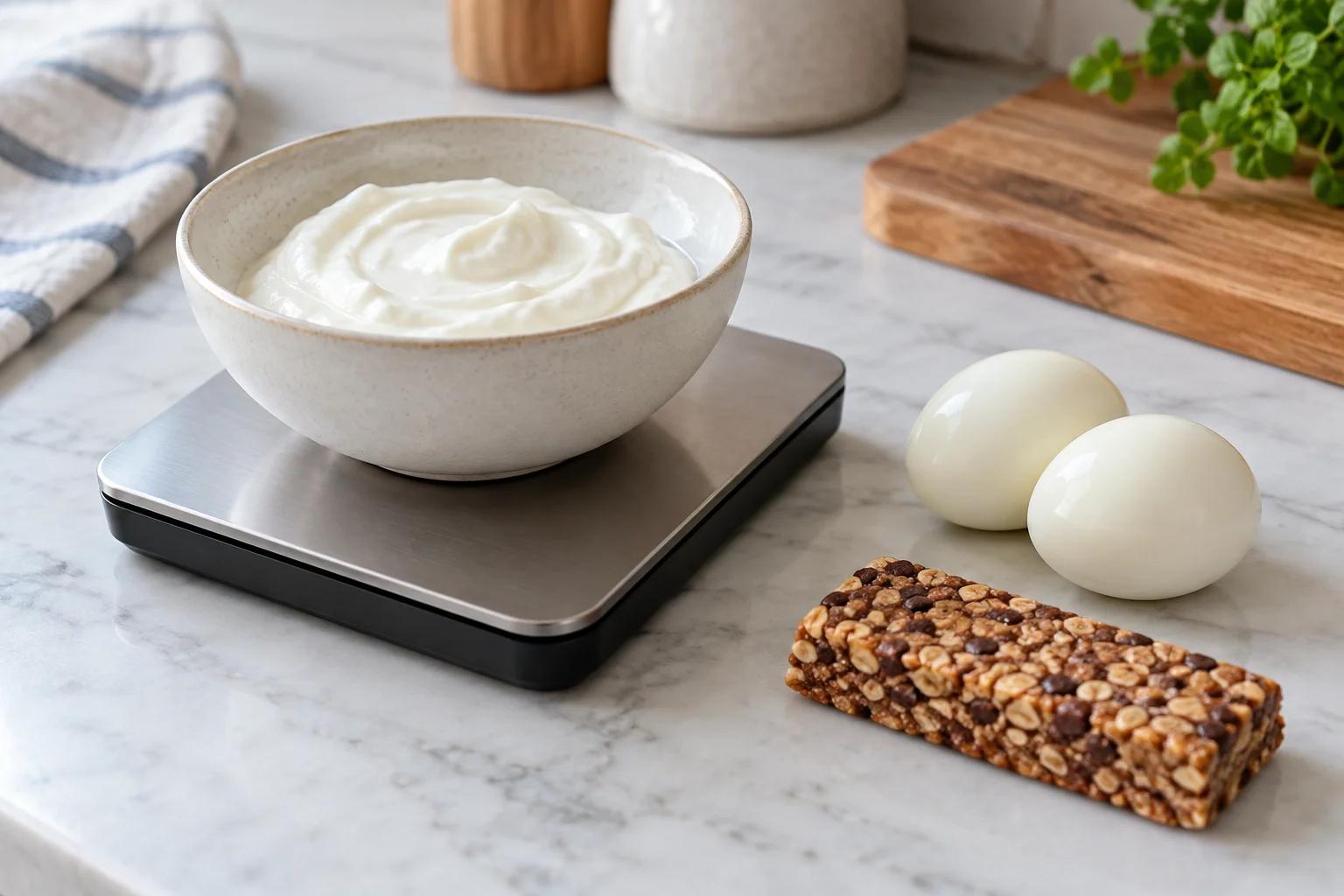
A good protein snack has about 10 to 20 grams of protein. Ten grams is the FDA threshold for a food to be called "high in protein." Aim for 15 to 20 grams if you are losing weight or have a big appetite, and 20 to 30 grams after strength training. Kids usually need only 5 to 10 grams per snack.
Key takeaways
- There is no official per-snack target. Published advice ranges from 5 g to 35 g; 10–15 g is the most common figure.
- 10 g is the floor for a "high-protein" snack under FDA labeling rules.
- 10–20 g suits most adults; 20–30 g fits post-workout or muscle-gain goals.
- Protein per 100 calories matters as much as grams: aim for 10 g or more per 100 calories.
- The 2025–2030 Dietary Guidelines raise the adult target to 1.2–1.6 g per kg of body weight per day, which makes protein-rich snacks more useful for many people.
How much protein should a snack have? (by goal)
The right amount depends on what the snack needs to do. These are our working ranges, built from the daily targets and per-meal research cited below:
| Goal | Protein per snack (g) | Why |
|---|---|---|
| General health, adults | 10–15 | Meets the "high in protein" claim; bridges meals |
| Weight loss | 15–20 | More protein per calorie; supports lean mass |
| Muscle gain / strength training | 20–30 | Matches sports-nutrition per-meal doses (about 0.25 g/kg) |
| Endurance training | 10–20, with carbs | Recovery also needs carbohydrate |
| Adults over 65 | 15–25 | Older muscle responds less to small doses |
| Kids 4–8 | 4–7 | Daily RDA is only 19 g |
| Kids 9–13 | 7–12 | Daily RDA is 34 g |
These ranges assume three regular meals. If a snack replaces a meal, aim for the higher end.
Why don't the experts agree on one number?
No national guideline or peer-reviewed consensus sets a per-snack protein amount. Online numbers are rules of thumb that differ for clear reasons:
- About 5 g. Harvard Health Publishing (opens in a new tab) suggests at least 5 grams, starting from the old 0.8 g/kg RDA, where meals cover most needs.
- 10–15 g. Most general guides land here: a moderate daily target split across three meals and two snacks.
- 20–35 g. Fitness sites assume a large, training body eating near 2 g/kg, with snacks acting as extra meals.
The snack number falls out of three inputs: your daily target, your body size and what your meals already supply.
How to work out your own snack target
Step 1: Set a daily target. The 2025–2030 Dietary Guidelines for Americans (opens in a new tab) advise 1.2 to 1.6 g of protein per kg of body weight per day, with protein at every meal. The old 0.8 g/kg RDA was set to prevent deficiency, not to optimize health, according to the review released with the guidelines, as reported by the AP (opens in a new tab).
| Body weight | Old RDA (0.8 g/kg) | New range (1.2–1.6 g/kg) |
|---|---|---|
| 120 lb (54 kg) | 44 g | 65–87 g |
| 150 lb (68 kg) | 54 g | 82–109 g |
| 180 lb (82 kg) | 65 g | 98–131 g |
| 220 lb (100 kg) | 80 g | 120–160 g |
Step 2: Subtract your meals. Three meals of 25 to 30 g supply 75 to 90 g.
Step 3: Divide the gap by your snacks. A 150-pound adult aiming for 100 g has a 10–25 g gap: one or two snacks close it. A 220-pound lifter aiming for 150 g has a 60–75 g gap, which explains the 25–35 g snacks on fitness sites.
The higher target is debated. In the same AP report, Tufts nutrition scientist Dariush Mozaffarian argued that extra protein mainly helps people doing resistance training and that most adults already get enough. If your meals are protein-rich, don't force large snacks.
What counts as a "high-protein" snack?
The FDA Daily Value (opens in a new tab) for protein is 50 grams, and 20% DV or more per serving counts as "high." So a food can be labeled "high in protein," "rich in" or an "excellent source of protein" if one serving provides 10 grams or more. Under the FDA's nutrient content claim rules (21 CFR 101.54 (opens in a new tab)), a "good source" provides 10–19% of the DV, or 5 to 9.9 grams.
Those are labeling rules, not nutrition advice. A 300-calorie candy-style bar with 10 grams of protein qualifies, and so does a 60-calorie serving of turkey breast. That is why grams alone are an incomplete test.
Protein per snack by goal
For weight loss
Aim for 15 to 20 grams in a snack of 200 calories or less. A 2015 review by Leidy and colleagues in the American Journal of Clinical Nutrition found that higher-protein, reduced-calorie diets led to more fat loss and better lean-mass preservation in controlled trials. The fullness effect was real but modest and did not clearly cut intake at the next meal, and research on specific per-snack amounts is thin. See our guide to protein snacks for weight loss.
For muscle gain
Aim for 20 to 30 grams of a complete protein. The International Society of Sports Nutrition's position stand on protein and exercise (opens in a new tab) recommends about 0.25 g/kg per eating occasion (an absolute dose of roughly 20 to 40 grams) containing 700 to 3,000 mg of leucine, spread every 3 to 4 hours, within a daily intake of 1.4 to 2.0 g/kg. That makes a high-protein snack a useful fourth or fifth "meal" for lifters. Our post-workout protein snacks guide lists options.
For endurance athletes
Runners and cyclists still need protein, but carbohydrate is the priority after long sessions to refill glycogen. A snack that pairs 10 to 20 grams of protein with a solid serving of carbs, such as low-fat chocolate milk or yogurt with fruit and granola, covers both.
For older adults
People over about 65 show "anabolic resistance": their muscles need a bigger protein dose to get the same response. The PROT-AGE study group recommends at least 1.0 to 1.2 g/kg per day for healthy older adults, and more for those who exercise or are ill. A snack of 15 to 25 grams helps, especially for people with small appetites at meals.
For kids
Children need much less than adults. The National Academies' RDAs are 13 g per day for ages 1–3, 19 g for ages 4–8 and 34 g for ages 9–13. With daily needs that small, 5 to 10 grams per snack is plenty. Details in high-protein snacks for kids.
For people with kidney disease or diabetes
Protein limits in chronic kidney disease are individualized; Kaiser Permanente's care guide (opens in a new tab) gives no single number, so follow your clinician's plan over any target here. For blood sugar, a small trial in adults with type 2 diabetes (opens in a new tab) found protein snacks raised glucose far less than white bread. See high-protein snacks for diabetics. This article is not medical advice.
Why protein density matters more than grams
Two bars can both carry about 20 grams of protein and be very different foods:
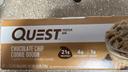
- Quest Chocolate Chip Cookie Dough bar: 21 g protein per 1-bar (60 g) serving, 190 calories and 12 g fiber → 11.1 g protein per 100 calories
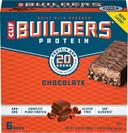
- Clif Builders Chocolate bar: 20 g protein per 1-bar (68 g) serving, 280 calories and 17 g sugar → 7.1 g protein per 100 calories
The second costs 90 more calories for slightly less protein. That is why we rank every snack by protein per 100 calories (grams of protein ÷ calories × 100), as explained in how we rank snacks. We treat 10 g or more per 100 calories as highly protein-dense.
Most packaged snacks fall short. In our analysis of 2,102 US Open Food Facts (opens in a new tab) records for protein bars, the median bar gave about 5.9 g protein per 100 calories, and only about 8.5% reached 10 g. Jerky did better (median 12.5 g across 677 jerky records); nuts and seeds sat near 3.1 g (7,742 records), so 15 g of protein from nuts alone costs roughly 480 calories. See the leaderboard in protein per 100 calories.
15 snacks with 10 to 30 grams of protein
Whole-food values are rounded from USDA FoodData Central. Packaged products use label data from Open Food Facts; formulas change, so check your package.
| Snack | Serving | Protein (g) | Calories | Protein per 100 calories |
|---|---|---|---|---|
| Light tuna in water, drained | 3 oz | 16.5 | ~73 | ~23 |
| Cooked shrimp | 3 oz | 20 | ~85 | ~24 |
| Nonfat plain Greek yogurt | 6 oz | 17 | ~100 | ~17 |
| 1% cottage cheese | ½ cup | 14 | ~80 | ~17 |
| 2% cottage cheese | 1 cup | 24 | ~185 | ~13 |
| Deli turkey breast (varies by brand) | 3 oz | 13–15 | ~90 | ~14–17 |
| Jack Link's Turkey Jerky, Original | 1 oz (28 g) | 13 | 80 | 16.3 |
| Beef jerky (original) | 1.5 oz | 14 | ~175 | ~8 |
| Cooked shelled edamame | 1 cup | 18 | ~190 | ~9.5 |
| Seapoint Farms Dry Roasted Edamame, Sea Salt | ⅓ cup (30 g) | 14 | 130 | 10.8 |
| Hard-boiled eggs | 2 large | 12.5 | ~155 | ~8 |
| Quest Chocolate Chip Cookie Dough | 1 bar (60 g) | 21 | 190 | 11.1 |
| Clif Builders Chocolate | 1 bar (68 g) | 20 | 280 | 7.1 |
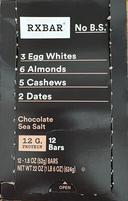
| RXBAR Chocolate Sea Salt | 1 bar (52 g) | 12 | 200 | 6.0 |
| Low-fat milk + 1 oz string cheese | 1 cup + 1 stick | 15 | ~185 | ~8 |
Browse more by type in our dairy and jerky and meat snack categories, or see the best protein snacks ranked by protein density. If you eat jerky often, watch sodium: in our analysis of 1,026 US Open Food Facts records for jerky and meat snacks, the median had about 1,357 mg per 100 g.
Can you eat too much protein at snack time?
For healthy adults, a large protein snack is not dangerous, but there are practical limits:
- Calories still count. A 40-gram protein snack built on nuts and bars can easily top 500 calories.
- It can crowd out other nutrients. All-protein snacks often push out fiber, fruit and vegetables. Pair protein with produce.
- "Protein" labels are not a health halo. Experts quoted by the AP worry the new guidance will boost protein-fortified packaged foods. Whole foods top our table for a reason.
- Kidney disease is the exception. Follow your clinician's guidance.
The "30 grams per sitting" myth
Absorption is not the limit; almost all protein you eat is digested and absorbed. Older studies found muscle building plateaued around 20 to 25 grams after a workout, and Harvard Health still cites 20 to 40 grams per sitting. But a 2023 study by Trommelen and colleagues in Cell Reports Medicine found that in healthy young men, 100 grams produced a larger anabolic response lasting over 12 hours than 25 grams. Bigger doses are not wasted, but spreading protein through the day is still sensible.
Protein before bed
Casein, the main protein in milk, cottage cheese and Greek yogurt, digests slowly. The ISSN position stand reports that 30 to 40 grams of casein before sleep increases overnight muscle protein synthesis in people who train. If you are not lifting, a 10–15 g bedtime snack such as half a cup of cottage cheese is plenty.
Frequently asked questions
Is 10 grams of protein enough for a snack?
Yes, for most adults 10 grams is a solid snack. It is the FDA threshold for a food to be labeled 'high in protein' or an 'excellent source' (20 percent of the 50-gram Daily Value). If you are trying to lose weight, have a big appetite or train for muscle gain, 15 to 30 grams may suit you better.
Is 30 grams of protein too much for a snack?
It is not harmful for healthy adults, but it is more than most people need between meals. Thirty grams makes sense after hard resistance training or for large, very active people. For everyday snacking, 10 to 20 grams usually covers the gap between meals without crowding out other foods or adding unnecessary calories.
How much protein should I eat before bed?
If you lift weights regularly, the International Society of Sports Nutrition says 30 to 40 grams of casein before sleep can raise overnight muscle protein synthesis. Cottage cheese and Greek yogurt are casein-rich whole-food options. If muscle gain is not your goal, a smaller 10 to 15 gram snack is plenty.
How many snacks a day should include protein?
Most people do well with one or two protein-containing snacks per day alongside three meals. Sports nutrition research supports spreading protein over four or five eating occasions about every three to four hours for muscle building. If your meals already reach your daily target, your snacks can be smaller or optional.
Can your body absorb more than 30 grams of protein at once?
Yes. Your body digests and absorbs nearly all the protein you eat. The real question is how much it uses for muscle building in one sitting. Older studies suggested a plateau near 20 to 25 grams, but a 2023 study in young men found 100 grams produced a bigger, longer response, so the cap is softer than once believed.
How much protein should I eat per day?
The 2025–2030 Dietary Guidelines advise adults to aim for 1.2 to 1.6 grams per kilogram of body weight, up from the long-standing 0.8 g/kg RDA. For a 150-pound (68 kg) adult that is about 82 to 109 grams. Some nutrition experts argue most adults already eat enough, so treat it as a target range.
Sources
- Dietary Guidelines for Americans 2025–2030 (opens in a new tab) (primary source)
- AAFP: Dietary Guidelines 2025–2030 summary (opens in a new tab)
- PBS NewsHour / AP, Jan. 19, 2026 (opens in a new tab)
- Harvard Health Publishing: high-protein snacks (opens in a new tab)
- FDA: Daily Value (opens in a new tab)
- 21 CFR 101.54: nutrient content claims (Cornell LII) (opens in a new tab)
- ISSN position stand: protein and exercise (Jäger et al., 2017) (opens in a new tab)
- USDA FoodData Central (opens in a new tab)
- Open Food Facts (opens in a new tab) (packaged product labels)
- Leidy HJ, et al. "The role of protein in weight loss and maintenance." American Journal of Clinical Nutrition, 2015.
- Trommelen J, et al. "The anabolic response to protein ingestion during recovery from exercise has no upper limit in magnitude and duration in vivo in humans." Cell Reports Medicine, 2023.
- Bauer J, et al. "Evidence-based recommendations for optimal dietary protein intake in older people: a position paper from the PROT-AGE Study Group." JAMDA, 2013.
More background reading is on our resources page.