Low-Calorie High-Protein Snacks: 25 Picks Under 200 Calories
By Editorial Team. Updated . 11 min read.
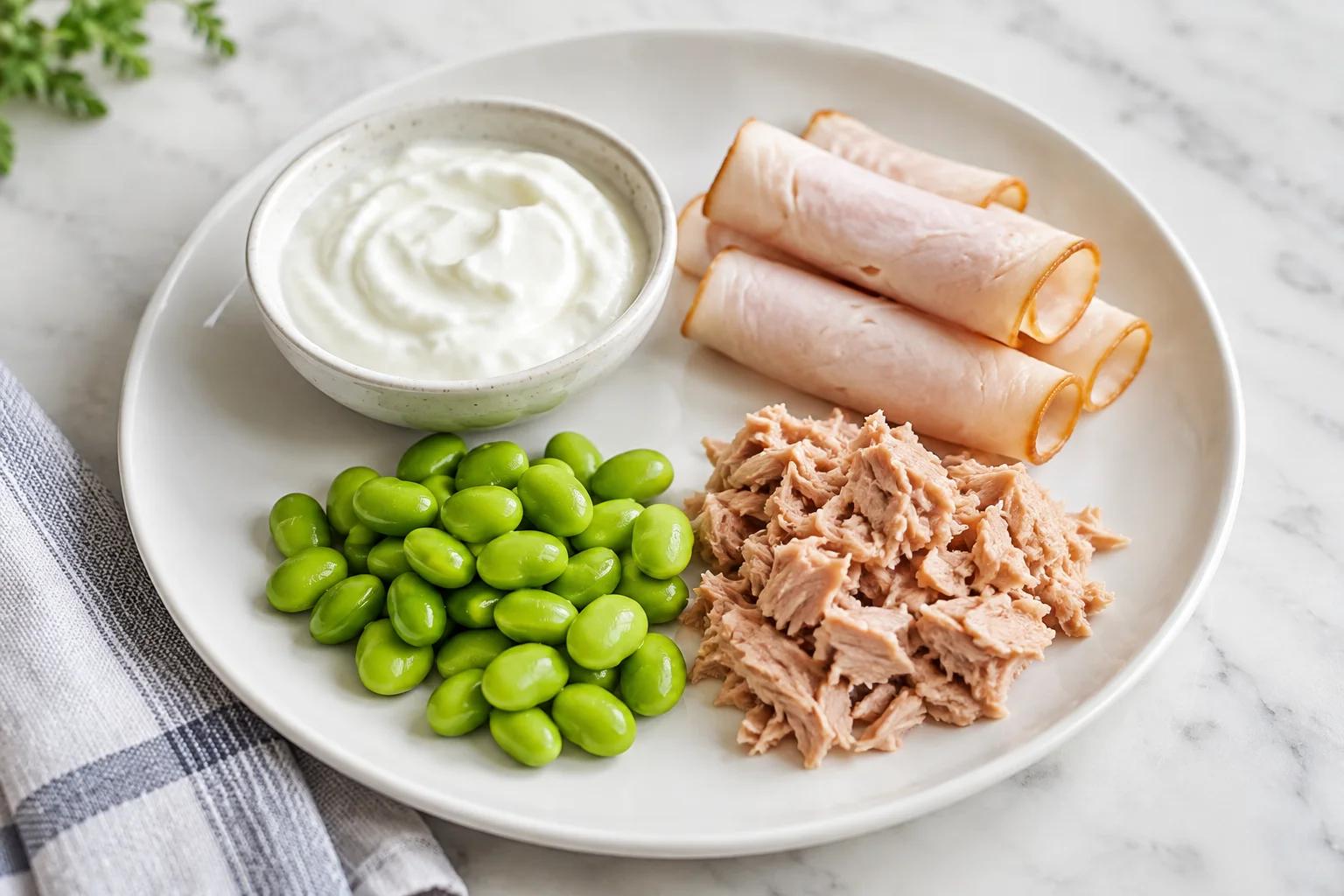
The best low-calorie, high-protein snacks pack at least 10 grams of protein for under 150 calories, which works out to about 7 grams or more of protein per 100 calories. Top whole-food picks are shrimp, tuna, egg whites, plain Greek yogurt and cottage cheese. The best packaged picks are zero-sugar jerky, lean meat sticks and a few low-sugar protein bars.
Key takeaways
- Our threshold: 10 g+ protein, 200 kcal or less, and 7 g+ protein per 100 kcal, all for the same serving.
- Every table lists calories, protein, fat and carbs for the same stated serving, from USDA FoodData Central (whole foods) or Open Food Facts label records (packaged).
- Shrimp, tuna, egg whites, turkey breast and skyr deliver 19 to 24 g of protein per 100 kcal.
- Packaged snacks are hit or miss: in our analysis of 2,035 US Open Food Facts protein bar records with a listed serving size, only about 1 in 6 (17%) passed all three tests.
What makes a snack "low-calorie, high-protein"?
A snack qualifies when it meets three tests at once, measured on the serving you actually eat:
- At least 10 g of protein. That matches the FDA's bar for a "high in protein" label claim: 20% of the 50 g Daily Value (opens in a new tab).
- 200 calories or less. Past that, a snack starts to work like a mini-meal.
- At least 7 g of protein per 100 calories. This filters out foods that reach 10 g only by being big.
The third test is the one most lists skip. The math is simple: grams of protein ÷ calories × 100. We treat 10 or more as excellent; see our explainer on protein per 100 calories, and our full scoring method in how to choose a healthy protein snack.
Top 10 low-calorie, high-protein snacks at a glance
One best pick per food type, sorted by protein per 100 kcal. Whole foods are calculated from USDA FoodData Central (opens in a new tab) for the weight shown; packaged foods use the label serving.
| Rank | Snack | Serving | Calories | Protein (g) | Fat (g) | Carbs (g) | Protein per 100 kcal |
|---|---|---|---|---|---|---|---|
| 1 | Cooked shrimp | 3 oz (85 g) | 84 | 20.4 | 0.2 | 0.2 | 24.2 |
| 2 | Light tuna, canned in water, drained (FDC 173709) | 3 oz (85 g) | 73 | 16.5 | 0.8 | 0 | 22.6 |
| 3 | Egg whites | 4 large (132 g) | 69 | 14.4 | 0.2 | 1.0 | 21.0 |
| 4 | Deli turkey breast, low sodium | 3 oz (85 g) | 93 | 18.5 | 0.7 | 3.0 | 20.0 |
| 5 | Plain nonfat skyr | 5.3 oz (150 g) | 90 | 17.0 | 0 | 6.0 | 18.8 |
| 6 | Pink salmon, canned, drained | 2.5 oz (71 g) | 97 | 17.5 | 3.0 | 0 | 18.1 |
| 7 | Nonfat plain Greek yogurt | 6 oz (170 g) | 100 | 17.3 | 0.7 | 6.1 | 17.3 |
| 8 | 1% cottage cheese | ½ cup (113 g) | 81 | 14.0 | 1.2 | 3.1 | 17.2 |
| 9 | Jack Link's Zero Sugar Beef Jerky | 1 oz (28 g) | 80 | 13.0 | 3.0 | 1.0 | 16.3 |
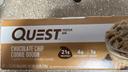
| 10 | Quest Protein Bar, Chocolate Chip Cookie Dough | 1 bar (60 g) | 190 | 21 | 8 | 20 (incl. 12 fiber) | 11.1 |
Quest has also sold a newer formulation with different numbers, so check the package. Brand labels for skyr, salmon and turkey can differ from USDA averages by a few grams.
Whole-food snacks under 150 calories
These whole foods also clear all three tests, and their nutrition does not depend on a brand's recipe.
| Snack | Serving | Calories | Protein (g) | Fat (g) | Carbs (g) | Protein per 100 kcal |
|---|---|---|---|---|---|---|
| Roasted chicken breast, no skin | 2 oz (57 g) | 94 | 17.7 | 2.0 | 0 | 18.8 |
| 2% cottage cheese | ½ cup (113 g) | 92 | 11.8 | 2.6 | 5.4 | 12.8 |
| 1 hard-boiled egg + 2 egg whites | 116 g | 112 | 13.5 | 5.4 | 1.1 | 12.0 |
| Firm tofu cubes | 6 oz (170 g) | 133 | 15.4 | 7.1 | 4.8 | 11.6 |
| Shelled edamame, cooked | ¾ cup (117 g) | 142 | 13.9 | 6.1 | 10.4 | 9.8 |
| Part-skim mozzarella string cheese | 2 sticks (56 g) | 142 | 13.6 | 8.9 | 1.6 | 9.6 |
Greek yogurt and skyr are the easiest daily habit. Straining concentrates protein to about 10 g per 100 g. Buy plain and add fruit yourself: the 2025–2030 Dietary Guidelines cap added sugars at 10 g per meal, per the AAFP summary (opens in a new tab). They also favor full-fat dairy without added sugar, so plain 2% or whole-milk yogurt works too, at more calories per gram of protein. See our dairy category.
Cottage cheese gives 12 to 14 g per half cup. Its weak point is sodium: about 350 to 460 mg per half cup in USDA data, depending on fat level.
Eggs miss alone (about 6 g each), so add two whites. Edamame is the strongest plant pick and adds about 6 g of fiber per ¾ cup.
Packaged snacks under 200 calories
Values are per label serving from Open Food Facts records that passed our consistency check.
| Snack | Serving | Calories | Protein (g) | Fat (g) | Carbs (g) | Sugar (g) | Sodium (mg) | Protein per 100 kcal |
|---|---|---|---|---|---|---|---|---|
| Jack Link's Turkey Jerky, Original | 1 oz (28 g) | 80 | 13.0 | 0.5 | 5.0 | 4 | 490 | 16.3 |
| Chomps Original Turkey Stick | 1 stick (32 g) | 80 | 12.0 | 3.5 | 0 | 0 | 390 | 15.0 |
| Quest Tortilla Style Protein Chips, Nacho Cheese | 1 bag (32 g) | 150 | 18.0 | 6.0 | 5.0 | 1 | 330 | 12.0 |
| Quest Protein Bar, Chocolate Chip Cookie Dough | 1 bar (60 g) | 190 | 21 | 8 | 20 | 1 | 220 | 11.1 |
| Seapoint Farms Dry Roasted Edamame, Sea Salt | 30 g | 130 | 14.0 | 5.0 | 9.0 | 1 | 140 | 10.8 |
How to check a label in 30 seconds
- Serving size first. Every number refers to it.
- Protein ÷ calories × 100. Below 7, you are mostly paying for fat or carbs.
- Added Sugars well under 10 g.
- Sodium % Daily Value. Jerky often lands near 20% per ounce.
- Sugar alcohols. Erythritol is usually well tolerated; maltitol raises blood sugar more.
Jerky and meat sticks. Across 1,026 US Open Food Facts records for jerky and meat snacks, the median had 11.1 g of protein per 100 kcal, the best packaged category, but also about 14 g of sugar per 100 g and 400 mg of sodium per serving. Harvard Health (opens in a new tab) also flags sodium as the thing to watch with jerky. Choose original or zero-sugar flavors, and compare products in jerky and meat snacks.
Protein bars. Only about 8.5% of the 2,102 US Open Food Facts protein bar records we analyzed reach 10 g of protein per 100 kcal. Quest Chocolate Chip Cookie Dough clears all three tests using milk and whey protein isolates, soluble corn fiber, erythritol, sucralose and stevia; its 12 g of fiber bloats some people. Our guide on whether protein bars are healthy goes deeper.
Protein shakes vary too much by brand to list, so apply the same three tests to the label, and count a shake as a snack, not a free extra.
Popular snacks that miss the cut, and quick fixes
Many "healthy" snacks fail a test. Small changes fix most.
| Snack (serving) | Calories | Protein (g) | 10 g+? | 200 kcal or less? | 7 g+ per 100 kcal? | Quick fix |
|---|---|---|---|---|---|---|
| String cheese (1 stick) | 71 | 6.8 | No | Yes | Yes | Eat two sticks |
| Shelled edamame (½ cup) | 94 | 9.3 | No | Yes | Yes | Go to ¾ cup |
| 1% milk (1 cup) | 102 | 8.2 | No | Yes | Yes | Add 1 string cheese |
| Beef jerky, generic (1 oz) | 115 | 9.3 | No | Yes | Yes | Pick a zero-sugar or turkey jerky |
| Almonds (1 oz) | 162 | 5.9 | No | Yes | No | Use ½ oz on Greek yogurt |
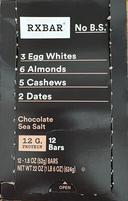
| RXBAR Chocolate Sea Salt (1 bar) | 200 | 12 | Yes | Yes | No | Treat it as a fruit-and-nut bar |
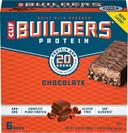
| Clif Builders Chocolate (1 bar) | 280 | 20 | Yes | No | Yes | Save it for a post-workout mini-meal |
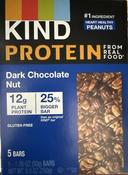
| KIND Protein Dark Chocolate Nut (1 bar) | 240 | 12 | Yes | No | No | Swap for Greek yogurt plus a few nuts |
Under 100 calories: the smallest high-protein snacks
All 100 calories or less with 10 g+ protein:
- Canned light tuna (3 oz): 16.5 g protein, 73 kcal
- Turkey breast (2 oz): 12 g, 62 kcal
- Egg whites (4): 14 g, 69 kcal
- Jerky or turkey stick (zero-sugar or turkey): 12 to 13 g, 80 kcal
- 1% cottage cheese (½ cup): 14 g, 81 kcal
- Shrimp (3 oz, about 10 to 12 medium): 20 g, 84 kcal
- Plain skyr (5.3 oz): 17 g, 90 kcal
- Chicken breast (2 oz): 18 g, 94 kcal
- Canned pink salmon (2.5 oz): 17.5 g, 97 kcal
- Nonfat Greek yogurt (6 oz): 17 g, 100 kcal
Season with hot sauce, mustard, salsa, cinnamon or lemon for almost no calories.
How to make any snack more filling
In a 2014 crossover trial in Nutrition Journal, Ortinau and colleagues (opens in a new tab) gave 20 healthy, normal-weight women three 160-calorie afternoon snacks, each on a single test day. Versus high-fat chocolate, a high-protein yogurt (14 g protein) reduced afternoon hunger and delayed dinner by about 30 minutes. Versus high-fat crackers, it cut dinner intake by about 100 calories. Overall fullness did not differ, and the study measured hunger and dinner intake, not weight loss.
You can push fullness further:
- Add fiber and water. Berries, cucumber, cherry tomatoes and apple slices add volume for about 10 to 60 calories.
- Measure fats. One tablespoon of nut butter is about 95 calories, so a teaspoon goes further than a spoonful.
- Eat from a plate, not the bag, so portions stay visible.
Combos with about 20 g of protein under 200 calories
| Combo | Calories | Protein (g) | Fat (g) | Carbs (g) | Fiber (g) |
|---|---|---|---|---|---|
| 6 oz nonfat Greek yogurt + ½ cup raspberries + 1 tsp chia | 152 | 18.7 | 2.3 | 15.2 | 5.4 |
| ½ cup 1% cottage cheese + ½ cup shelled edamame | 176 | 23.3 | 5.2 | 10.0 | 4.1 |
| 2 oz turkey breast + 1 string cheese + ½ cup cucumber | 141 | 19.6 | 5.0 | 4.7 | 0.5 |
| 3 oz shrimp + ½ cup shelled edamame | 179 | 29.7 | 4.3 | 7.1 | 4.1 |
| 4 egg whites + 1 whole egg, with hot sauce | 146 | 20.7 | 5.5 | 1.5 | 0 |
How many low-calorie protein snacks fit in a day?
A Cleveland Clinic (opens in a new tab) dietitian says most people do well with three meals and one or two snacks a day, and that a snack much past 200 calories becomes a mini-meal. The 2025–2030 Dietary Guidelines suggest about 1.2 to 1.6 g of protein per kilogram of body weight daily.
For a 150-pound (68 kg) adult, that is roughly 80 to 110 g a day. Two snacks at 15 to 20 g each cover about a third of it for around 300 calories. For help sizing each snack, see how much protein a snack should have. If you have kidney disease or another condition that limits protein, ask your doctor before raising your intake.
For weight-loss goals, see protein snacks for weight loss; if added sugar is your concern, see low-sugar protein snacks.
Frequently asked questions
What snack has the most protein and the fewest calories?
Lean seafood wins. Three ounces of cooked shrimp has about 20 grams of protein for 84 calories in USDA data, and 3 ounces of canned light tuna has about 16.5 grams for 73 calories. Four egg whites, deli turkey breast and plain skyr follow closely, each giving roughly 19 to 21 grams of protein per 100 calories.
What is a good 100-calorie protein snack?
A 6-ounce cup of plain nonfat Greek yogurt is the simplest 100-calorie protein snack, with about 17 grams of protein and under 1 gram of fat. Other picks at or under 100 calories include half a cup of 1% cottage cheese (14 grams), four egg whites (14 grams), two ounces of turkey breast (12 grams) or zero-sugar beef jerky (13 grams).
Are low-calorie protein bars healthy?
Some are reasonable. Bars under 200 calories with about 20 grams of protein usually swap sugar for sweeteners such as erythritol, sucralose or stevia and add fibers like soluble corn fiber. These suit most people but can cause gas or bloating in larger amounts. Check the ingredient list: maltitol raises blood sugar more than erythritol does.
Is jerky a low-calorie snack?
Usually, yes. Generic beef jerky has about 115 calories and 9 grams of protein per ounce in USDA data, while zero-sugar beef and turkey jerkies list about 80 calories and 13 grams. The trade-offs are sodium, a median of about 409 milligrams per serving across 677 US Open Food Facts jerky records, and added sugar in sweet flavors like teriyaki.
Are nuts a good low-calorie protein snack?
Not on their own. An ounce of almonds has about 6 grams of protein for 162 calories, under 4 grams per 100 calories. Nuts bring fiber and unsaturated fat, but on a calorie budget they cost a lot for the protein they give. Use half an ounce as a crunchy topping on Greek yogurt or cottage cheese instead.
How many low-calorie protein snacks should I eat a day?
Most people do well with one or two snacks a day, according to a Cleveland Clinic dietitian, and a snack above about 200 calories starts to work like a small meal. Two 150-calorie snacks with 15 to 20 grams of protein each supply roughly a third of the daily protein target for a 150-pound adult.
Sources
- Dietary Guidelines for Americans 2025–2030 (opens in a new tab) (primary source) and the AAFP summary (opens in a new tab)
- USDA FoodData Central (opens in a new tab) (whole foods: SR Legacy entries, e.g. light tuna FDC 173709; skyr: branded plain nonfat entry FDC 2400949)
- FDA Daily Values (opens in a new tab)
- Ortinau et al., Nutrition Journal, 2014 (opens in a new tab)
- Cleveland Clinic (opens in a new tab) and Harvard Health (opens in a new tab)
- Open Food Facts (opens in a new tab) US product data: our analysis of 2,102 protein bar, 1,026 jerky and meat snack and 677 jerky records from 23,236 cleaned US Open Food Facts records. We excluded records with more than 90 g protein per 100 g, calories more than 20% off their macros, macros above 105 g per 100 g, or more sugar than carbohydrate. Protein bars are bars with "protein" in the name or category, or at least 15 g of protein per 100 g.
More background reading is on our resources page.