Savory High-Protein Snacks: Protein, Sodium and What's Inside
By Editorial Team. Updated . 8 min read.
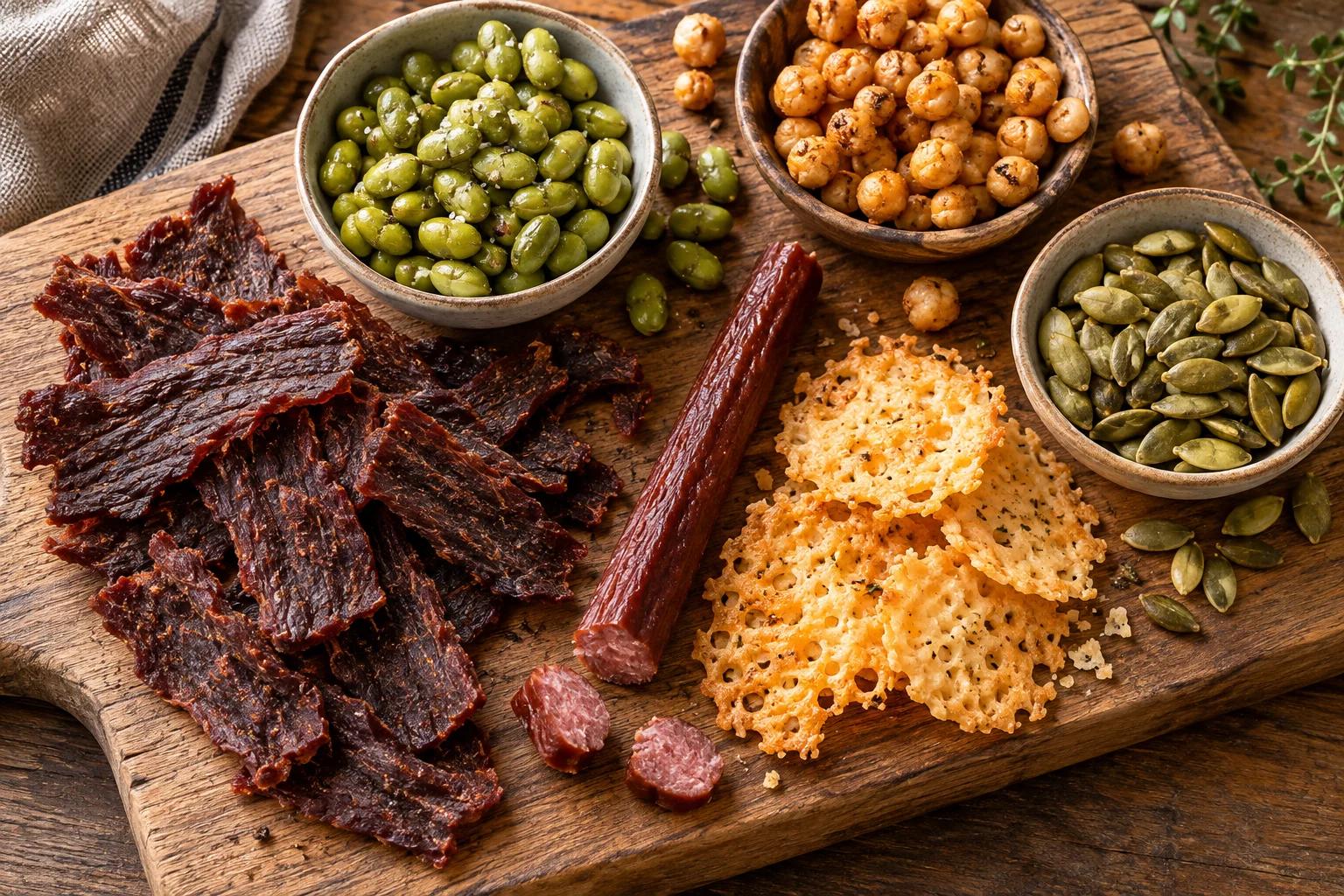
Among savory high-protein snacks, jerky and meat sticks give the most protein per calorie, at 10 to 16 g per 100 calories. Roasted edamame and protein chips follow at 10 to 12 g. Nuts and chickpeas manage 4 to 6 g. The cost is sodium: an ounce of jerky can use 20% of the 2,300 mg daily limit.
Key takeaways
- Most protein for the calories: jerky (13.7 to 16.2 g per 100 kcal on the labels we checked), then protein chips (12.0) and roasted edamame (10.8).
- Sodium is the main cost. The jerky labels we checked run 330 to 600 mg per ounce, or 14% to 26% of the FDA Daily Value of 2,300 mg (opens in a new tab).
- Protein chips get their protein from isolates, usually milk and whey protein isolate or pea protein isolate, not from the potato or corn.
- Nuts are healthy fats first and protein second, at under 5 g of protein per 100 calories.
Every number below comes from a US label in our Open Food Facts (opens in a new tab) dataset, converted to the stated serving. We dropped records whose calories don't match their macros.
Which savory snacks have the most protein?
"% of 2,300 mg" is the share of the FDA's daily sodium value one serving uses.
| Snack (serving) | Protein (g) | Calories | Protein per 100 kcal | Sodium (mg) | % of 2,300 mg | Fiber (g) | Shelf-stable |
|---|---|---|---|---|---|---|---|
| Jack Link's Zero Sugar Beef Jerky (28 g) | 12.9 | 80 | 16.2 | 480 | 21% | 0 | Yes |
| Country Archer Original Beef Jerky (28 g) | 11.0 | 70 | 15.7 | 330 | 14% | 0 | Yes |
| Jack Link's Original Beef Jerky (28 g) | 11.0 | 80 | 13.7 | 460 | 20% | 0 | Yes |
| Quest Tortilla Style Protein Chips, Nacho Cheese (32 g bag) | 17.9 | 150 | 12.0 | 330 | 14% | 1 | Yes |
| Seapoint Farms Dry Roasted Edamame, Sea Salt (30 g) | 14.0 | 130 | 10.8 | 140 | 6% | 6 | Yes |
| Chomps Original Beef Stick (32 g stick) | 10.0 | 100 | 10.0 | 300 | 13% | 0 | Yes |
| Kraft String Cheese (24 g stick) | 6.0 | 60 | 10.0 | 180 | 8% | 0 | No |
| Moon Cheese Pepper Jack (28 g) | 11.7 | 165 | 7.1 | 350 | 15% | 0 | Yes |
| Bob's Red Mill Shelled Pumpkin Seeds (26 g) | 9.0 | 150 | 6.0 | 0 | 0% | 2 | Yes |
| The Good Bean Sea Salt Crunchy Chickpeas (28 g) | 5.9 | 120 | 5.0 | 95 | 4% | 5 | Yes |
| Planters Dry Roasted Peanuts, Unsalted (28 g) | 8.0 | 170 | 4.7 | 5 | <1% | 2 | Yes |
| Wonderful Roasted & Salted Almonds (28 g) | 7.0 | 185 | 3.8 | 110 | 5% | not listed | Yes |
No snack wins every column. Jerky leads on density but costs up to a fifth of your sodium budget; the lowest-sodium items (pumpkin seeds, peanuts) have the least protein per calorie. Edamame is the quiet all-rounder: double-digit density, 6 g of fiber, 6% of the sodium limit.
Our guide to protein per 100 calories explains the math behind that column.
Jerky and meat sticks: high protein, high salt
Jerky is close to pure protein because drying removes water and most lean cuts carry little fat. In our analysis of 1,026 US Open Food Facts records for jerky and meat snacks, the median score is 11.1 g of protein per 100 calories. The median protein bar (2,102 records) scores 5.9, about half that.
Sodium is the price, since salt is part of how jerky is cured. The median meat snack in those 1,026 records carries about 1,357 mg of sodium per 100 g, roughly 380 mg per ounce. Harvard Health (opens in a new tab) puts beef jerky at about 10 g of protein per ounce and says to watch the sodium, without giving a number. Here are the label numbers:
- Country Archer Original: 330 mg per ounce (14% DV)
- Jack Link's Original: 460 mg (20% DV)
- Jack Link's Zero Sugar: 480 mg (21% DV). Removing the sugar did not remove the salt.
- Old Trapper Old Fashioned: 600 mg (26% DV)
The FDA's rule of thumb (opens in a new tab) is that 20% DV or more per serving is high, so three of these four count as high-sodium foods. The same page notes that Americans average about 3,400 mg a day, well over the limit.
The World Health Organization (opens in a new tab) names "biltong or beef jerky" as an example of processed meat, which IARC classifies as Group 1, carcinogenic to humans. That rates strength of evidence, not size of risk, but it argues for rotating jerky rather than eating it daily.
For brand-by-brand picks, see our jerky and meat snacks category.
Protein chips and crisps: where the protein comes from
The median item in our chips-and-crackers data (4,189 records) scores just 2.5 g of protein per 100 calories. Protein chips reach 12 or more because they use a different base. Read the first ingredient:
- Dairy isolate chips. Quest's ingredient list starts with a "protein blend (milk protein isolate, whey protein isolate)," then oil, calcium caseinate and corn starch: 17.9 g of protein for 150 calories per bag. Not for the dairy-free.
- Pea isolate chips. One plant-based chip in our data (brand not recorded) lists pea protein isolate, then potato flakes. Per 28 g: 14.9 g of protein, 120 calories, 3 g of fiber and 290 mg of sodium.
- Cheese crisps. Moon Cheese and parmesan crisps are just dried or baked cheese, so fat keeps them at about 7 to 9 g per 100 kcal.
- Meat chips. One crisped-chicken chip in our data has 18 g of protein per 28 g, with 430 mg of sodium.
An isolate chip is a processed food engineered to deliver protein. Compare sodium too: Quest bags in our data range from about 190 to 340 mg.
Our chips and crackers category lists the protein chips we track, with full labels.
Nuts and seeds: good food, modest protein
Nuts are worth eating for their fats and fiber, but most of their calories come from fat, so peanuts score 4.7 g of protein per 100 calories and almonds 3.8. Harvard Health (opens in a new tab) puts shelled peanuts at about 7 g per ounce and almonds and pistachios at about 6 g.
Shelled pumpkin seeds do a little better, with 9 g of protein per 26 g (6.0 per 100 kcal). Unsalted versions have essentially no sodium.
Watch the package: the Wonderful almonds above come in a 70 g bag, about 460 calories if you finish it. More options are in our nuts and seeds category.
Meatless savory options: edamame, chickpeas and cheese
Roasted edamame is the strongest plant pick. A 30 g serving of Seapoint Farms Sea Salt has 14 g of protein, 6 g of fiber and 140 mg of sodium. Harvard Health (opens in a new tab) notes that edamame contains all the essential amino acids.
Roasted chickpeas score only 5.0 per 100 kcal but bring 5 g of fiber per ounce. Treat them as a fiber snack with some protein.
Cheese covers both fridge and pantry. A Kraft string cheese stick has 6 g of protein for 60 calories, and Harvard Health puts cheese sticks at 5 to 7 g each. Dried cheese like Moon Cheese is shelf-stable, with 11.7 g of protein per ounce but nearly three times the calories. See our dairy snacks and plant-based snacks categories for more.
How much protein should a savory snack have?
Harvard Health (opens in a new tab) suggests at least 5 g of protein per snack and says a high-protein, low-calorie snack helps you stay full longer. Everything in the table clears that bar. Our article on how much protein a snack should have covers targets by goal.
How to keep sodium in check
Salty snacks add up fast. One ounce of Jack Link's Original (460 mg), one bag of Quest chips (330 mg) and one ounce of Old Trapper (600 mg) total 1,390 mg. That's 60% of the daily limit before meals, and the FDA (opens in a new tab) notes that most dietary sodium already comes from packaged and prepared foods.
- Read %DV, not milligrams. 5% or less is low; 20% or more is high.
- Count servings per bag. Jerky and nut bags often hold two or more.
- Pair salty with unsalted. Jerky plus unsalted pumpkin seeds gives about 20 g of protein for roughly 230 calories, with sodium from only one item.
- Use edamame as the default. It has the best balance of protein, fiber and sodium in the table.
For commutes and flights, see high-protein snacks on the go.
How savory snacks compare with a protein bar
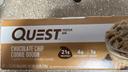
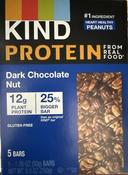
Bars are the usual alternative. The Quest Chocolate Chip Cookie Dough bar has 21 g of protein for 190 calories (11.1 per 100 kcal) and 220 mg of sodium, matching a meat stick's density with less salt. The KIND Protein Dark Chocolate Nut bar behaves like nuts: 12 g for 240 calories (5.0). If sodium is your limit, a bar can be the better pick. Browse the best protein snacks for everything we rank.
Frequently asked questions
What is the highest-protein savory snack?
By protein per calorie, jerky wins. Jack Link's Zero Sugar Beef Jerky gives 12.9 grams of protein for 80 calories, about 16 grams per 100 calories. By grams per bag, whey-based protein chips are close: a 32-gram bag of Quest Tortilla Style chips has 17.9 grams for 150 calories. Roasted edamame is the best plant option.
How much sodium is in beef jerky?
In our analysis of 677 US Open Food Facts jerky records, about 80 percent carry 190 to 610 milligrams of sodium per ounce, and the median is about 410 milligrams per ounce, roughly 18 percent of the FDA's 2,300-milligram daily value. Labels range from Country Archer Original at 330 milligrams to Old Trapper Old Fashioned at 600.
What are protein chips made of?
Most protein chips are built on a protein isolate instead of potato or corn. Quest chips use milk protein isolate and whey protein isolate, with some corn starch for crunch. Plant versions use pea protein isolate with potato flakes. Cheese crisps are just baked or dried cheese, and chicken chips are made from chicken.
Are there savory protein snacks without meat?
Yes. Dry-roasted edamame has about 14 grams of protein and 6 grams of fiber per 30-gram serving. Dried cheese snacks such as Moon Cheese give about 11.7 grams per ounce. Pumpkin seeds, roasted chickpeas and peanuts give 6 to 9 grams, with fewer grams of protein per calorie.
How can I eat salty protein snacks without too much sodium?
Check the %DV for sodium on the label. The FDA calls 5 percent or less low and 20 percent or more high. Pair one salty item, like jerky, with an unsalted one, like plain pumpkin seeds or unsalted peanuts, and count the servings in the bag. Many bags hold more than one serving.
Sources
- Harvard Health Publishing: High-protein snacks to build muscle and keep hunger at bay (opens in a new tab) (snack protein values, 5 g minimum, satiety, edamame amino acids)
- FDA: Sodium in Your Diet (opens in a new tab) (2,300 mg Daily Value, 5%/20% DV guide, 3,400 mg average intake)
- WHO: Carcinogenicity of the consumption of red meat and processed meat (opens in a new tab) (jerky as processed meat, Group 1 classification)
- Open Food Facts (opens in a new tab) US product labels: our analysis of 23,236 cleaned US Open Food Facts records (1,026 jerky and meat snacks, 677 of them jerky; 4,189 chips and crackers; 7,742 nuts and seeds)
More background reading is on our resources page.